Edit

Jaishankar Reviews India-West Asia Ties Amid Conflict

Jaishankar Reviews India-West Asia Ties Amid Conflict

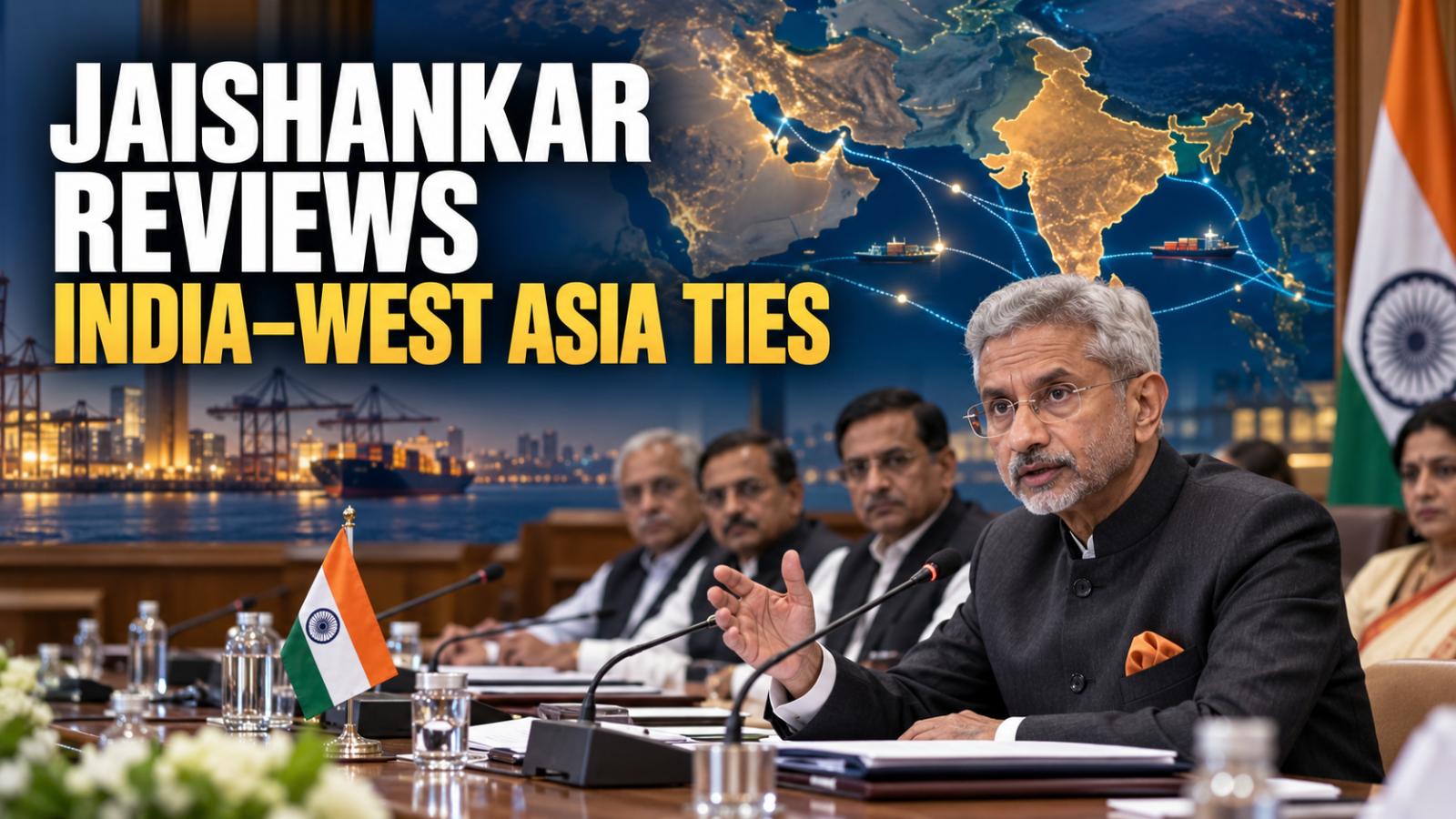
External Affairs Minister S. Jaishankar chaired a Consultative Committee meeting on India’s relations with West Asia in New Delhi on Monday, September 7, 2026. The discussions covered Gulf partnerships, the welfare of 10 million Indians, energy security and regional concerns arising from the ongoing conflict.

Jaishankar Highlights India’s Strategic Partnerships Across West Asia

External Affairs Minister S. Jaishankar chaired a meeting of Parliament’s Consultative Committee on India’s relations with West Asia, outlining New Delhi’s economic, diplomatic and security priorities during a period of continuing regional instability.

The minister highlighted India’s close and long-standing relations with countries in the Gulf and the wider West Asia and North Africa region. These partnerships cover trade, investment, energy, maritime cooperation and extensive people-to-people connections.

Jaishankar told members that India continues to advance its trade and connectivity interests despite the conflict affecting the region. He also emphasised that New Delhi has strengthened its political engagement with several West Asian countries while maintaining communication with competing regional powers.

In a social media post following the meeting, the minister said the discussions covered India’s efforts to protect its citizens and secure access to essential energy and fertiliser supplies.

Diaspora Welfare Remains a Priority for India

The safety and welfare of approximately 10 million Indians living and working in the Gulf formed a major part of the committee’s deliberations.

The large Indian community in West Asia has an important economic and social role. Its members contribute to Gulf economies while supporting families in India through remittances. Any military escalation, interruption to air travel or disruption of essential services could therefore directly affect millions of people.

Jaishankar underlined the government’s responsibility to monitor regional developments and maintain emergency support systems through Indian missions. Previous crises have required India to coordinate evacuations, establish helplines and work with local authorities to assist citizens.

With instability continuing across parts of the region, the government is expected to remain focused on contingency planning, transport access and communication with Indian communities. Protecting workers, students, professionals and their families is likely to remain central to India’s West Asia policy.

Energy Security and Trade Routes Face Regional Pressure

Several MPs reportedly raised questions about the impact of the conflict on India’s energy requirements. Jaishankar informed the meeting that New Delhi was diversifying its energy supply chain while continuing to assess developments in major oil- and gas-producing countries.

West Asia remains critical to India’s energy security as well as fertiliser supplies, shipping and commercial connectivity. Disruptions to production facilities or maritime routes could increase transportation costs and affect global commodity prices.

The committee also discussed US sanctions affecting purchases of energy and other products from Iran, according to sources cited by PTI. Jaishankar reportedly noted that India maintains working relations with both Washington and Tehran, giving New Delhi an important but complex diplomatic position.

India must balance its energy needs and regional partnerships with international restrictions and financial risks. Strengthening alternative suppliers and protecting maritime trade routes are therefore essential to reducing the impact of future disruptions.

Makkah Defence Pact Draws Questions From MPs

Some committee members also expressed concern about the Makkah Joint Defence Agreement signed by Pakistan, Saudi Arabia and Turkiye on August 7, 2026.

The agreement states that an armed attack against one participating country will be treated as an attack against all three. It was announced amid heightened security concerns and establishes a framework for closer political and military coordination.

The pact is significant for India because it includes Pakistan alongside two countries with which New Delhi maintains important diplomatic and economic ties. However, the detailed defence obligations and circumstances in which the collective-security clause could be activated have not been fully explained publicly.

MPs reportedly asked the government to clarify India’s assessment of the agreement and its possible security implications. No detailed official account of Jaishankar’s response was released.

The meeting highlighted the challenge facing Indian diplomacy: protecting a large diaspora, maintaining energy supplies and expanding trade while navigating conflicts, sanctions and emerging security alliances across West Asia.

What is your response?

joyful Joyful 0%
cool Cool 0%
thrilled Thrilled 0%
upset Upset 0%
unhappy Unhappy 0%
AD
AD
AD
AD
AD
AD
AD
AD
AD
AD