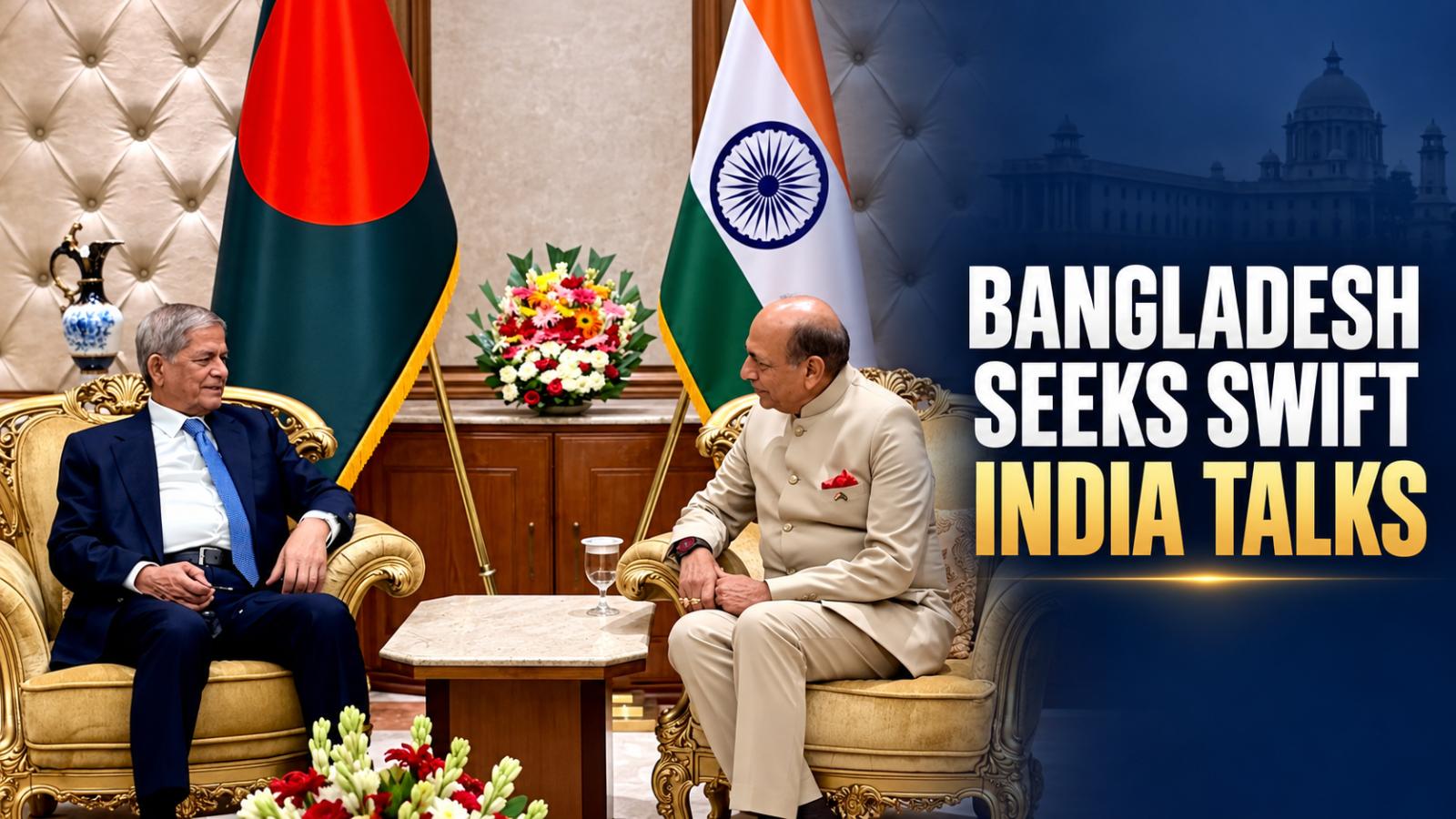
Bangladesh President Mirza Fakhrul Islam Alamgir has called for the swift resolution of outstanding issues with India through dialogue, saying fair and mutually acceptable solutions would strengthen trust between the neighbouring countries.
Alamgir made the remarks when Indian High Commissioner Dinesh Trivedi paid a courtesy call on him at Bangabhaban in Dhaka on Tuesday. According to Bangabhaban officials, Trivedi was the first foreign envoy to meet the president after he assumed office on August 21.
The Indian envoy congratulated Alamgir and conveyed his best wishes for the president’s service to the people of Bangladesh. The two sides highlighted the relationship’s foundations in shared history, cultural connections and strong people-to-people links.
Alamgir, the long-serving former secretary general of the ruling Bangladesh Nationalist Party, became the country’s 23rd president following a parliamentary election. His meeting with Trivedi signals an effort to maintain high-level communication during a sensitive period in India-Bangladesh relations.
Bangladesh India Talks Focus on Teesta and Ganges WatersWater sharing emerged as one of the central subjects of the meeting. Alamgir urged India to take effective measures to ensure Bangladesh receives what he described as a fair share of water from common rivers, including the Teesta and Ganges.
The management of shared rivers has remained a complex bilateral issue because both countries depend on cross-border water systems for agriculture, livelihoods and environmental security.
President’s Press Secretary Md Sarwar Alam said the Indian envoy indicated that New Delhi was taking positive measures regarding the matter. No new agreement or implementation schedule was announced during the meeting.
Alamgir argued that resolving issues of mutual concern fairly would increase confidence among citizens of both nations. He said Bangladesh was interested in developing a forward-looking and mutually beneficial partnership while protecting sovereign equality, national interests, dignity and public welfare. Bangladesh’s state-run news agency reported that both sides supported deeper cooperation built on respect and trust.
Bilateral Trade and Connectivity Offer Scope for GrowthThe president described India as Bangladesh’s closest neighbour and an important trade and development partner. He said the two countries had considerable scope to expand cooperation in commerce, technology, connectivity, culture, water management and people-to-people exchanges.
Alamgir maintained that the capabilities of both populations could be used more effectively to promote shared peace, development and prosperity.
Trivedi reiterated India’s commitment to broadening the bilateral partnership on the basis of mutual respect, confidence and cooperation. India’s mission in Dhaka said the discussions underscored the deep-rooted ties connecting the two countries.
Later, the high commissioner met Shipping, Railways, Road Transport and Bridges Minister Sheikh Rabiul Alam. State Minister for Roads, Highways and Railways Habibur Rashid also attended.
Those talks covered railway links, shipping, bilateral development programmes and transport connectivity. Both sides described improved connectivity as an important driver of economic engagement and closer contact between their citizens.
Dhaka New Delhi Relations Face a Delicate ResetThe meetings come as India and Bangladesh attempt to stabilise relations after a period of strain following former prime minister Sheikh Hasina’s removal during the 2024 youth-led uprising and her subsequent stay in India.
Hasina’s presence in India and Dhaka’s request for her extradition have remained sensitive diplomatic issues. However, recent meetings involving Trivedi and senior members of Bangladesh’s new political leadership suggest that both governments want to keep communication channels open.
The envoy previously met Prime Minister Tarique Rahman, who called for a conducive environment to deepen bilateral ties. That meeting highlighted the opportunities available to the neighbours as well as the political difficulties that must be managed.
Alamgir said he hoped bilateral relations would become more positive, productive and focused on the welfare of ordinary people during his tenure. Turning those diplomatic statements into progress will depend on continued negotiations over river waters, trade barriers, security concerns and cross-border connectivity.
The latest meeting did not produce a major agreement, but it established priorities for future engagement. For Dhaka and New Delhi, resolving long-standing disputes while expanding practical cooperation could determine whether the current diplomatic reset gains lasting momentum.