
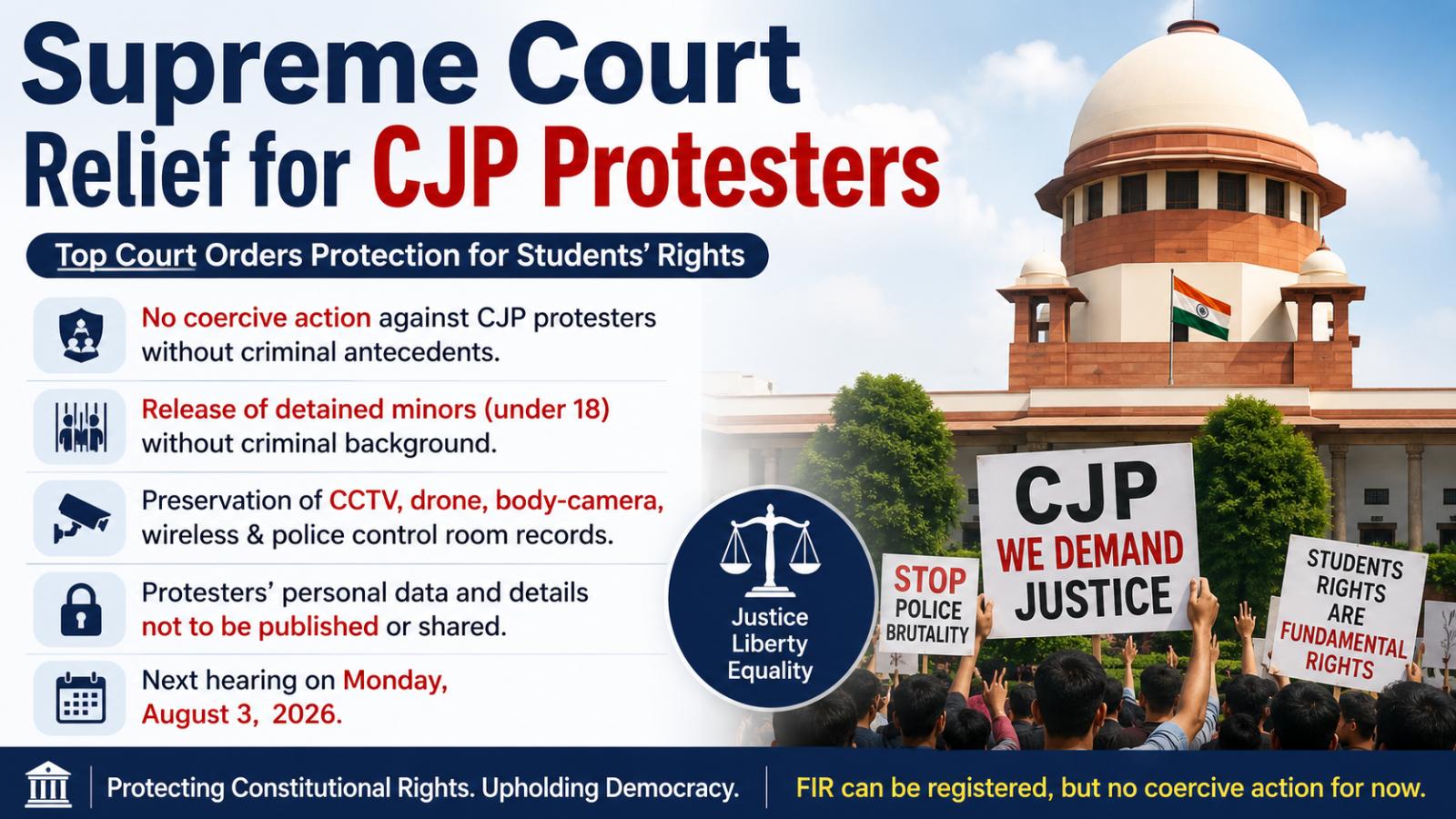
Supreme Court CJP Protest Order: No Coercive Action Against Students
The Supreme Court has directed states to avoid coercive action against CJP protesters without criminal antecedents and release eligible detainees. It also ordered the preservation of protest footage, police records, and protesters’ personal data.
Court Grants Interim Relief and Protects Protest Evidence
The Supreme Court has allowed investigations into FIRs linked to the CJP-led student protests to continue but barred coercive measures against protesting students without criminal antecedents. It also ordered the release of eligible minors and preservation of digital evidence.
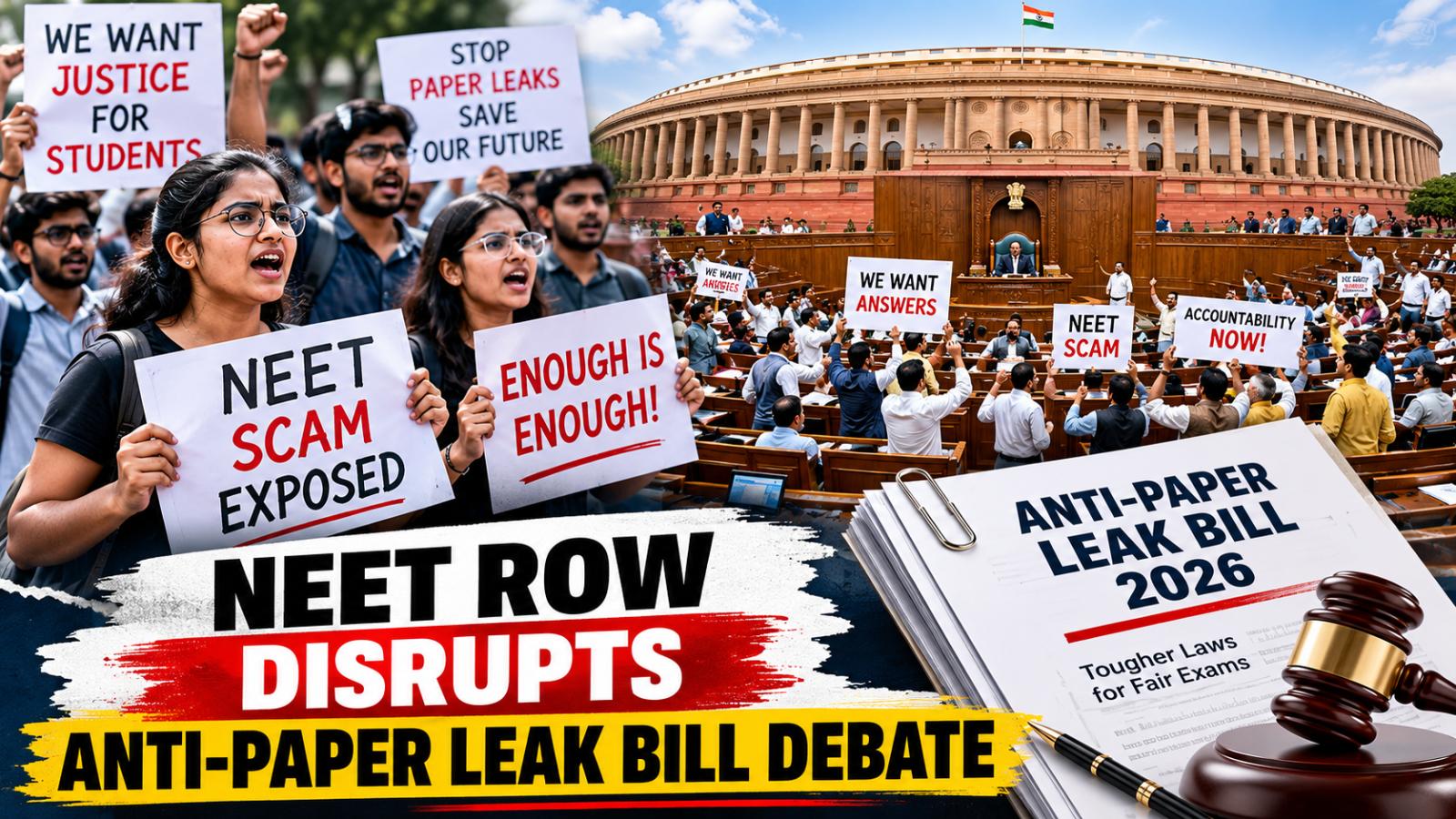
New Delhi, July 29, 2026: The Supreme Court CJP protest order has given interim protection to students facing police cases following demonstrations over the alleged NEET-UG 2026 paper leak.
A three-judge bench headed by Chief Justice of India Surya Kant said Delhi Police and authorities in other states may continue investigating registered First Information Reports. However, no coercive measures should be taken against protesting students for the time being.
The protection will not apply to people with criminal antecedents, the court clarified.
Supreme Court CJP Protest Order Covers Detained Minors
The court specifically directed states to release children below the age of 18 who were arrested or detained in connection with the protests, provided they do not have any criminal antecedents.
Where required, the minors may be released after they or their family members execute a simple bond. The direction is therefore not a blanket order releasing every detained adult without a previous criminal case. It applies expressly to eligible detainees under 18.
The interim directions came during the hearing of several petitions filed under Article 32 of the Constitution. The petitions raised allegations of excessive police force during student demonstrations that began in Delhi and later spread to Maharashtra, Bihar, Assam, Uttar Pradesh, Madhya Pradesh, West Bengal, and Kerala.
The petitioners alleged that the actions violated rights protected under Articles 14, 19, 21, and 22 of the Constitution.
Petitions Allege Excessive Force During Student Protests
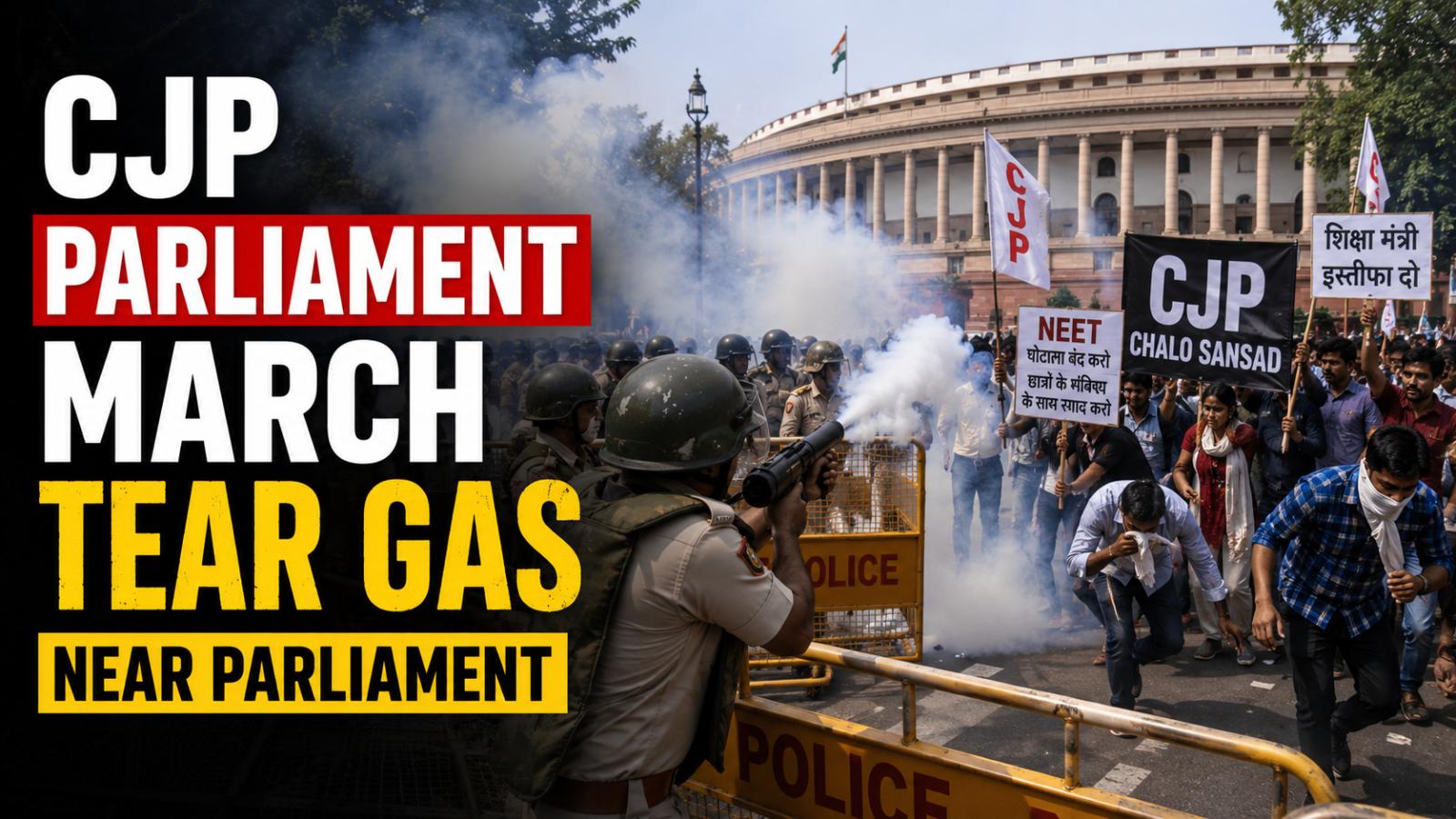
According to the court record, the petitioners placed material alleging the use of lathis, pellet guns, rubber bullets, tear gas and electronic batons against protesters.
The petitions also alleged that some demonstrators suffered serious injuries and that a member of the media was assaulted. These remain allegations placed before the court and have not yet been established through an independent investigation.
Lawyers representing injured police personnel presented a different account. They alleged that some protesters or other people who entered the protest sites threw stones and committed acts of violence, causing injuries to police officers.
The Union government and the Delhi administration denied that police personnel had committed excesses. Solicitor General Tushar Mehta, however, told the court that the authorities had no objection to an independent and fair investigation into the incidents.
Court Sees Case for Independent Investigation
The bench observed that the material placed before it prima facie presented a compelling case for an independent and impartial investigation. Such an inquiry, it said, should examine allegations raised by both protesters and injured police personnel.
Before issuing a final direction on the proposed inquiry, the court gave the Union government and the Delhi administration time to file affidavits with relevant material.
Notices were also issued to the chief secretaries of Maharashtra, Bihar, Assam, Uttar Pradesh, Madhya Pradesh, West Bengal and Kerala. The advocate generals or standing counsel representing these states were asked to appear online at the next hearing.
CCTV, Drone, and Body-Camera Records to Be Preserved
As an interim safeguard, the Supreme Court directed authorities to preserve CCTV footage, drone recordings, body-worn camera footage, videography, wireless communications, and police control room records connected with the student protests.
Police and other authorities were also instructed to safeguard the personal information and digital data collected from protesters. The data must not be disclosed in the public domain for the time being.
The court further said that authorities should not publish personal details or other public data identifying protesters, particularly students.
The matter has been listed for further consideration on Monday, August 3, 2026. Until then, FIR investigations may continue, but the interim restrictions on coercive action and the directions concerning evidence preservation will remain important safeguards in the protest-related cases