
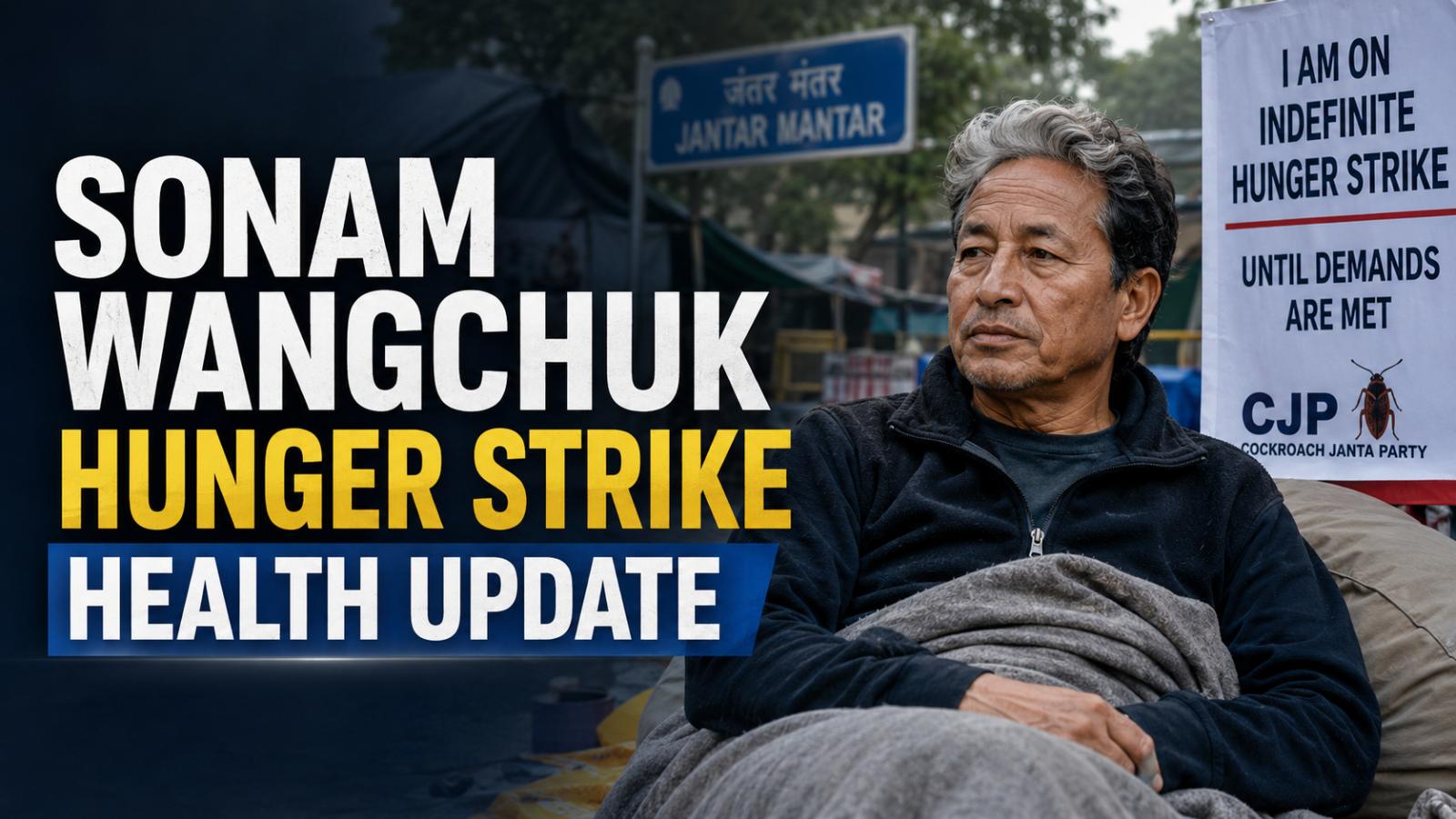
Sonam Wangchuk Refuses to End Fast as Health Concerns Deepen
New Delhi, July 16, 2026: Activist and education reformer Sonam Wangchuk continued his indefinite hunger strike at Jantar Mantar on Thursday, with the protest entering its 19th day amid growing concern over his health.
Wangchuk began the fast on June 28 in solidarity with the youth-led Cockroach Janta Party, or CJP. The group is protesting alleged irregularities in competitive examinations and demanding the resignation of Union Education Minister Dharmendra Pradhan.
Wangchuk Loses Around Nine Kilograms
Medical updates shared from the protest site indicated that Wangchuk had lost approximately nine kilograms since beginning the hunger strike. Doctors and organisers have expressed concern about increasing physical weakness and muscle loss as the prolonged fast continues.
Wangchuk said medical examinations, including an electrocardiogram, had not shown an immediate emergency. However, he acknowledged that his muscles were becoming weaker and that his overall physical condition was not good.
Despite appeals from political leaders, public figures, and supporters, Wangchuk ruled out ending the fast without a response from the government. He argued that withdrawing the protest without dialogue or accountability would send the wrong message to those demanding reforms.
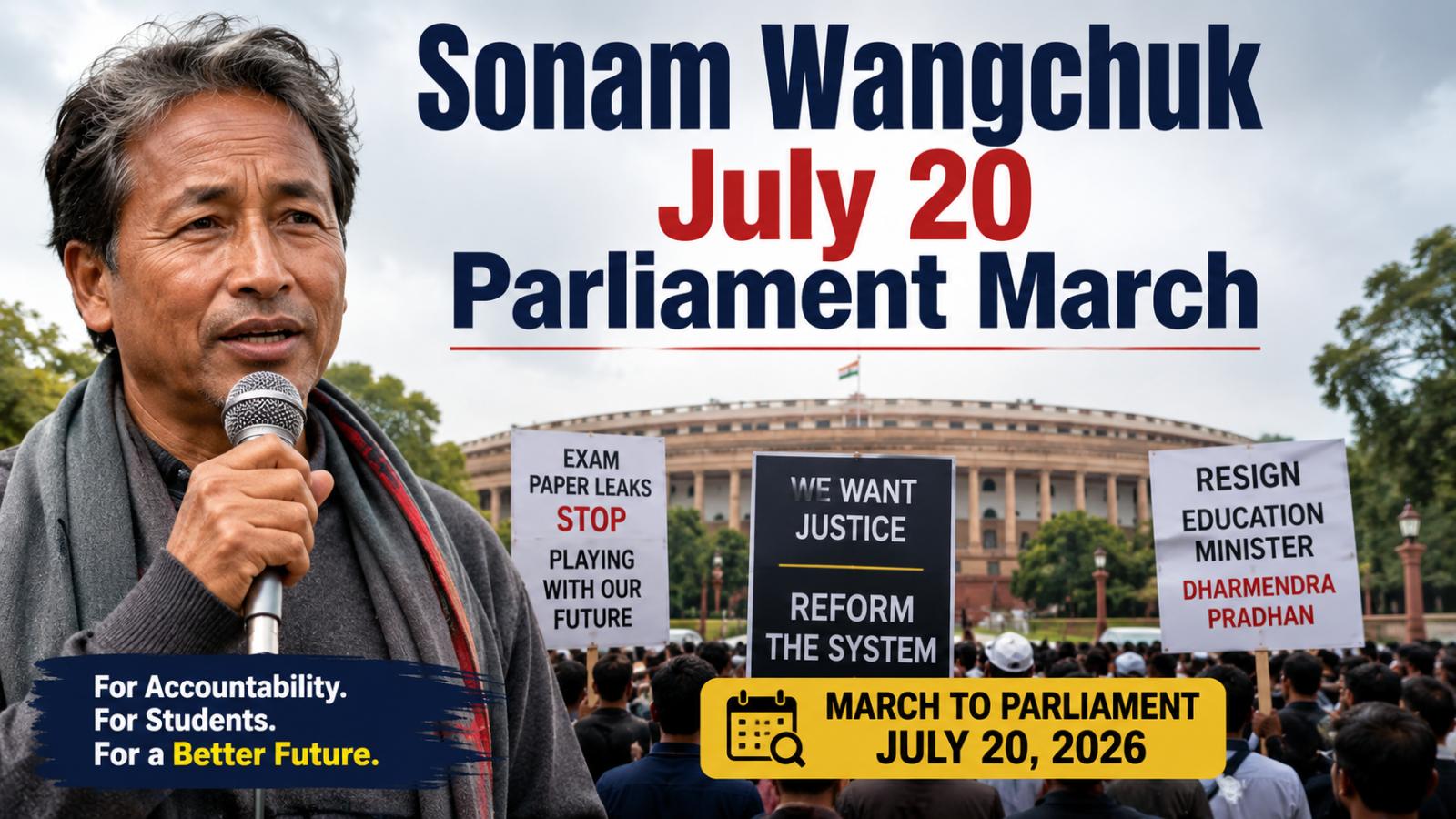
He instead urged supporters to focus on strengthening the movement and participating in the proposed march towards Parliament on July 20.
Protest Demands Accountability Over Examination Problems
The CJP movement has raised concerns over alleged paper leaks, marking errors, and other problems affecting competitive and entrance examinations. Its central demand is the resignation of Education Minister Dharmendra Pradhan, along with broader reforms aimed at improving transparency and accountability in the examination system.
The movement has particularly highlighted the impact of examination disruptions on students preparing for medical and other competitive courses. Protesters argue that repeated controversies have damaged confidence in institutions responsible for conducting major examinations.
These remain allegations and political demands made by the protesters. Responsibility for any specific examination failure would need to be established through official investigations, judicial proceedings or government findings.
The CJP initially organised demonstrations at Jantar Mantar in early June. Wangchuk later began his indefinite fast after joining the campaign and expressing support for its peaceful approach.
Delhi High Court Examines Health Concerns
Wangchuk’s declining health has also reached the Delhi High Court through a public interest litigation seeking urgent medical intervention.
The petition requested that the Centre and Delhi government ensure proper medical treatment and consider shifting him to a government hospital. It also sought liquid nutrition or force-feeding if doctors considered such intervention necessary to protect his life.
The High Court sought responses from the Centre and the Delhi government while treating the matter as urgent. The legal proceedings primarily focus on Wangchuk’s health and medical care, rather than on addressing the political demands raised by the protesters.
Wangchuk, however, disputed claims that he was facing an immediate threat to his life. He said that although he had become physically weak, his recent test results and heart condition were stable.
One-Day Solidarity Fast Held on July 16
The CJP called for a one-day nationwide solidarity hunger strike on July 16. Supporters were encouraged to participate from different locations and share images of empty plates online to draw attention to the campaign.
The solidarity programme was organised as concern over Wangchuk’s condition increased, and the main hunger strike continued without a formal resolution.
The protest has also attracted support from students, civil society representatives, actors, and opposition politicians. Several supporters have endorsed the demand for examination reforms while simultaneously urging Wangchuk to protect his health.
CJP Plans Parliament March on July 20
The next major development is expected on July 20, when the CJP plans to march from Jantar Mantar towards Parliament. The date coincides with the opening of the Monsoon Session.
Organisers say the march will remain peaceful and will focus on student concerns, examination accountability, and the demand for government engagement. Wangchuk has asked students and supporters to join the programme rather than repeatedly requesting that he end his fast.
The CJP has claimed that a large number of supporters have indicated their intention to participate. However, the actual turnout and the route permitted by Delhi Police will become clear only when the demonstration takes place.
Government Dialogue Remains Central Demand
At the time of publication, protesters stated that they had not yet received the direct government dialogue they were seeking. The lack of engagement has become a central part of Wangchuk’s justification for continuing the hunger strike.
Attention will now remain on Wangchuk’s medical condition, the Delhi High Court proceedings, and preparations for the July 20 march.
Whether the government opens formal talks or announces a response to the examination-related demands could determine the next phase of the protest.