
Viksit Bharat Review Focuses on Reforms and Technology
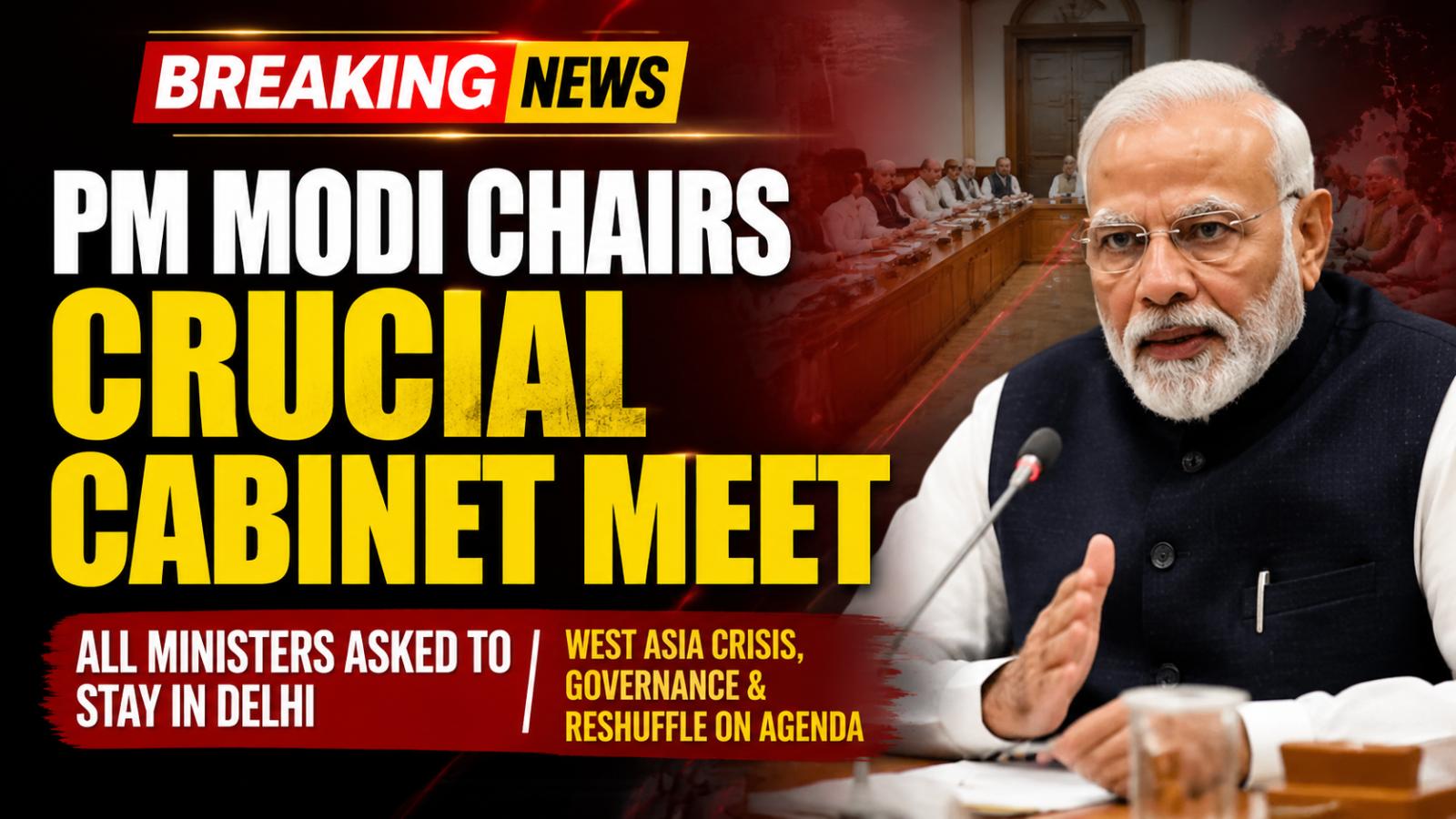
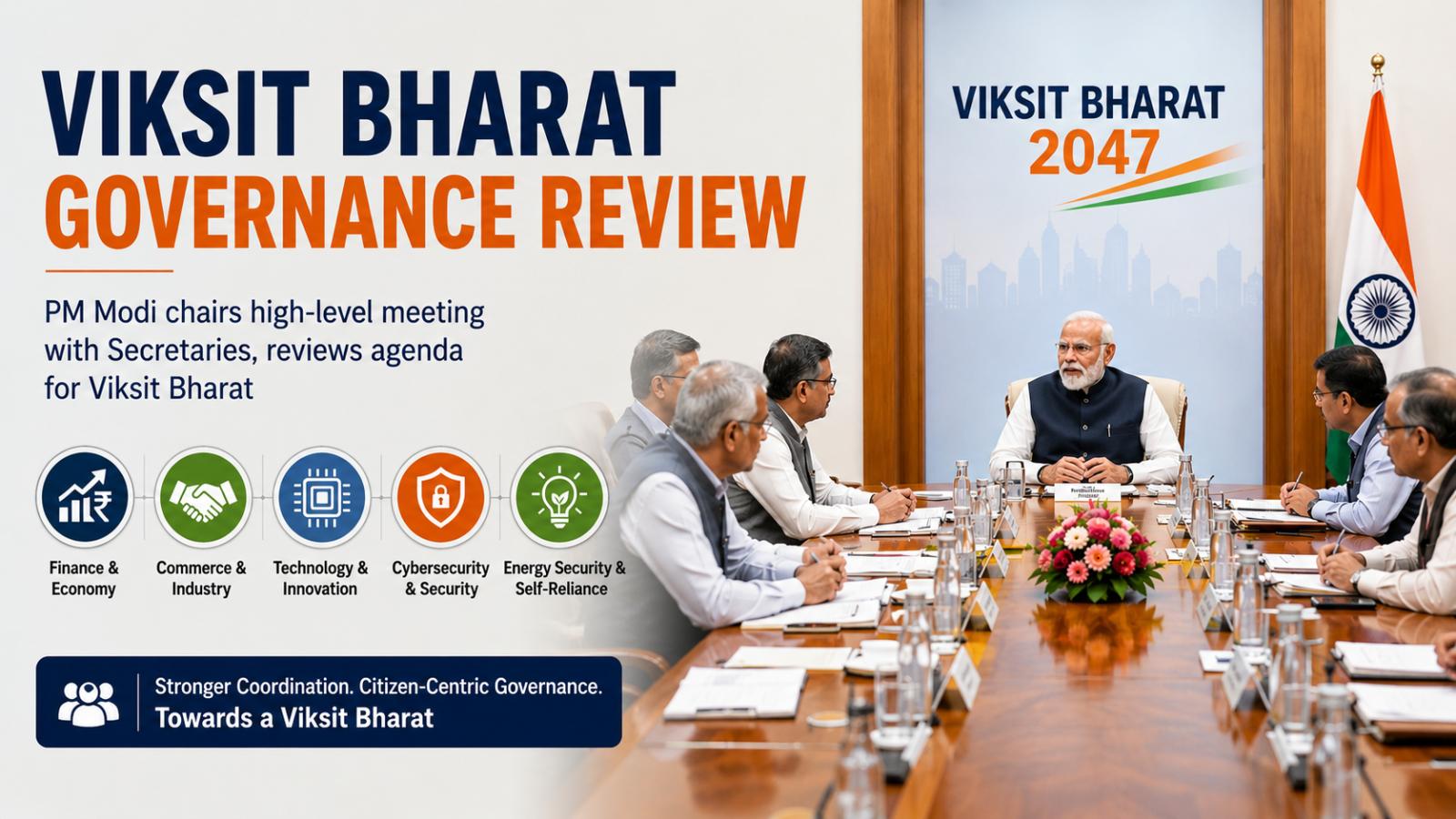
Prime Minister Narendra Modi chaired a high-level meeting with government Secretaries to review the Viksit Bharat agenda. Discussions covered economic growth, inter-ministerial coordination, indigenous technology, energy security, cybersecurity, institutional reforms, and citizen-centric governance.
PM Modi Viksit Bharat Secretaries Meeting Focuses on Reforms
Prime Minister Narendra Modi chaired the second high-level meeting with Secretaries to the Government of India on Tuesday, July 28, 2026, to review the future action agenda for ministries handling finance, the economy, commerce, industry, and technology.
The PM Modi Viksit Bharat Secretaries meeting focused on faster implementation, stronger coordination, and policy priorities connected with India’s developed-nation goals.
PM Modi Viksit Bharat Secretaries Meeting Reviews Key Priorities
The meeting was held at the Prime Minister’s residence at 7, Lok Kalyan Marg in New Delhi. According to a government statement released by the Press Information Bureau at 8:48 pm IST, Secretaries discussed key initiatives, emerging opportunities, and implementation challenges across the three sectors.
Prime Minister Modi asked ministries and departments to work with a shared sense of purpose and deliver integrated outcomes. He stressed that both horizontal and vertical silos within the government must be removed so that departments can coordinate more effectively.
The Prime Minister also said citizens should remain at the centre of governance and policymaking. Decisions, reforms, and administrative processes, he said, should reflect the needs and aspirations of people rather than operate only as internal government exercises.
Technology Self-Reliance and Domestic Capabilities
A major part of the discussion focused on technological self-reliance. Modi said India’s large investments in infrastructure should be matched by efforts to strengthen domestic capabilities in critical technologies.
The emphasis indicates that policy implementation will need to focus not only on physical infrastructure but also on research, manufacturing, innovation, and Indian technological capacity. The government statement highlighted the importance of reducing dependence in strategic sectors and creating stronger domestic systems.
Energy security was also linked with national security, economic stability, and public welfare. The Prime Minister called for innovation, diversification, and faster capacity creation to improve India’s self-reliance in the energy sector.
The remarks place domestic energy capacity alongside technology and infrastructure as an important part of the broader Viksit Bharat development agenda.
Cybersecurity Ecosystem and Future Skills
The meeting also reviewed India’s cybersecurity requirements as digital systems become increasingly important to governance, business, and public services.
Modi called for constant vigilance against emerging cyber threats and encouraged greater participation by young innovators and entrepreneurs. He said the cybersecurity ecosystem should develop into a nationwide movement.
Such an approach would require stronger cooperation among government institutions, technology companies, startups, educational institutions, and skilled professionals.
The Prime Minister also called for new academic courses to be planned in partnership with industry. The objective is to prepare students and workers for emerging sectors while ensuring that education and training programmes remain connected to future employment requirements.
Reforms, Communication, and Institutional Efficiency
Modi described reform as a continuous requirement for effective governance. He called for improvements in government processes, work culture, and institutional efficiency so that departments can respond more quickly to changing challenges and opportunities.
The Prime Minister also stressed proactive communication in strategic sectors. He said public outreach was necessary to address misinformation and unfounded concerns surrounding major national initiatives.
He further observed that the government must remain youthful, dynamic, and forward-looking. Departments, he said, should continuously adapt to changing circumstances through agility and innovation.
The meeting was attended by the Cabinet Secretary, Secretaries of key ministries and departments, and senior officials from the Prime Minister’s Office. Officials shared their experiences and views on ongoing programmes, future priorities, and barriers affecting implementation.
Taken together, the discussions indicate that the Viksit Bharat agenda is being framed around coordinated governance, domestic technological capacity, energy resilience, cybersecurity, workforce development and continuous administrative reform. The next stage will depend on how ministries convert these priorities into measurable outcomes and citizen-focused delivery.