
The Udhayanidhi Stalin arrest over alleged Trisha remarks has intensified Tamil Nadu politics. The Tamil Nadu police case, TVK and BJP criticism, DMK political vendetta claim and Cauvery protest controversy have moved the row to the centre of public debate.
Tamil Nadu police case follows Trisha remarks row
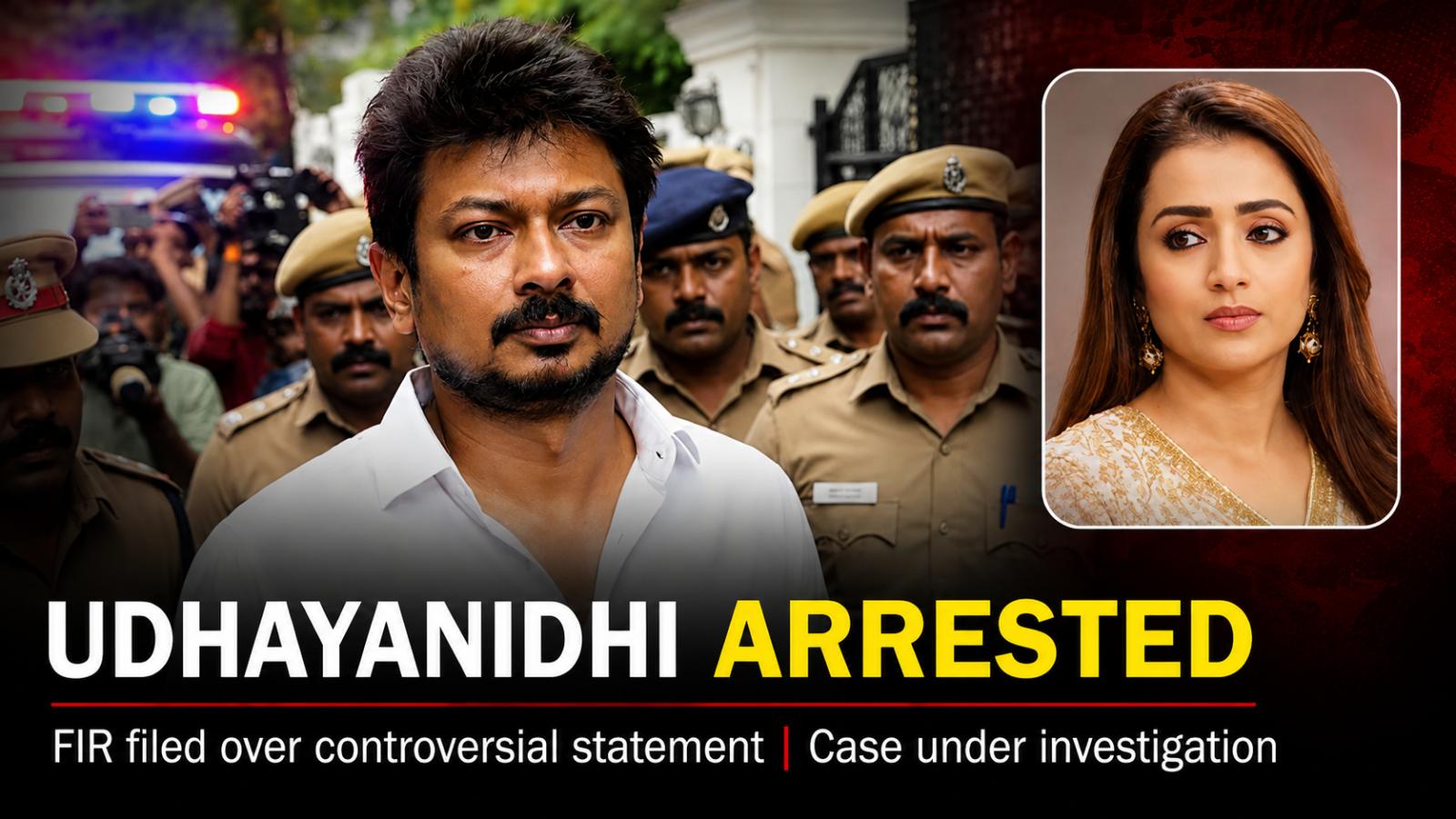
Tamil Nadu Police arrested DMK leader and Leader of the Opposition Udhayanidhi Stalin on August 4 following a case concerning remarks made during a Cauvery water protest in Thanjavur. The comments were widely interpreted as a double entendre involving actor Trisha and Tamil Nadu Chief Minister C Joseph Vijay.
The controversy began while Udhayanidhi was criticising the state government over its handling of the Cauvery water dispute. When people in the gathering reportedly chanted Trisha’s name, he paused and responded with a remark that political opponents described as vulgar and derogatory. A video of the exchange circulated widely and triggered criticism across Tamil Nadu.
Police arrived at Udhayanidhi’s Chennai residence after the case was registered. He was initially detained and later formally arrested. While being taken away, Udhayanidhi denied making any improper statement and maintained that he had not named anyone apart from the chief minister. He described the police action as vengeful and said the court should decide whether he had committed an offence.
The case reportedly includes provisions of the Bharatiya Nyaya Sanhita dealing with insulting the modesty of a woman, intentional insult, criminal intimidation, conspiracy and acts prejudicial to harmony. Provisions of the Tamil Nadu Prohibition of Harassment of Women Act and the Information Technology Act were also invoked. These remain allegations and must be tested through the legal process.
TVK and BJP criticism meets DMK political vendetta claim
The ruling TVK submitted complaints to the police and the National Commission for Women, seeking action over the speech. TVK leaders accused Udhayanidhi of lowering the standard of political discourse and using language that disrespected women. They argued that political disagreements should not involve personal or suggestive references to women who are not part of the dispute.
BJP leaders also condemned the remarks. Tamil Nadu BJP representatives described the comment as objectionable and demanded accountability. BJP leader Khushbu Sundar called upon Udhayanidhi to issue an unconditional public apology to Trisha.
The DMK defended its leader and accused the Tamil Nadu government of using the controversy to target the opposition. DMK MP Kanimozhi alleged that the arrest was intended to prevent Udhayanidhi from attending the Assembly session. Other party leaders claimed the row was being amplified to divert attention from the Cauvery dispute and the problems faced by farmers in Tamil Nadu’s delta region.
The arrest led to protests by DMK workers and intensified the confrontation between the ruling TVK and the opposition DMK. Although the political reactions have been strong, the legal merits of the charges have not yet been determined. The courts will ultimately decide whether Udhayanidhi’s remarks constitute offences under the provisions cited by police.
Tamil Nadu police case follows Trisha remarks row
Tamil Nadu Police arrested DMK leader and Leader of the Opposition Udhayanidhi Stalin on August 4 following a case concerning remarks made during a Cauvery water protest in Thanjavur. The comments were widely interpreted as a double entendre involving actor Trisha and Tamil Nadu Chief Minister C Joseph Vijay.
The controversy began while Udhayanidhi was criticising the state government over its handling of the Cauvery water dispute. When people in the gathering reportedly chanted Trisha’s name, he paused and responded with a remark that political opponents described as vulgar and derogatory. A video of the exchange circulated widely and triggered criticism across Tamil Nadu.
Police arrived at Udhayanidhi’s Chennai residence after the case was registered. He was initially detained and later formally arrested. While being taken away, Udhayanidhi denied making any improper statement and maintained that he had not named anyone apart from the chief minister. He described the police action as vengeful and said the court should decide whether he had committed an offence.
The case reportedly includes provisions of the Bharatiya Nyaya Sanhita dealing with insulting the modesty of a woman, intentional insult, criminal intimidation, conspiracy and acts prejudicial to harmony. Provisions of the Tamil Nadu Prohibition of Harassment of Women Act and the Information Technology Act were also invoked. These remain allegations and must be tested through the legal process.
TVK and BJP criticism meets DMK political vendetta claim
The ruling TVK submitted complaints to the police and the National Commission for Women, seeking action over the speech. TVK leaders accused Udhayanidhi of lowering the standard of political discourse and using language that disrespected women. They argued that political disagreements should not involve personal or suggestive references to women who are not part of the dispute.
BJP leaders also condemned the remarks. Tamil Nadu BJP representatives described the comment as objectionable and demanded accountability. BJP leader Khushbu Sundar called upon Udhayanidhi to issue an unconditional public apology to Trisha.
The DMK defended its leader and accused the Tamil Nadu government of using the controversy to target the opposition. DMK MP Kanimozhi alleged that the arrest was intended to prevent Udhayanidhi from attending the Assembly session. Other party leaders claimed the row was being amplified to divert attention from the Cauvery dispute and the problems faced by farmers in Tamil Nadu’s delta region.
The arrest led to protests by DMK workers and intensified the confrontation between the ruling TVK and the opposition DMK. Although the political reactions have been strong, the legal merits of the charges have not yet been determined. The courts will ultimately decide whether Udhayanidhi’s remarks constitute offences under the provisions cited by police.