
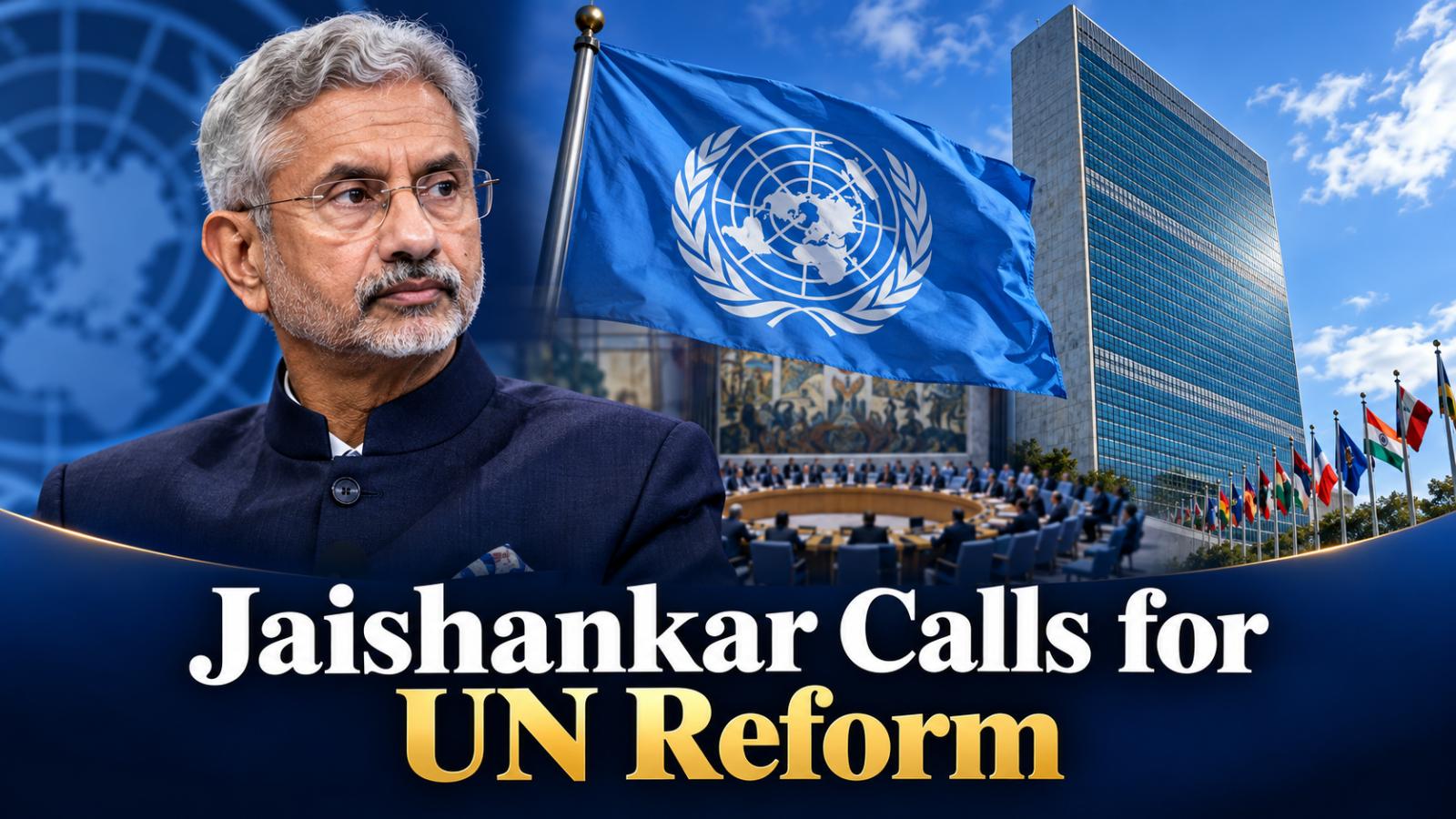
External Affairs Minister S. Jaishankar has called for reforms to the United Nations, saying the organisation has become “largely irrelevant” to decision-making on major global challenges because of persistent divisions within its Security Council.
Speaking at the fifth Kautilya Economic Conclave in New Delhi on Monday, October 5, he argued that the world body’s decision-making structure no longer adequately represents the international community. His remarks underlined India’s continuing push for a more representative and effective UN Security Council.
Security Council gridlock limits UN effectiveness
Jaishankar cited conflicts in the Gulf, Ukraine and Africa, along with the COVID-19 pandemic, while questioning the UN’s influence over major international decisions. He attributed much of the problem to deadlock within the Security Council. In his assessment, the inability to reach agreement on critical issues has weakened the organisation’s effectiveness when coordinated international action is needed.
The minister also highlighted the gap between the UN’s expanding membership and its largely unchanged leadership structure. He noted that the organisation began with 51 members and now has almost four times that number, arguing that its governing arrangements must evolve accordingly.
Africa’s position features in reform debate
Jaishankar said some countries opposing reform were invoking Africa’s interests as a reason to resist changes. He did not identify those countries in the remarks provided. According to the minister, Africa has already presented a clear position through intergovernmental negotiations, outlining the changes it wants to see. He questioned the use of African interests to obstruct reform when African countries have articulated their own demands.
His comments placed broader representation at the centre of the debate, particularly the need for international institutions to reflect the interests of countries whose role in global affairs has grown.
Jaishankar urges efforts to strengthen the UN
Despite his criticism, Jaishankar acknowledged the UN’s contribution to the international community and stressed that it remains necessary. He said the priority should be repairing the organisation and improving its ability to function. His remarks framed reform as a way to restore the UN’s effectiveness and ensure that it can respond more meaningfully to contemporary challenges. He also said the organisation itself must contribute to that process, rather than allowing concerns about its relevance and decision-making capacity to remain unresolved.
India continues diplomatic push for reform
India is pursuing comprehensive UN reform through intergovernmental negotiations and cooperation with other member states. New Delhi works with Japan, Brazil and Germany through the G4 grouping to build support for expanding the Security Council. It also engages with the L.69 Group, which brings together developing countries from Asia, Africa and Latin America.
Outreach to countries of the Global South forms another part of India’s efforts to strengthen support for changes to the institution. Any restructuring of the Security Council would require amendments to the UN Charter. Jaishankar’s remarks reinforce India’s argument that broader representation and more effective decision-making are essential to maintaining the UN’s role in international affairs.