
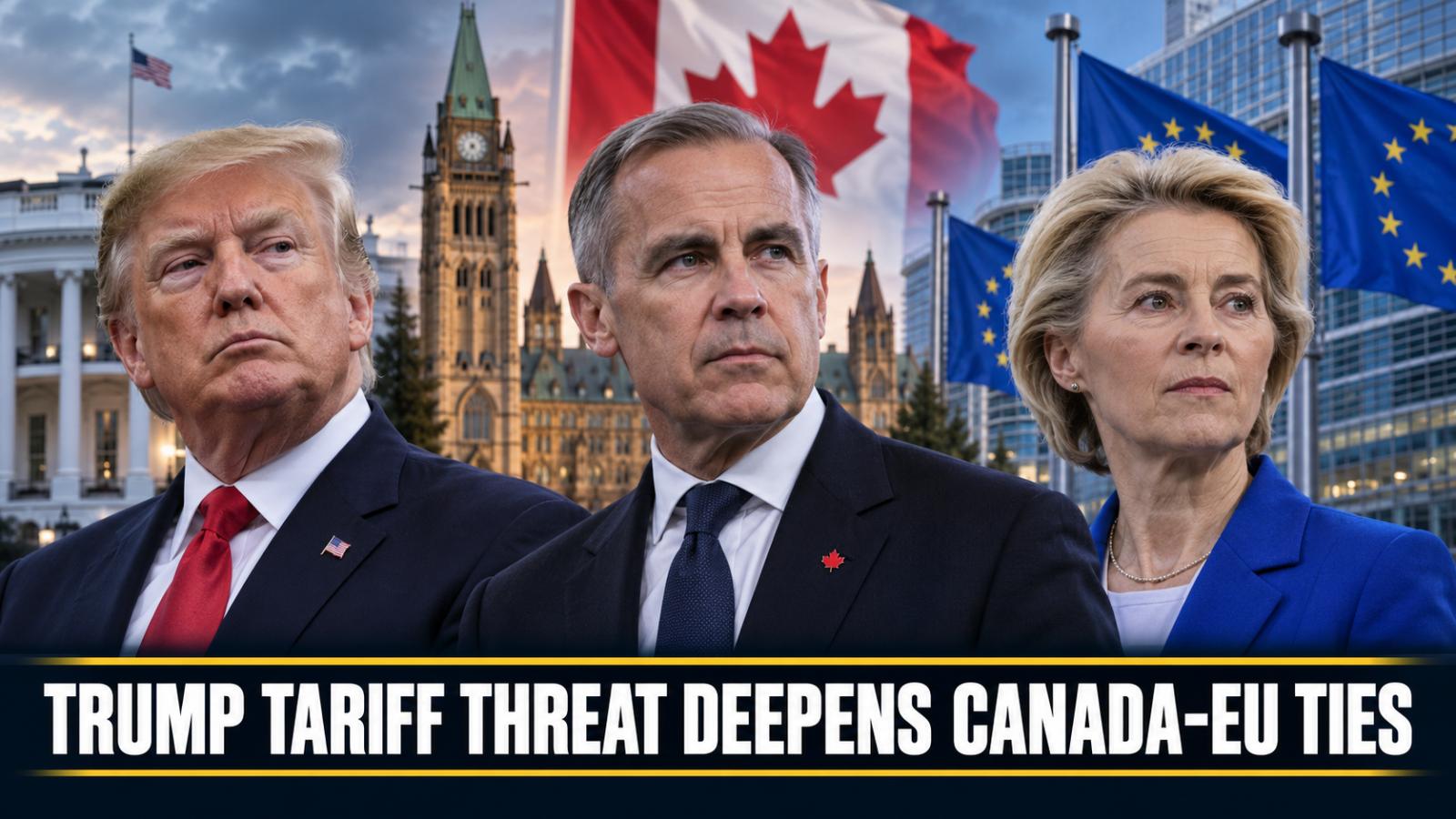
Canada’s growing engagement with the European Union has opened a new chapter in its strained relationship with the United States, as Prime Minister Mark Carney seeks stronger economic and strategic partnerships beyond North America.
European Commission President Ursula von der Leyen proposed developing an “associate member” arrangement with Canada, although no such formal status currently exists within the EU. Addressing the European Parliament in Strasbourg, Carney welcomed the ambition behind the proposal but clarified that Canada was neither seeking full EU membership nor attempting to create a rival geopolitical bloc.
The development comes amid prolonged trade tensions between Ottawa and Washington. US President Donald Trump has repeatedly spoken about bringing Canada closer to the United States, even suggesting that it could become America’s 51st state. However, tariff disputes, political taunts and pressure from Washington appear to have strengthened Canada’s efforts to diversify its international relationships.
Trump responded to the proposed Canada-EU arrangement by warning that the United States could impose heavy tariffs on Europe if the partnership was judged to be hostile to American interests. He said Washington would accept an agreement made with good intentions but could retaliate if it viewed the initiative as an unfriendly move.
Canada seeks resilience through stronger EU ties
Carney said closer cooperation with Europe would be aimed at improving Canada’s resilience, sovereignty and economic independence. He rejected suggestions that Ottawa wanted to create a competing global power centre, saying Canada and Europe should instead work together to protect open markets, democratic institutions and national sovereignty.
The Canadian leader identified energy security, critical minerals, defence manufacturing, payments and artificial intelligence as areas with significant potential for cooperation. Canada could help meet Europe’s demand for liquefied natural gas, hydrogen, fertiliser, crude oil and strategically important minerals.
Carney also called for greater Canadian participation in European education and research initiatives, including Erasmus+ and Horizon Europe. He proposed expanding opportunities for young Canadians and Europeans to live, study and work across the Atlantic. Any final agreement would require further negotiations and parliamentary consideration in Canada. Carney said the substance of the partnership mattered more than the terminology used to describe it. More details could emerge during an EU-Canada investment summit expected to be held in Montreal.
Trade hurdles could complicate new partnership
The proposal has received a cautious response from some European officials because “associate membership” is not an established EU category. Germany has supported a particularly close partnership with Canada but suggested that a different name may be needed for the arrangement.
Canada and the EU already maintain substantial economic ties through the Comprehensive Economic and Trade Agreement, commonly known as CETA. However, the deal has still not been ratified by several EU countries, including France, Italy and Poland. That unfinished process could become a hurdle to any more ambitious political or economic framework.
Trade in goods and services between Canada and the European Union reached approximately €130.8 billion last year, according to European Commission figures. European exports to Canada include vehicles, machinery and pharmaceutical products, while Canada supplies crude oil, fertiliser, critical minerals and base metals.
The proposed partnership could therefore strengthen cooperation in trade, energy, research, defence and technology. It also carries major geopolitical significance as Canada attempts to reduce its vulnerability to economic pressure from its largest trading partner. For now, there is no final Canada-EU alliance or formal membership plan. However, Carney’s positive response and Trump’s tariff warning have transformed the proposal into a fresh test of relations among Ottawa, Brussels and Washington.