
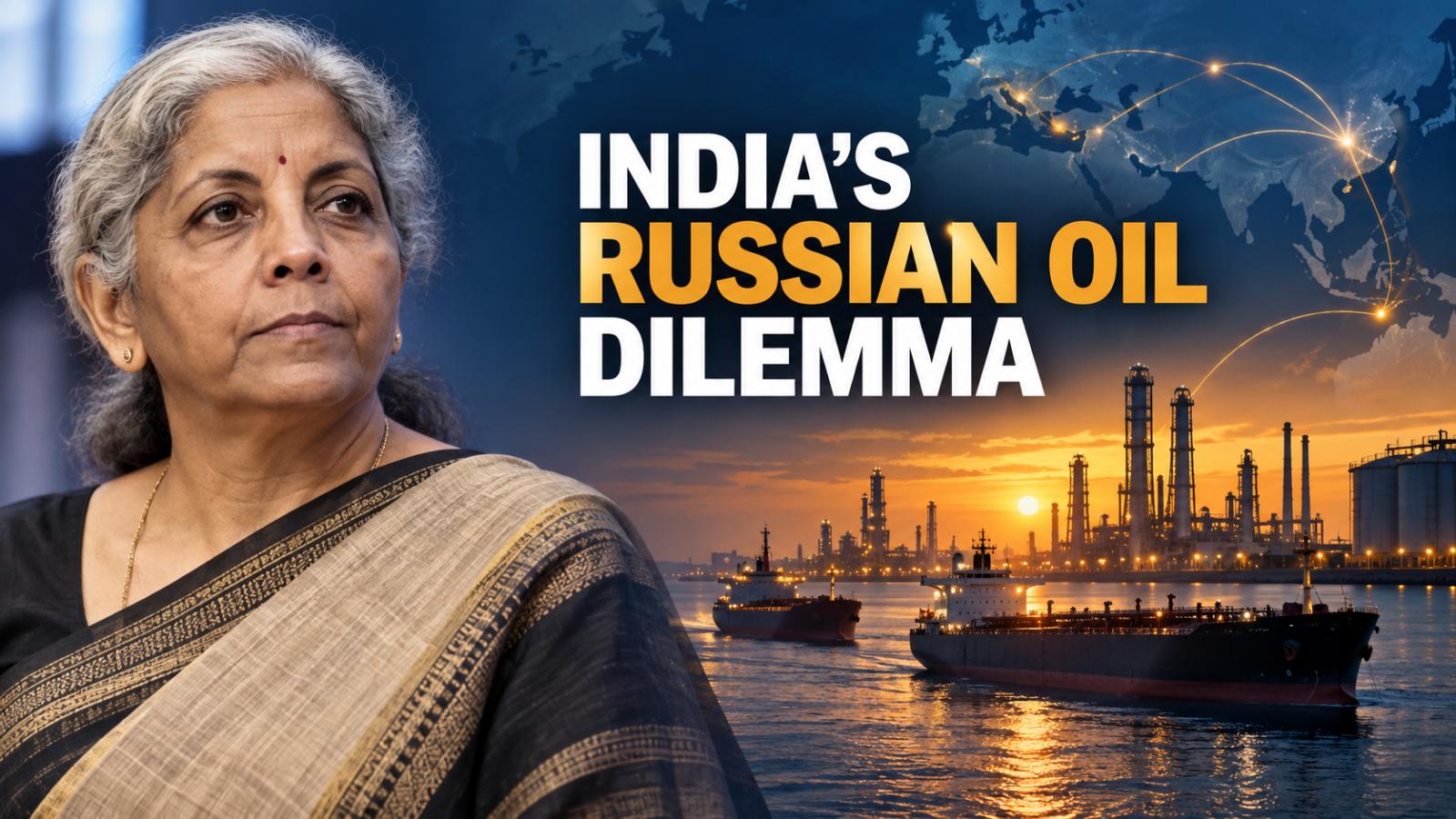
Finance Minister Nirmala Sitharaman has said India cannot simply stop buying Russian crude and replace it with oil from other countries. Speaking at the BusinessLine Changemaker Awards on September 22, she pointed to limited global supply, the risk of higher prices and the need to obtain crude that Indian refineries can process.
Her remarks came as India faces renewed pressure over its energy trade with Russia. US President Donald Trump signed the Lindsey O. Graham Sanctioning Russia and Iran Act on September 18. The law gives the US president authority to impose tariffs of up to 100% on certain major buyers of Russian energy. It does not, by itself, mean that a 100% tariff has been imposed on India.
Sitharaman argued that if a major buyer such as India moved suddenly to other suppliers, it would compete for a limited pool of available crude. That additional demand could push prices higher. She also referred to disruptions affecting supplies from the Gulf as another reason the global market could be difficult to rely on for a rapid replacement.
India is already diversifying its oil purchases, the minister said, but it must secure enough energy to meet domestic demand. Her argument was that any change in sourcing has to account for both the quantity available and the price paid. A decision that appears straightforward in diplomatic terms could have wider costs if replacement supplies are scarce.
The type of crude matters as well as its source. Sitharaman said Indian refiners cannot necessarily process every alternative grade without changes to their operations. Buying oil that is available elsewhere would offer little practical benefit if it does not suit refinery requirements. She said India would continue looking across global markets for supplies that meet its needs.
The minister’s comments set out India’s position as it weighs energy security against the possibility of new US trade measures. The sanctions law creates tariff authority, while any specific use of that authority would require a further US decision. For now, Sitharaman’s message is that India will assess its oil purchases against supply, cost and refinery suitability rather than make an abrupt switch away from Russia.