

Visa Restructures Workforce Despite Strong Business Growth
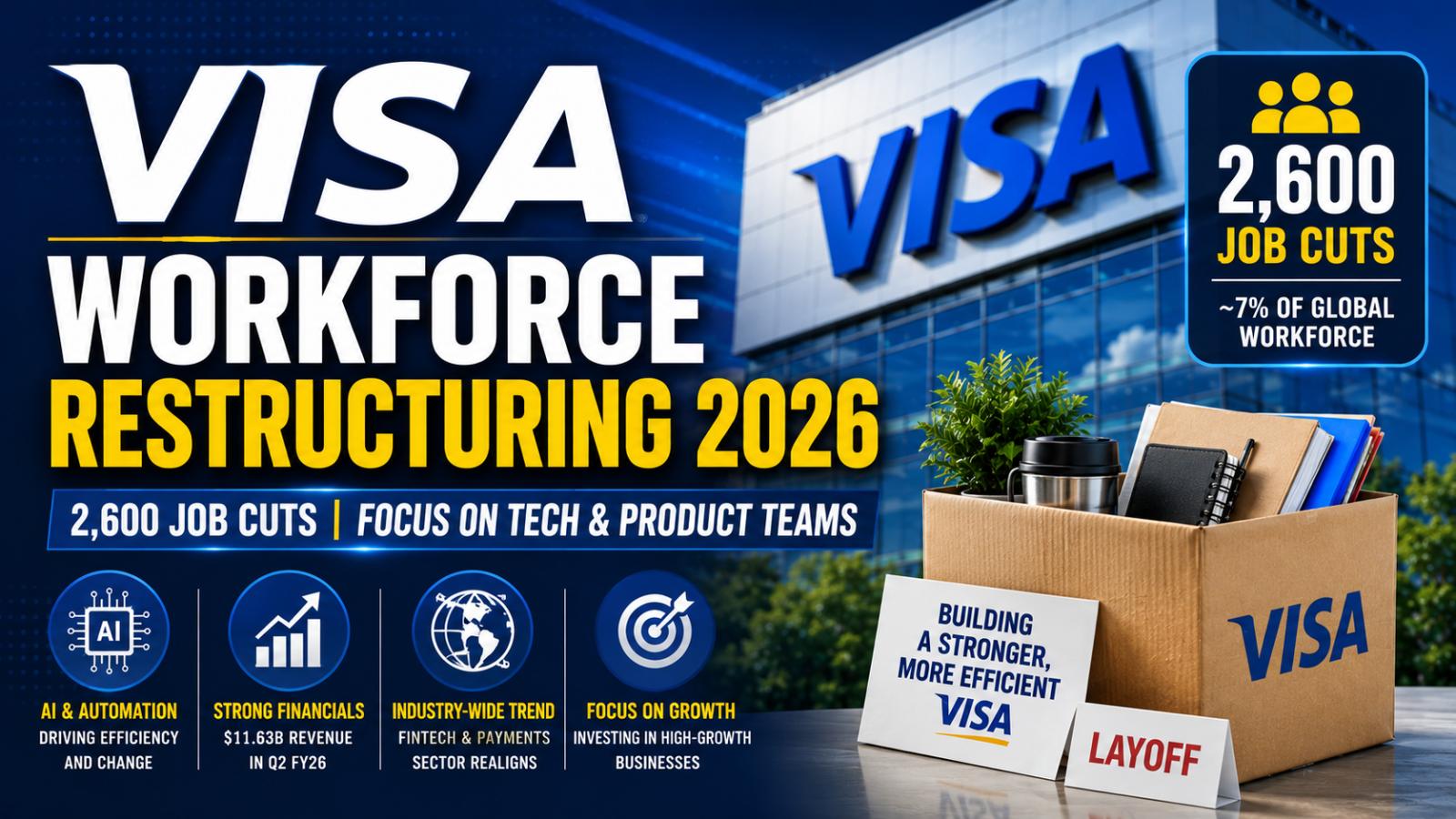
Visa is cutting approximately 2,600 jobs, representing about 7% of its global workforce. Technology and product teams will face most of the reductions as the payment company improves efficiency and redirects resources towards AI and other growth opportunities.
Visa 2,600 Job Cuts in 2026 Target Tech and Product Teams
Visa's 2,600 job cuts in 2026 will primarily affect employees working in the company’s technology and product divisions. The global payment-processing company is reducing approximately 7% of its workforce as part of an effort to improve efficiency and redirect resources towards businesses with stronger growth potential.
Visa confirmed the workforce reduction on Tuesday, July 28, 2026. The announcement comes as major financial technology companies review staffing requirements while increasing their use of artificial intelligence and automation.
Why Visa Is Cutting 2,600 Jobs in 2026
Visa CEO Ryan McInerney told employees that the company must continue changing how it operates to remain competitive in the rapidly evolving payments industry. The restructuring is intended to reduce operating complexity and allow Visa to reinvest in areas offering stronger long-term growth and returns.
Most of the reductions will affect technology and product teams, although positions in other parts of the organisation may also be included. Visa has not released a detailed country-wise breakdown or confirmed how many employees will be affected at individual offices.
The company employed approximately 34,100 people at the end of fiscal 2025, an increase of 8% from the previous financial year. The planned cuts, therefore, represent a substantial reversal after a period of workforce expansion.
How Artificial Intelligence Influenced the Restructuring
Artificial intelligence is playing an important role in Visa’s operational transformation. AI tools are helping employees automate repetitive processes, accelerate product development, and improve productivity across different business functions.
However, Visa has indicated that AI is not the only reason for the workforce reduction. The decision also reflects a wider review of costs, business priorities, and investment allocation. The company is seeking to move resources towards areas it believes can deliver higher growth while adapting its workforce to changing technology requirements.
Visa Reports Strong Earnings Despite Job Cuts
The layoffs were announced even as Visa continued to report strong financial performance. For the quarter ending June 30, 2026, the company recorded adjusted earnings of $3.32 per share, exceeding analysts’ average estimate of $3.23.
Net revenue increased 14% to approximately $11.63 billion, while payment volumes grew 10% in constant-currency terms and crossed $4 trillion for the first time in a single quarter. Processed transactions also increased by 10%, supported by resilient consumer spending and stronger international travel activity.
Visa earns most of its revenue from transactions processed through its network rather than by directly lending money to consumers. This business model gives the company less exposure to borrower defaults than traditional banks and other lending institutions.
Payment and Fintech Companies Reduce Workforces
Visa’s restructuring is part of a wider employment shift across the payments and financial technology industry. Mastercard previously announced plans to eliminate approximately 4% of its global workforce while redirecting investments towards different business priorities.
Fintech company Block also announced thousands of job cuts in 2026 as it moved towards a smaller organisational structure. These decisions show how payment companies are attempting to control costs while investing more heavily in automation, AI-powered services, and emerging digital-payment opportunities.
What the Visa Layoffs Mean
The Visa technology team layoffs demonstrate that strong revenue and profits do not necessarily protect employees from corporate restructuring. Companies may still reduce jobs when management believes a smaller workforce can improve productivity or free resources for faster-growing operations.
For Visa, the immediate priority is to complete the workforce transition while maintaining service reliability and product development. The longer-term impact will depend on whether its investment in AI and new payment technologies generates enough growth to justify the scale of the restructuring.