
Narendra Modi promoted India’s 7.8% quarterly GDP growth in an Instagram video. His “jhooth ki goonj” remark was interpreted as a veiled response to Rahul Gandhi’s youth-focused political campaign.
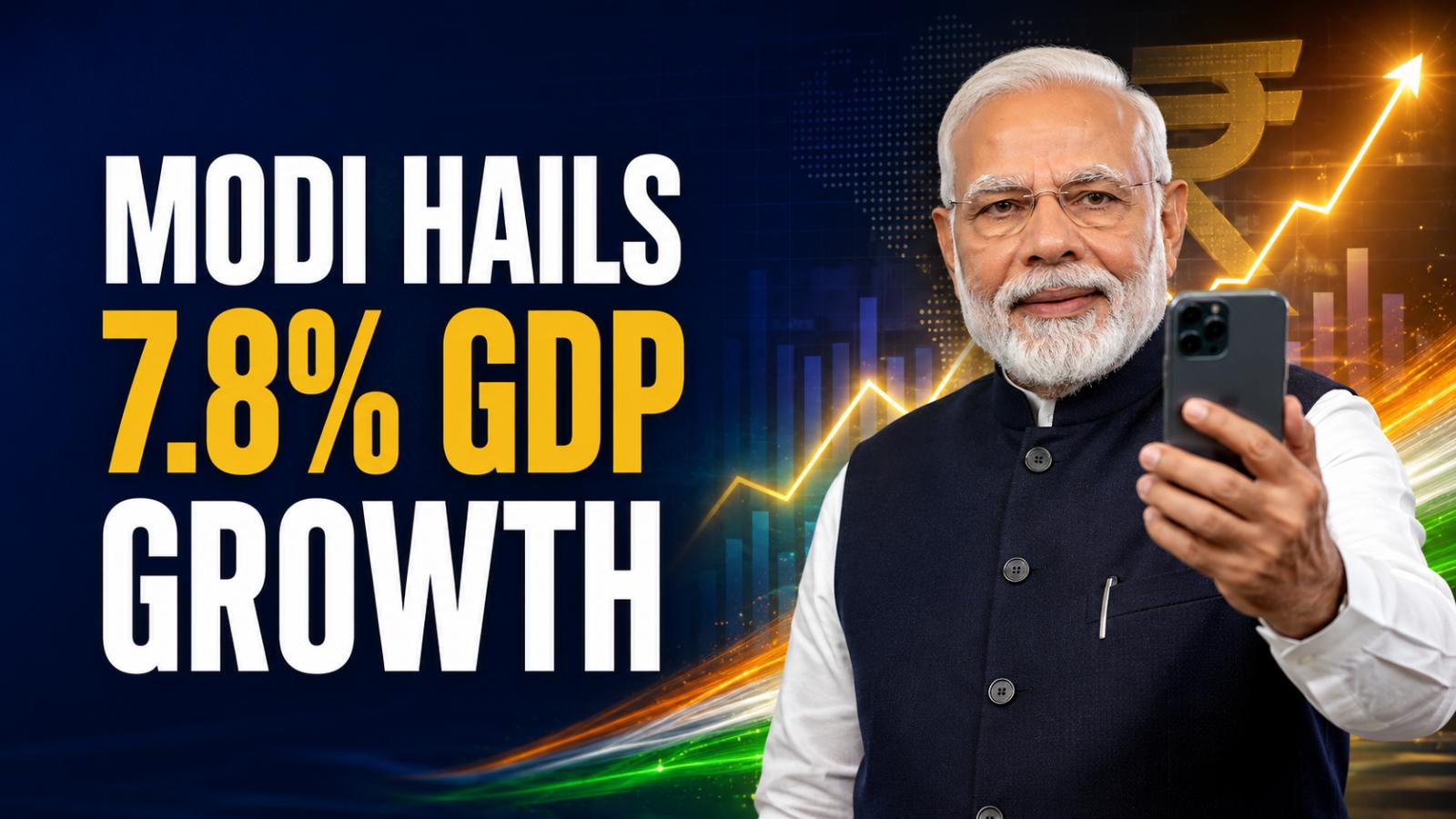
Prime Minister Narendra Modi has used a selfie-style Instagram video to highlight India’s stronger-than-expected economic growth and counter what he described as an “echo of lies” and pessimism being spread across the country.
Modi recorded the nearly three-minute message while attending the Shanghai Cooperation Organisation summit in Bishkek. The video marked a rare instance of the prime minister addressing a domestic economic and political issue during an overseas visit.
Without naming Congress leader Rahul Gandhi, Modi said India was progressing rapidly despite those spreading “jhooth ki goonj.” The expression was widely interpreted as an indirect reference to Gandhi’s “Chhatron Ki Goonj” campaign aimed at connecting with students and younger voters.
The prime minister also revived his swadeshi campaign, urging people to support local products, organise weddings in India and reduce avoidable spending on overseas travel and imported gold.
Modi uses Instagram to promote India’s economic performanceModi presented the latest growth figures as evidence of confidence in the Indian economy despite wars, supply-chain disruptions and continued uncertainty in the global environment.
“7.8% growth. Strong numbers. Even stronger confidence,” he wrote while sharing the video. He argued that India’s economic progress had continued even as international conflicts and instability created difficulties for several countries.
His choice of Instagram and a direct-to-camera format appeared designed to make the economic message more accessible, particularly to younger audiences. It also reflected the growing importance of short-form social media communication in political outreach.
The prime minister had earlier described the quarterly performance as a “herculean feat” and used the phrase “Doomsayers were doomed, and India bloomed” while responding to the official figures.
GDP data shows services and investment supporting growthIndia’s real gross domestic product grew by 7.8% during the April–June quarter of the 2026-27 financial year, compared with 6.9% in the corresponding period a year earlier, according to the Ministry of Statistics and Programme Implementation.
The result exceeded the Reserve Bank of India’s Q1 projection of 7%. The RBI had projected real GDP growth of 6.7% for the full financial year, with quarterly estimates of 7% in Q1, 6.4% in Q2, 6.5% in Q3 and 6.8% in Q4.
Official data showed that the services sector expanded by 10%, supported by financial, real estate, information technology and professional services. The secondary sector grew by 8.6%, while the primary sector recorded growth of 2.9%.
Gross fixed capital formation rose by 11.9%, indicating stronger investment activity, while private final consumption expenditure increased by 7.1%. The figures provided the government with an opportunity to defend its economic record against criticism from the opposition.
Swadeshi appeal targets foreign travel, weddings and goldModi used the positive GDP numbers to renew his call for self-reliance and greater domestic spending. He encouraged citizens to follow the “vocal for local” approach and support goods produced within India.
The prime minister also repeated his “Wed in India” campaign, which urges families to organise destination weddings within the country instead of spending large sums abroad. He said unnecessary foreign travel and avoidable gold purchases should also be reduced.
India imports substantial quantities of gold and crude oil, placing pressure on foreign exchange outflows when global prices rise. Modi presented reduced dependence on imports as part of a broader strategy to strengthen economic resilience.
He linked swadeshi consumption with India’s long-term development ambitions, saying greater emphasis on self-reliance could help the country meet the aspirations of young Indians by the centenary of independence in 2047.
Political undertone puts Rahul Gandhi campaign in focusAlthough Modi did not mention Rahul Gandhi, the wording of his “jhooth ki goonj” comment triggered political speculation because of the Congress leader’s “Chhatron Ki Goonj” campaign.
The apparent wordplay allowed Modi to challenge opposition criticism while highlighting official GDP numbers as evidence of economic strength. However, quarterly growth alone does not settle wider debates about employment, household income, inflation and the distribution of economic gains.
The Instagram reel also appeared to be part of Modi’s effort to increase direct engagement with Gen Z and young voters. The informal format differed from a conventional government address and allowed him to combine economic messaging, political criticism and lifestyle appeals in one video.
The 7.8% figure gives the government a strong headline, but its broader political value will depend on whether growth produces visible improvements in jobs, wages, consumption and living standards. Opposition parties are likely to continue questioning how the benefits of economic expansion are reaching ordinary households.