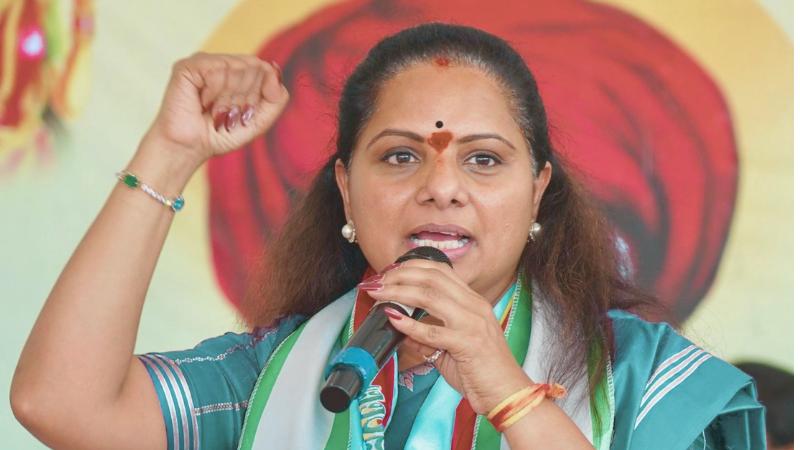

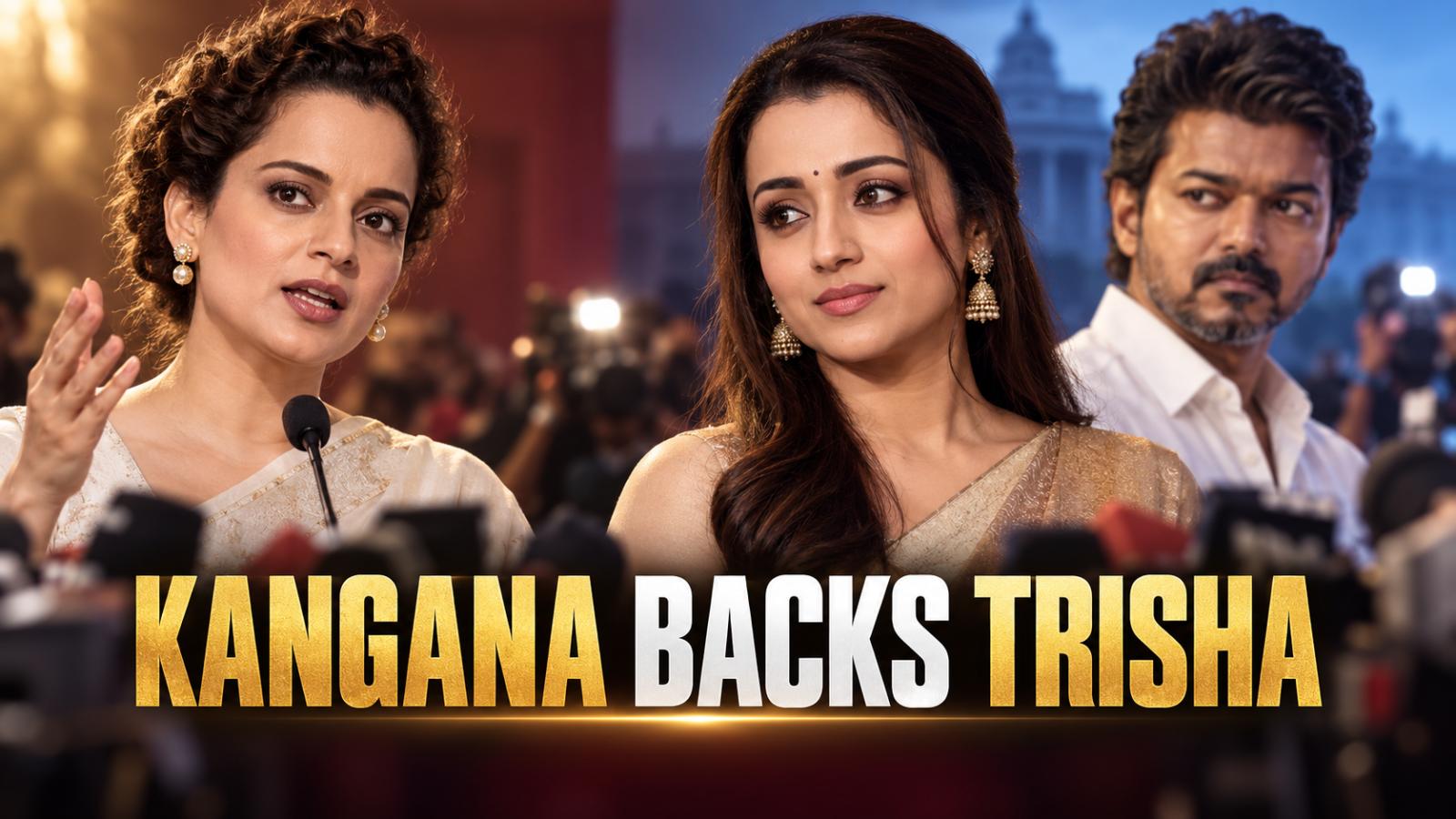
Kangana Ranaut responded to the controversy involving Trisha, Vijay and comments attributed to Udhayanidhi Stalin. Speaking in Kullu, Himachal Pradesh, the BJP MP condemned character attacks against women and called for greater respect and introspection.
Kangana Backs Trisha in Character Assassination RowActor and BJP MP Kangana Ranaut has come out in support of Trisha Krishnan amid a political controversy in Tamil Nadu involving rumours linking the actress with Chief Minister C Joseph Vijay.
Addressing the issue during a media interaction in Kullu, Kangana criticised the tendency to attack a woman’s character when speculation surrounds two individuals. She argued that women frequently face a disproportionate share of abuse, personal scrutiny and reputational damage in such controversies.
Without directly naming Trisha in the reported portion of her statement, Kangana referred to the controversy involving a respected actress in Tamil Nadu. She said that although rumours concerned two people, criticism and character attacks were being directed primarily at the woman.
Her remarks followed the backlash over comments attributed to Tamil Nadu Leader of the Opposition Udhayanidhi Stalin. Those reported comments and related political slogans were widely interpreted as references to Trisha and the persistent rumours involving Vijay.
Vijay-Trisha Rumours Return to Political SpotlightSpeculation about Vijay and Trisha’s personal relationship has circulated online for years. Neither Vijay nor Trisha has publicly confirmed the claims, and the rumours should not be presented as established fact.
The issue acquired a political dimension after Trisha was seen near Vijay’s family at a public event and her name subsequently surfaced in political exchanges. Social media posts, speeches and slogans further amplified the controversy, moving an unverified personal narrative into the centre of Tamil Nadu’s political debate.
Kangana’s response focused less on the truth of the rumours and more on how women are treated when such speculation gains public attention. She urged society to examine whether women receive genuine respect or are routinely subjected to degrading commentary when personal controversies emerge.
She also described character assassination as a wider problem that is not limited to India. According to her argument, women across societies are often made the principal targets of public abuse even when an allegation or rumour involves more than one person.
Vijay Warns Against Derogatory Remarks About WomenThe controversy also reached the Tamil Nadu Assembly, where Chief Minister Vijay warned against abusive and double-meaning remarks targeting women. He said political freedom of expression could not be used to justify personal attacks and indicated that the law would take its course in cases involving offensive statements.
Vijay’s intervention intensified the political exchange between the ruling Tamilaga Vettri Kazhagam and the opposition DMK. The dispute unfolded amid broader confrontations between Vijay and Udhayanidhi inside the Assembly, where the two sides traded allegations over governance and political conduct.
Kangana’s support added a national voice to the debate. As both a film personality and an elected representative, her remarks attracted attention beyond Tamil Nadu and shifted part of the discussion towards misogyny, privacy and responsible political speech.
Tamil Nadu Row Raises Questions About Political DecencyThe episode demonstrates how celebrity rumours can be drawn into partisan politics and transformed into attacks against individuals who may not hold public office. Trisha’s personal life became part of a political confrontation despite the absence of confirmation regarding the claims being circulated.
Kangana maintained that political differences should not become an excuse to demean women. Her comments highlighted the need for public figures, party workers and social media users to distinguish legitimate political criticism from personal abuse.
The controversy may continue to fuel exchanges between TVK and DMK, but it has also produced a wider conversation about gender dignity. Responsible reporting requires attributing disputed remarks, avoiding the presentation of rumours as facts and ensuring that women are not unfairly reduced to subjects of political or personal speculation.