
NEET Row Intensifies as Annamalai and Anna Hazare Seek Accountability
K Annamalai and Anna Hazare have separately questioned the handling of the NEET controversy as student protests continue in Delhi. Their interventions place renewed focus on alleged paper leaks, delayed talks, ministerial responsibility, and trust in the examination system.
NEET Protests Bring New Pressure for Dialogue and Responsibility
New Delhi, July 22, 2026: NEET accountability calls by Annamalai and Anna Hazare have added fresh political and public pressure on the Centre as student protests continue over alleged examination irregularities.
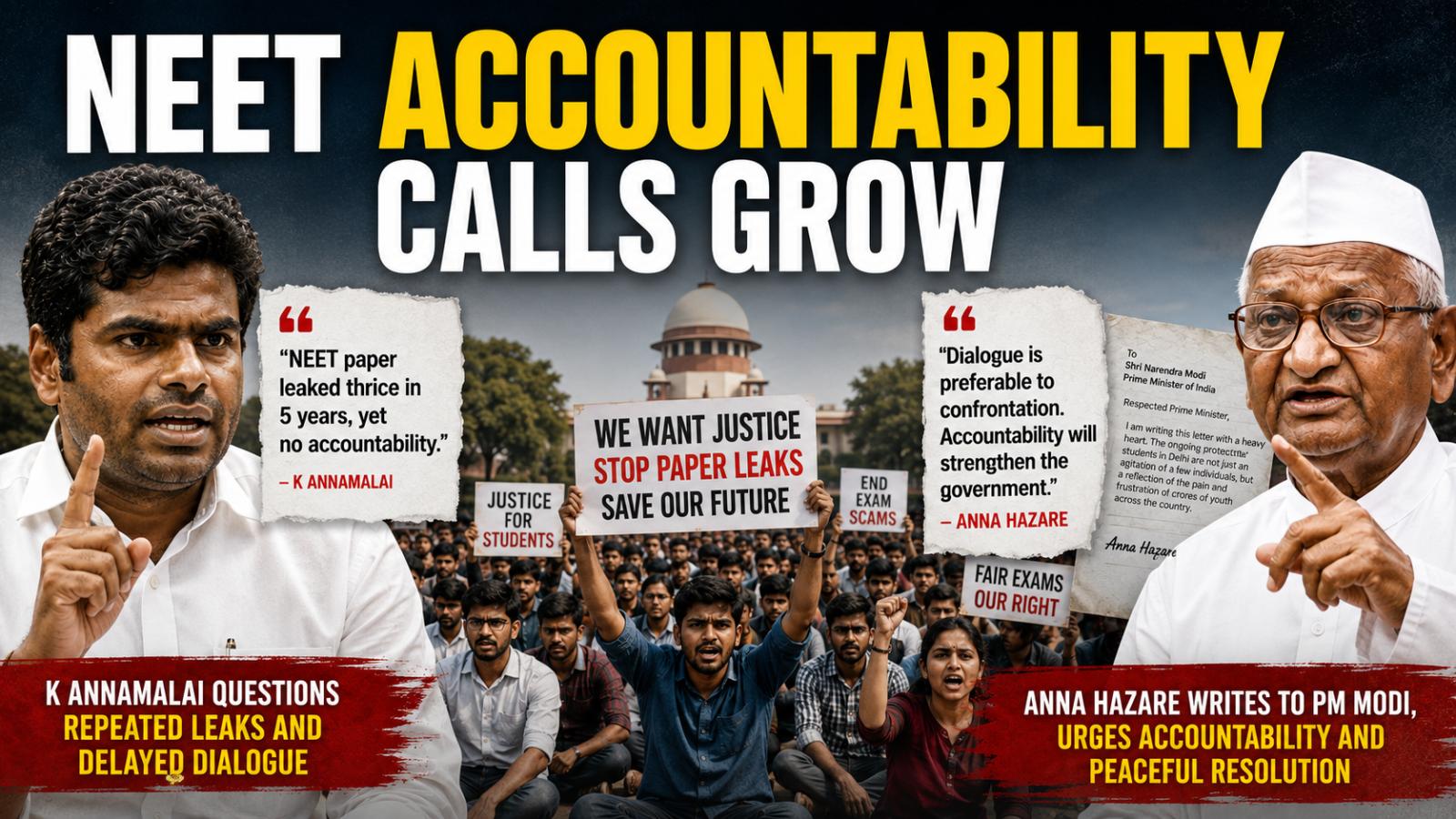
Former BJP leader K Annamalai questioned what he described as repeated failures in the medical entrance examination system and the government’s delayed engagement with protesters. Separately, social activist Anna Hazare wrote to Prime Minister Narendra Modi, urging dialogue, accountability, and a peaceful resolution to the continuing agitation.
Why NEET Accountability Calls by Annamalai and Anna Hazare Matter
The two interventions were made separately, but both focused on the same central concern: declining student confidence in the fairness and credibility of the examination system.
Annamalai, who had publicly supported NEET for bringing uniformity to medical admissions, said the examination was intended to give students from disadvantaged backgrounds a fair opportunity to pursue medical education.
However, he alleged that the NEET-UG question paper had been leaked three times during the past five years without adequate accountability. He said repeated disruptions placed enormous pressure on students who had already completed a demanding preparation and examination process. The claim regarding three leaks remains Annamalai’s assertion and should not be treated as an independently established official finding.
Annamalai Questions Delay in Talks With Students
Annamalai also questioned why meaningful dialogue was not initiated before the protest escalated. Calling peaceful protest a fundamental democratic right, he urged the government to engage with students, maintain transparency, and take appropriate action to address their concerns.
At the same time, he cautioned protest organisers against allowing groups with unrelated political interests to divert the agitation from its original demands. He argued that protecting the core objectives of the movement was also the responsibility of its leaders.
Anna Hazare Writes to Prime Minister Modi
Anna Hazare’s letter placed greater emphasis on ministerial responsibility and the handling of demonstrations in Delhi.
Hazare said reports of violence and police action against protesting students were deeply distressing. He argued that violence, damage to public property, and excessive force should be avoided and that dialogue was preferable to confrontation in a democracy.
He also said accepting the resignation of a minister over departmental failures would not weaken a government. Instead, he argued, it would demonstrate that senior officials and ministers could be held responsible when their departments failed to perform their duties properly.
The activist urged the prime minister not to treat public criticism merely as political opposition. Student concerns involving examination irregularities, recruitment delays, and unemployment, he said, represented wider public anxiety that required patient engagement.
Protesters Continue Dharmendra Pradhan Resignation Demand
The Cockroach Janta Party-led agitation has demanded Education Minister Dharmendra Pradhan’s resignation, reforms to the examination system, and accountability over repeated test-paper leak allegations.
The protest began as an online satirical movement before developing into a wider youth-led campaign. Demonstrators have continued gathering at Delhi’s Jantar Mantar, supported by volunteers providing food, water, and medical assistance.
Pradhan has promised “answers, reforms, and accountability,” while the government has said strong measures are being taken to safeguard students’ interests. Protesters, however, continue to demand clearer responsibility at the senior political level.
Trust in Examination Institutions Becomes Central Issue
The statements by Annamalai and Hazare reflect a broader debate extending beyond the future of one minister or one examination.
For students who spend years preparing for highly competitive entrance tests, allegations of leaks and irregularities can damage confidence in the entire selection process. Restoring that confidence will require transparent investigations, timely communication, stronger examination safeguards, and clear responsibility whenever institutional failures are established.
The allegations surrounding the examination remain subject to investigation and official scrutiny.