
TVK Seeks State Control Over Medical Education, End to NEET
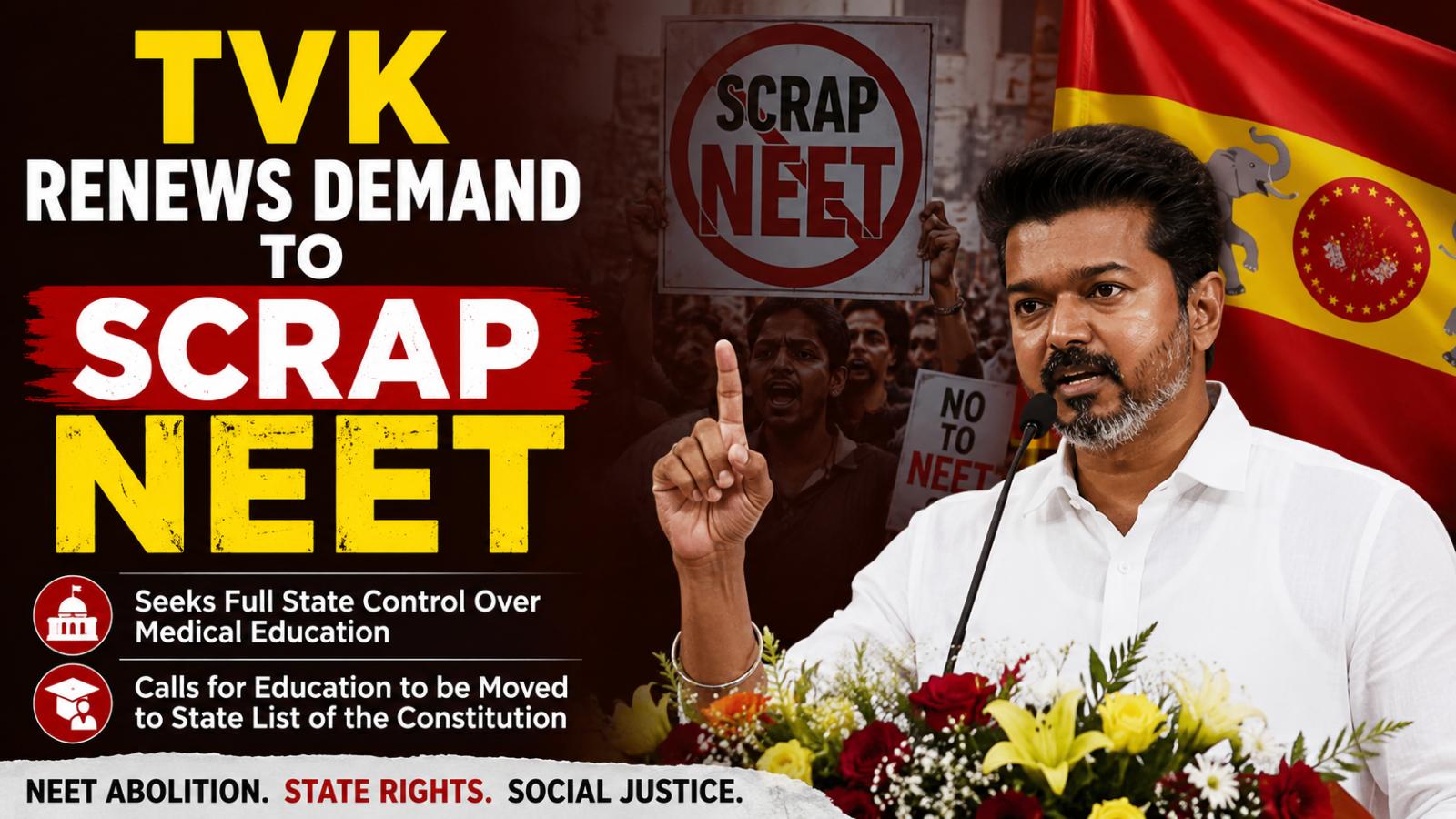
Tamilaga Vettri Kazhagam has renewed its demand to abolish NEET and give states complete authority over education and medical admissions. The party has also proposed constitutional changes to transfer education-related powers from the Centre to the states.
TVK Expands Its Position Against NEET
Chennai, July 22, 2026: The TVK state control over medical education demand has added a new dimension to Tamil Nadu’s continuing political battle over the National Eligibility-cum-Entrance Test, or NEET.
Tamilaga Vettri Kazhagam said on Tuesday, July 21, that it was not merely seeking action against alleged irregularities in the national medical entrance examination. The party reiterated that NEET should be abolished completely and that state governments should receive full authority over education, medical admissions and medical colleges.
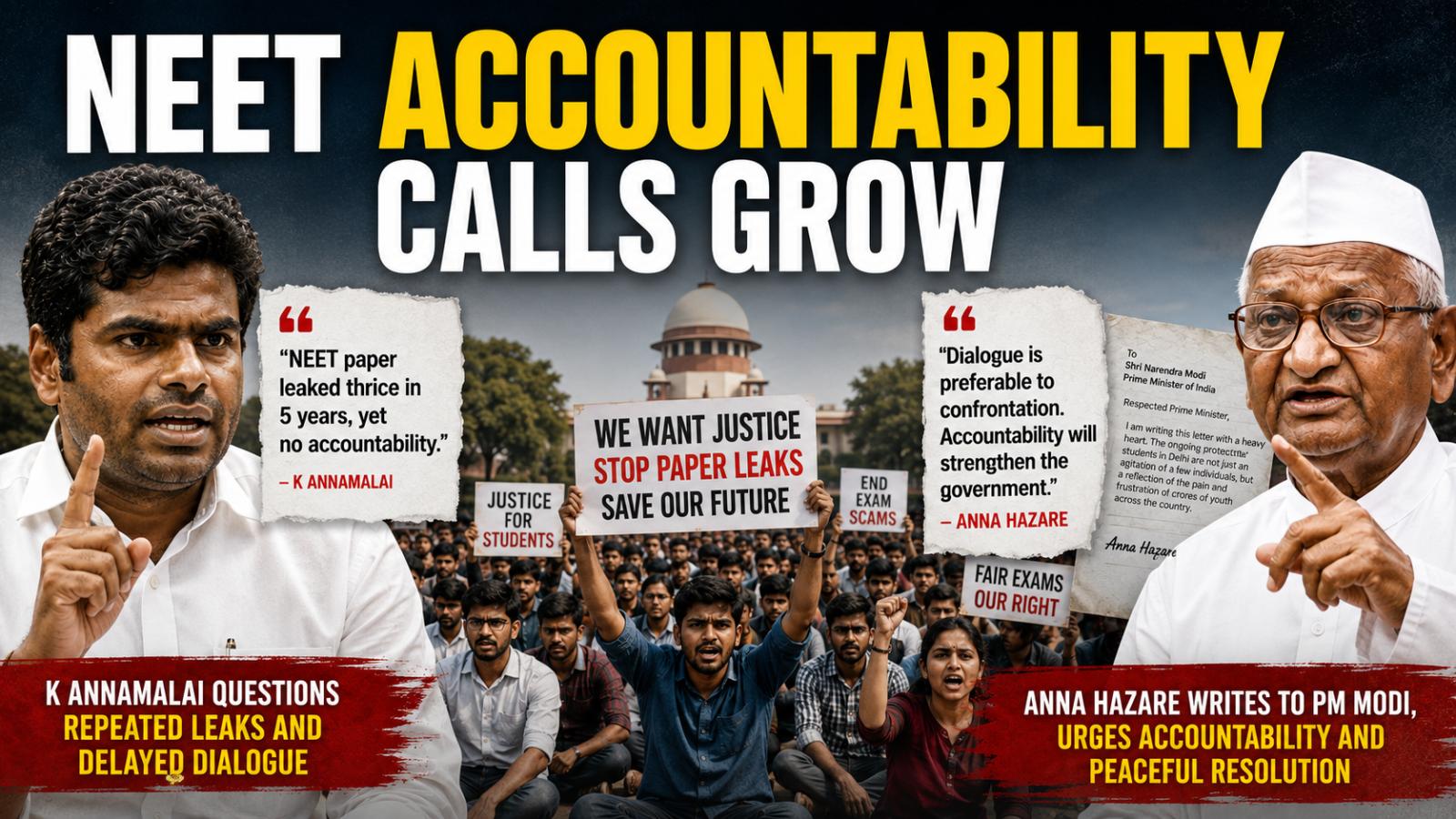
TVK described its position as firm and uncompromising as protests over NEET continued in Delhi and other parts of the country.
Why TVK Wants Education Moved to the State List
TVK proposed transferring education from the Concurrent List to the State List of the Constitution. Under the Concurrent List, both Parliament and state legislatures can make laws concerning education, although central legislation can prevail when the two conflict.
Moving education to the State List would provide state governments with greater independence in deciding admission policies, entrance examination requirements, and the administration of state-run educational institutions.
TVK argued that states should have complete authority over their education systems, including the selection of students for state medical colleges.
The demand is not entirely new. Tamil Nadu’s political parties have repeatedly sought an exemption from NEET and greater state authority over medical admissions. TVK has previously supported moving education back to the State List as part of its broader position on state autonomy.
Special Concurrent List Suggested as Interim Measure
TVK also presented an alternative in case transferring education directly to the State List encounters legal or constitutional difficulties.
The party suggested creating a Special Concurrent List that would grant state governments greater decision-making powers over education until a permanent solution is introduced.
Under the proposal, states could receive authority over medical education and admissions while constitutional and procedural questions surrounding a complete transfer of powers are addressed.
TVK maintained that abolishing NEET would be the permanent objective, while the proposed Special Concurrent List could function as an interim arrangement.
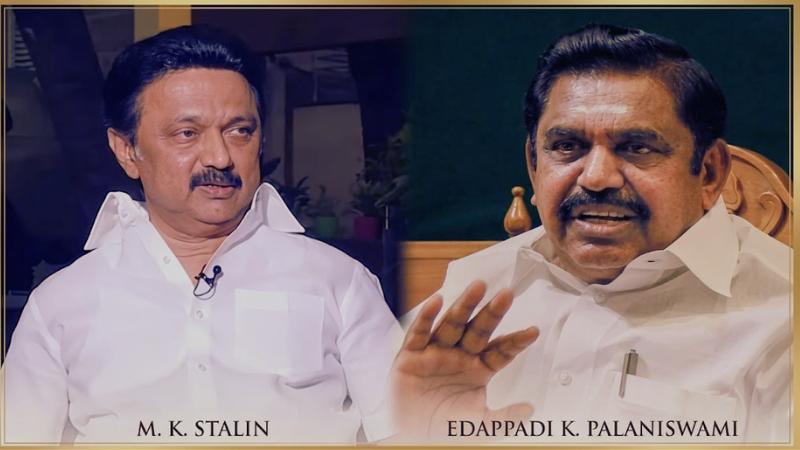
TVK Targets DMK Over Previous NEET Promise
Without directly naming the DMK, TVK criticised political parties that promise voters they will abolish NEET without explaining the constitutional or legal process required.
The DMK had promised before the 2021 Tamil Nadu Assembly election that it would work towards ending NEET after coming to power. TVK accused its political rivals of misleading voters through promises that could not be implemented solely by a state government.
The statement further warned political parties against claiming ownership of ideas, campaigns, and struggles initiated by others.
Arivu Protest Adds to Tamil Nadu NEET Debate
TVK’s statement followed political controversy involving rapper Therukkural Arivu, who has publicly opposed NEET.
Arivu briefly raised slogans against the entrance examination outside the Tamil Nadu Secretariat at Fort St George in Chennai before police removed him from the location. The incident prompted criticism from opposition leader Udhayanidhi Stalin over the state government’s response.
The episode has intensified pressure on TVK to demonstrate how its government intends to pursue its anti-NEET position through legislative, constitutional, or administrative measures.
NEET Dispute Becomes a Federal Powers Debate
The latest TVK NEET abolition demand shows that the controversy is no longer restricted to alleged paper leaks, examination irregularities, or student protests.
It has also developed into a wider debate over federalism, state autonomy, and which level of government should control education policy.
TVK has now placed three demands at the centre of its position: complete abolition of NEET, transfer of education to the State List, and an interim Special Concurrent List if an immediate constitutional transfer is not possible.
Whether these proposals receive support from the Union government or other states remains uncertain. However, TVK’s statement is likely to keep NEET and state control over medical education at the centre of Tamil Nadu’s political discussion.