
NEET Protest Rocks Parliament as Monsoon Session Opens
Parliament’s Monsoon Session 2026 opened amid repeated adjournments as Opposition MPs demanded debates on the NEET-UG paper leak, police action against CJP protesters, and the alleged Ayodhya donation theft. A Supreme Court judges' amendment bill was introduced during the uproar.NEET Protest Rocks Parliament as Monsoon Session Opens
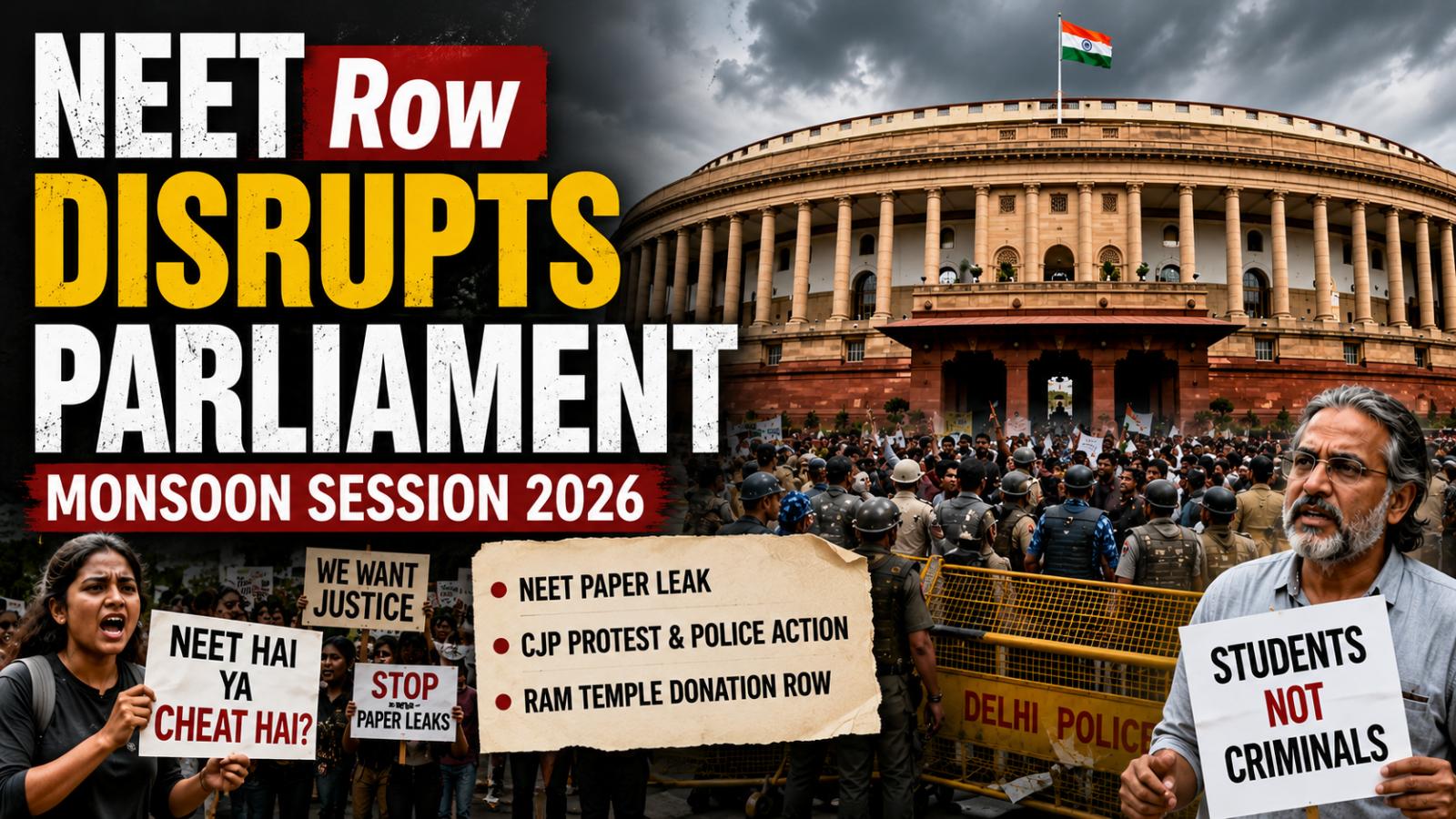
The Monsoon Session 2026 NEET row triggered repeated disruptions in both Houses of Parliament on Monday, July 20, as Opposition MPs demanded an immediate discussion on the alleged medical entrance examination paper leak, student protests, and accountability within the Education Ministry.
Proceedings in the Lok Sabha and Rajya Sabha were adjourned several times as Opposition members raised slogans over the NEET controversy, alleged police action against protesters at Delhi’s Jantar Mantar, and the alleged theft of donations made to the Ram Temple in Ayodhya. The disruption washed out Question Hour and affected Zero Hour on the opening day of the session.
Monsoon Session 2026 NEET Row Dominates Day One
The Lok Sabha began with Speaker Om Birla making obituary references and urging members to maintain the dignity of the House. However, Opposition MPs continued their protests and demanded that the NEET paper leak controversy be discussed before the government proceeded with its legislative agenda.
Birla told MPs that every member would be allowed to speak and appealed for an orderly Question Hour. The House was initially adjourned until noon and faced further adjournments after proceedings resumed.
In the Rajya Sabha, Leader of the Opposition Mallikarjun Kharge raised the NEET controversy and the treatment of protesters at Jantar Mantar. The resulting uproar forced the Upper House to adjourn repeatedly, including an adjournment until 2 pm as protests continued.
Opposition Demands Debate on Paper Leaks
Opposition parties made the alleged NEET-UG paper leak one of their main priorities for the Monsoon Session. Congress MP Gaurav Gogoi submitted an adjournment notice in the Lok Sabha, while CPI MP P Sandosh Kumar moved a notice under Rule 267 in the Rajya Sabha seeking suspension of the listed business for a discussion on examination irregularities.
Congress MP KC Venugopal separately sought a discussion and an independent investigation into the alleged embezzlement of donations at the Shri Ram Janmabhoomi Teerth Kshetra Trust.
Opposition floor leaders met at Kharge’s office before Parliament assembled. Rahul Gandhi, Gaurav Gogoi, Jairam Ramesh, Supriya Sule, Sanjay Raut, Sagarika Ghose, and representatives of several INDIA bloc parties attended the meeting.
The Opposition decided to prioritise the NEET controversy and the Ayodhya donation allegations, arguing that the government should respond to the two issues before other legislative business was taken up.
Dimple Yadav Marches to Jantar Mantar
Samajwadi Party MP Dimple Yadav and other party MPs marched from Parliament towards Jantar Mantar in support of students protesting against alleged examination irregularities.
Yadav carried a placard bearing the slogan “NEET Hai Ya Cheat Hai” and accused the government of failing to engage with young people demanding accountability. She said students were facing severe stress because of alleged corruption and uncertainty surrounding the examination system.
Samajwadi Party leaders said their MPs would continue supporting the protest and would press for a parliamentary debate on education-related concerns.
CJP Parliament March Faces Police Restrictions
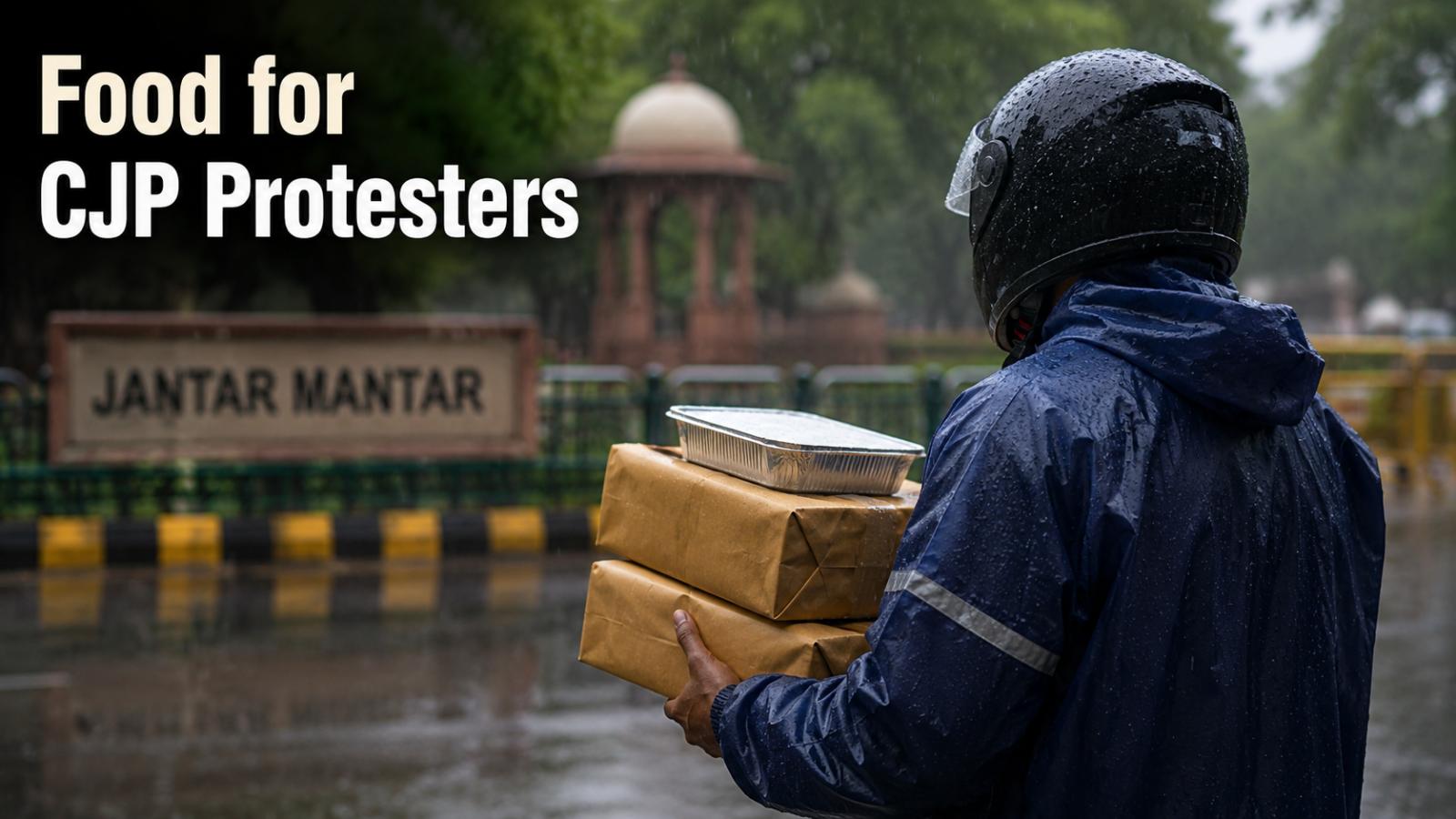
Thousands of supporters associated with the youth-led Cockroach Janta Party gathered at Jantar Mantar for a proposed march towards Parliament. The group has demanded accountability over examination paper leaks and the resignation of Union Education Minister Dharmendra Pradhan.
Delhi Police had not granted permission for the march and imposed restrictions around Parliament and central Delhi, citing security and public-order concerns. Police and paramilitary personnel were deployed near Jantar Mantar, Parliament Street, Rail Bhawan, and surrounding areas.
The protesters were stopped before they could approach the Parliament complex. Reuters reported that police used batons against some participants, while Opposition leaders criticised the action and alleged that force had been used against a peaceful demonstration.
Congress MP Shashi Tharoor questioned the reported police action and said issues of national importance should be debated in Parliament. He argued that cooperation between the government and Opposition required both sides to allow discussion rather than relying only on their numerical strength.
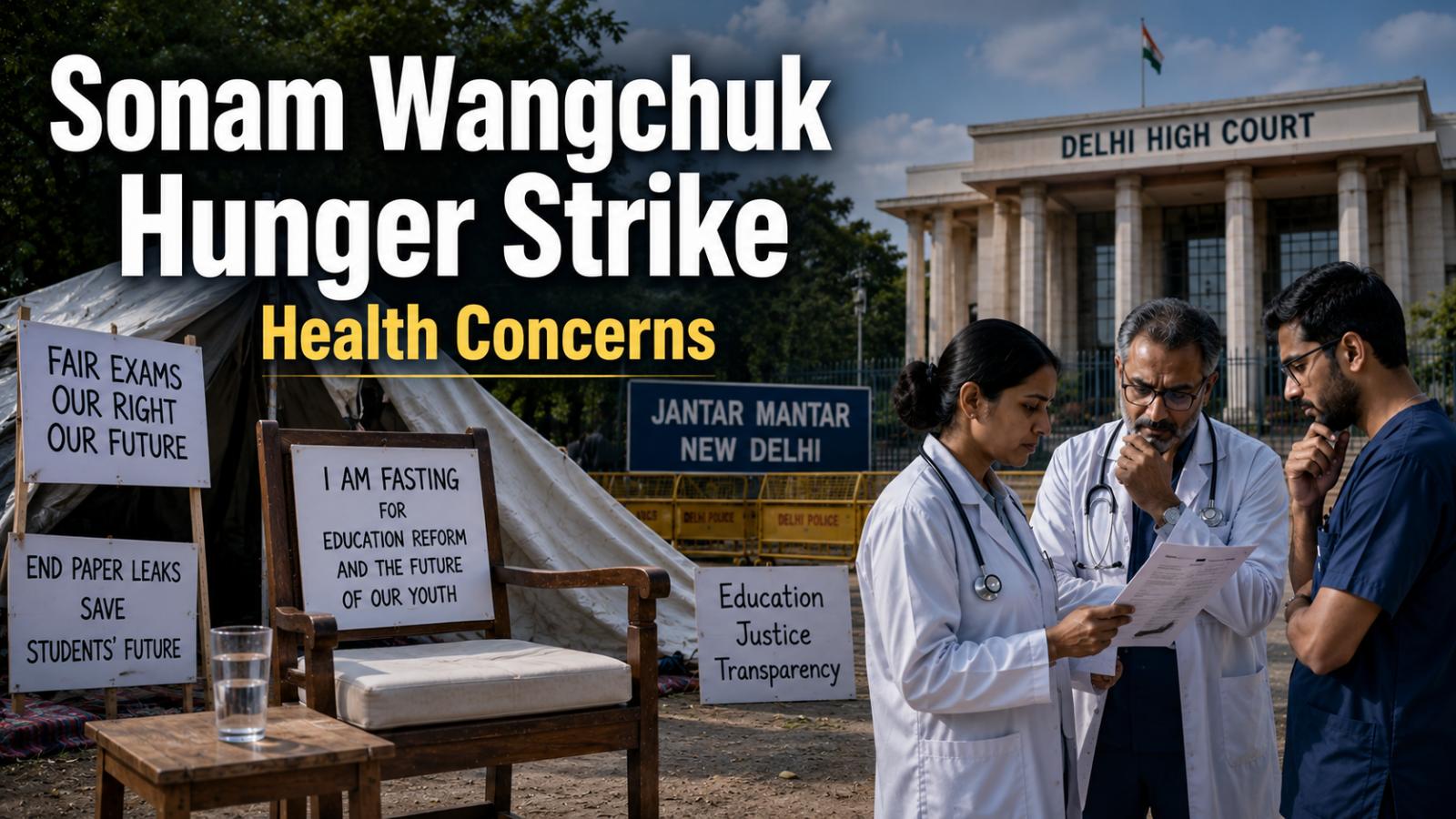
Sonam Wangchuk’s Hunger Strike Remains Central to Protest
Activist Sonam Wangchuk, who had been on an indefinite hunger strike over examination leaks and education accountability, was moved to Safdarjung Hospital before the Parliament march.
Wangchuk indicated that he was prepared to end his fast if the government accepted accountability, if protest representatives reached Parliament and received assurances from MPs, or if political leaders visited him in hospital and promised to raise the matter during the session.
His removal from Jantar Mantar intensified the protest, with supporters arriving in Delhi ahead of the planned march. The agitation has developed into a wider youth movement demanding reforms in examination administration and greater accountability from the Education Ministry.
Supreme Court Judges Bill Introduced Amid Uproar
Despite the disruption, Union Law Minister Arjun Ram Meghwal introduced the Supreme Court (Number of Judges) Amendment Bill, 2026, in the Lok Sabha.
The legislation seeks to replace an earlier ordinance and increase the number of Supreme Court judges from 33 to 37, excluding the Chief Justice of India. The total sanctioned strength would therefore rise from 34 to 38, including the Chief Justice.
The Union Cabinet had approved the addition of four judges with the stated objective of improving the court’s efficiency and supporting faster disposal of cases.
Vande Mataram Amendment Bill on the Government Agenda
Union Home Minister Amit Shah was also expected to introduce the Prevention of Insults to National Honour (Amendment) Bill, 2026, in the Rajya Sabha.
The proposed legislation seeks to extend statutory protection to Vande Mataram and make intentional insult or disruption during its singing a punishable offence.
Shiv Sena (UBT) MP Sanjay Raut criticised the proposal and challenged Prime Minister Narendra Modi and Amit Shah to recite the national song without using a teleprompter. Congress spokesperson Pawan Khera described the bill as a distraction from the NEET controversy and the alleged Ram Temple donation row.
Other legislation listed for the session includes the Foreign Contribution (Regulation) Amendment Bill, 2026, the Viksit Bharat Shiksha Adhishthan Bill, 2025, and proposed changes covering taxation, MSMEs, and the registration of births and deaths.
PM Modi Calls for Fact-Based Debate
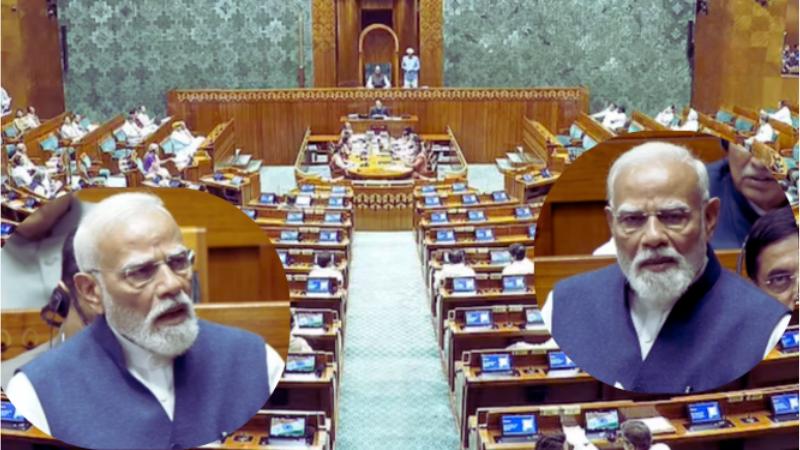
Before the session began, Prime Minister Narendra Modi appealed to MPs to participate in constructive and fact-based discussions. He said every opinion should be respected and expressed hope that Parliament would contribute to national development.
Modi highlighted India’s private space-sector achievements and praised the young team associated with Skyroot Aerospace. Referring to its average age of 28, he made a political dig about a “56-year-old youth”, widely interpreted as a reference to Rahul Gandhi.
The Prime Minister also referred to India’s reported 7.7 per cent economic growth, challenges caused by tensions in West Asia, a major oil refinery, a new semiconductor facility, and the launch of a green hydrogen-powered train.
Session Scheduled to Continue Until August 13
The Monsoon Session is scheduled to run from July 20 to August 13, covering 19 sittings across 25 days. The government is seeking to advance its legislative programme, while the Opposition plans sustained protests and debates over examination leaks, education accountability, the Ayodhya donation allegations, ethanol blending, and foreign policy.
The turbulent opening day indicated that the NEET controversy, the CJP movement, and the confrontation over parliamentary debate could remain central to the session in the coming weeks.