
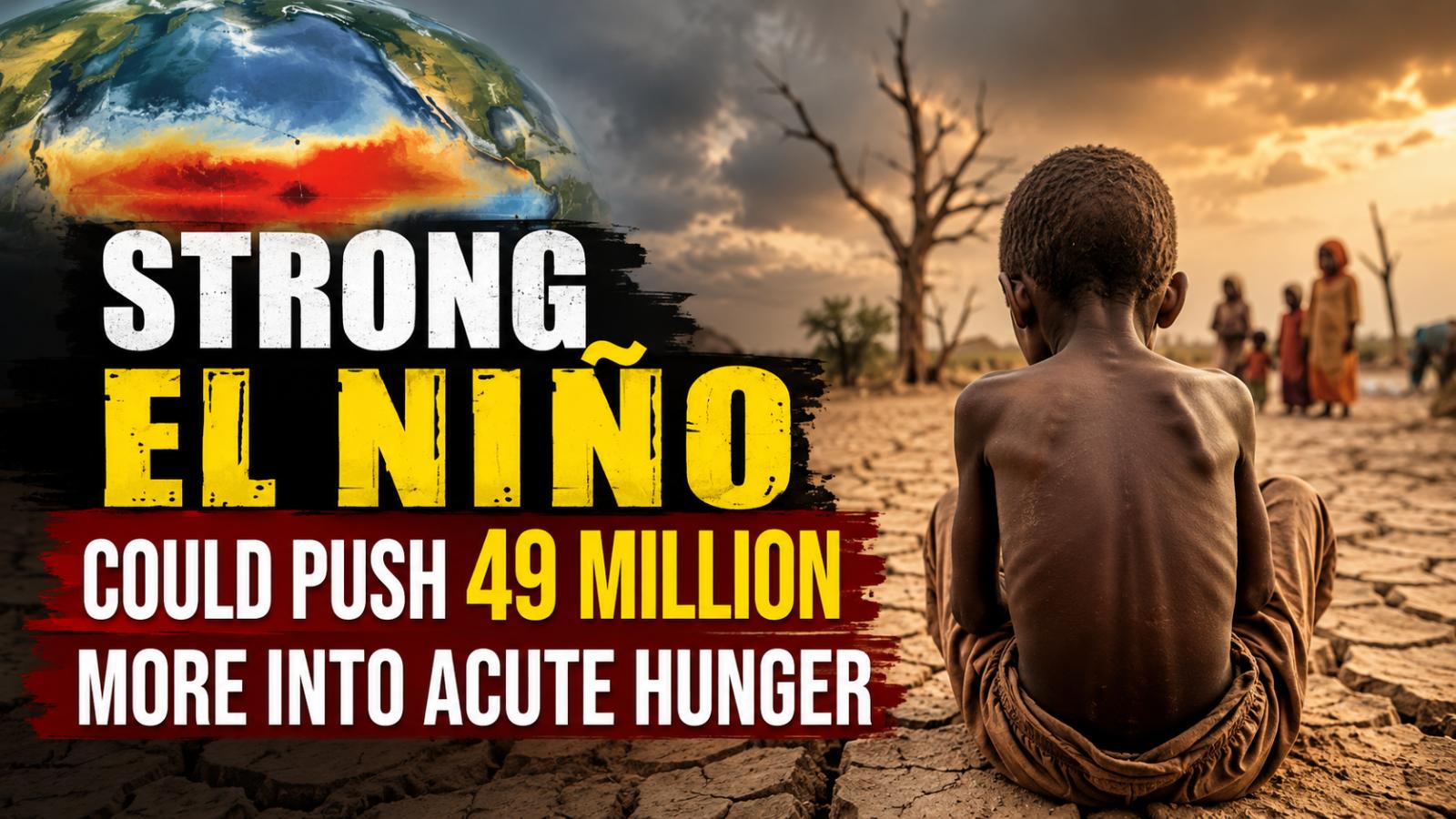
A powerful El Niño could push nearly 49 million more people into acute food insecurity across 45 vulnerable countries by the end of 2027. Central America and Southern Africa may face the sharpest rise as drought, erratic rainfall, floods and higher food prices threaten millions.
Strong El Niño Raises Global Hunger Risk
A powerful El Niño could push nearly 49 million additional people into acute food insecurity across vulnerable regions by the end of 2027, the United Nations World Food Programme has warned. Its analysis of 45 countries suggests the number facing crisis-level hunger or worse may climb 22% to around 274 million.
WFP said there is an 81% chance that the developing El Niño will become very strong. Pacific sea surface temperatures are at their warmest since at least 1982, and the event could become the strongest since 1950. El Niño can disrupt global rainfall, bringing drought, delayed monsoons, flooding and unpredictable weather that damages agriculture and livelihoods.
Central America And Southern Africa Face Major Losses
Central America and Southern Africa are expected to record the steepest increases in food insecurity. The number affected could rise by 83% in Central America and nearly 75% in Southern Africa. Southern Africa, South America and the Caribbean could each see more than 12 million additional people pushed into acute hunger.
Rainfall deficits are forecast in parts of East Africa, the Sahel, Central America and the Caribbean. Somalia and nearby areas may face greater flood risks, while South and Southeast Asia could experience drought, uneven monsoons and localised flooding. These shocks may cut harvests, weaken livestock production, disrupt markets and raise food costs.
Food Prices And Data Shortages Raise Concern
Global food markets entered the El Niño period in a relatively stable position after good harvests in 2025. However, conflict in the Middle East and possible weather-related crop losses could increase pressure on prices. Even without a global price surge, local shortages and higher costs may leave low-income families unable to afford enough food.
Donor funding cuts have also reduced food-security monitoring. WFP carried out about 1.1 million household surveys in 2024 and around 800,000 in 2025, with data collection falling further in 2026. Reduced monitoring could delay warnings about drought, failed harvests and new hunger hotspots.
Early Action Could Protect Vulnerable Communities
WFP said governments and aid agencies must prepare before extreme weather destroys crops and incomes. The agency has expanded anticipatory action programmes in 18 countries and reached more than 1.3 million people this year with cash and other assistance.
Early measures include drought-tolerant or flood-resistant seeds, water harvesting, flood protection, livestock support, agricultural advice and cash transfers. While forecasts remain uncertain and impacts will differ by region, early preparation could reduce losses and prevent vulnerable families from falling deeper into hunger.