
Blue Origin Blast Explains Rocket Safety Distance
Blue Origin Blast Puts Safety Distance In Focus
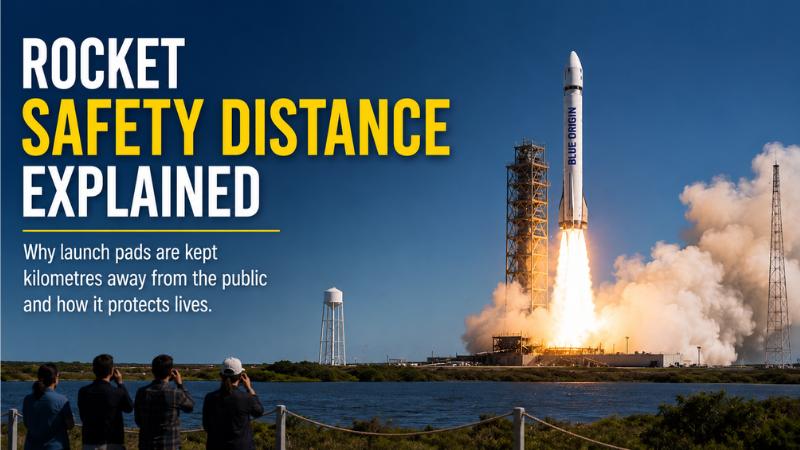
The Blue Origin New Glenn rocket blast in Florida has again raised a serious question: why are rocket launch pads kept so far from the public? The incident happened during a static fire test at Cape Canaveral, where the rocket’s engines were fired while the vehicle stayed fixed to the ground. The test ended in a huge fireball, damaging the launch pad, but no deaths were reported.
Why Launch Pads Are Far From Public
Rocket safety distance is not only about explosion risk. Former ISRO chairman S Somanath explained that rockets create extreme heat, powerful sound waves, blast pressure, and flying debris. At close range, these forces can become deadly. Even rocket noise can turn into strong vibrations that affect machines, structures, and people.
This is why public viewing galleries and media areas are placed kilometres away from launch pads. A rocket blast zone is calculated by studying heat, pressure, debris movement, and acoustic vibration danger.
Static Fire Test Safety Matters
The Blue Origin incident shows why strict exclusion zones are important even before a rocket launches. Static fire tests may look controlled, but they involve massive fuel loads and high engine pressure. When something fails, the danger can spread quickly.
The Blue Origin blast shows why rocket safety is built around distance, strict planning, and keeping people far outside the launch danger zone.