

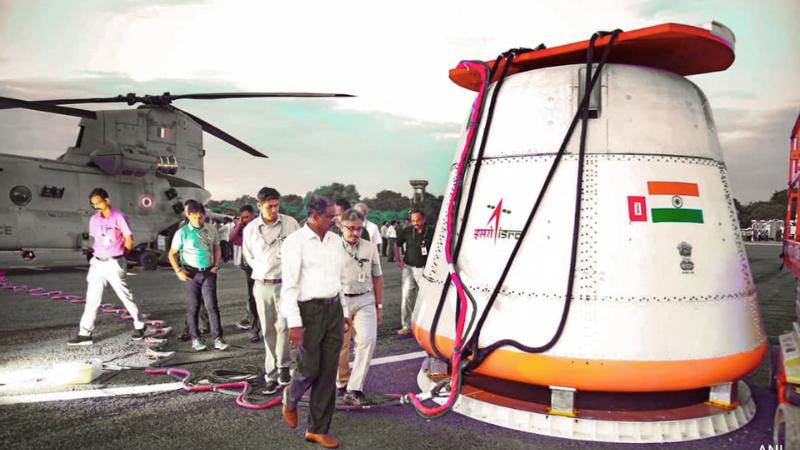
India’s much-anticipated Gaganyaan mission is facing growing uncertainty, with questions emerging over its ability to meet the revised 2027 crewed launch target. Once seen as a landmark step in India’s space journey, the mission now hinges on the successful completion of critical uncrewed test flights. These tests are vital for validating systems such as crew escape, life support, avionics, and the overall mission safety architecture.
As of April 2026, the pending uncrewed missions have yet to take place, further tightening an already ambitious timeline. At the Indian Space Research Organisation’s launch hub in Satish Dhawan Space Centre, activity has also slowed. Despite plans for an extensive launch schedule in 2026, only a limited number of missions have been conducted so far, prompting a more cautious approach focused on reliability and safety following recent setbacks.
Meanwhile, progress on key internal systems has been gradual, including astronaut safety protocols and environmental control mechanisms. With a small group of astronauts currently in training and no clear timeline for expansion, the mission faces additional challenges. While Gaganyaan remains a symbol of India’s ambitions in human spaceflight, experts believe a more flexible timeline may be required to ensure mission success without compromising safety.