
Rare daylight moment covered most of humanity on July 8
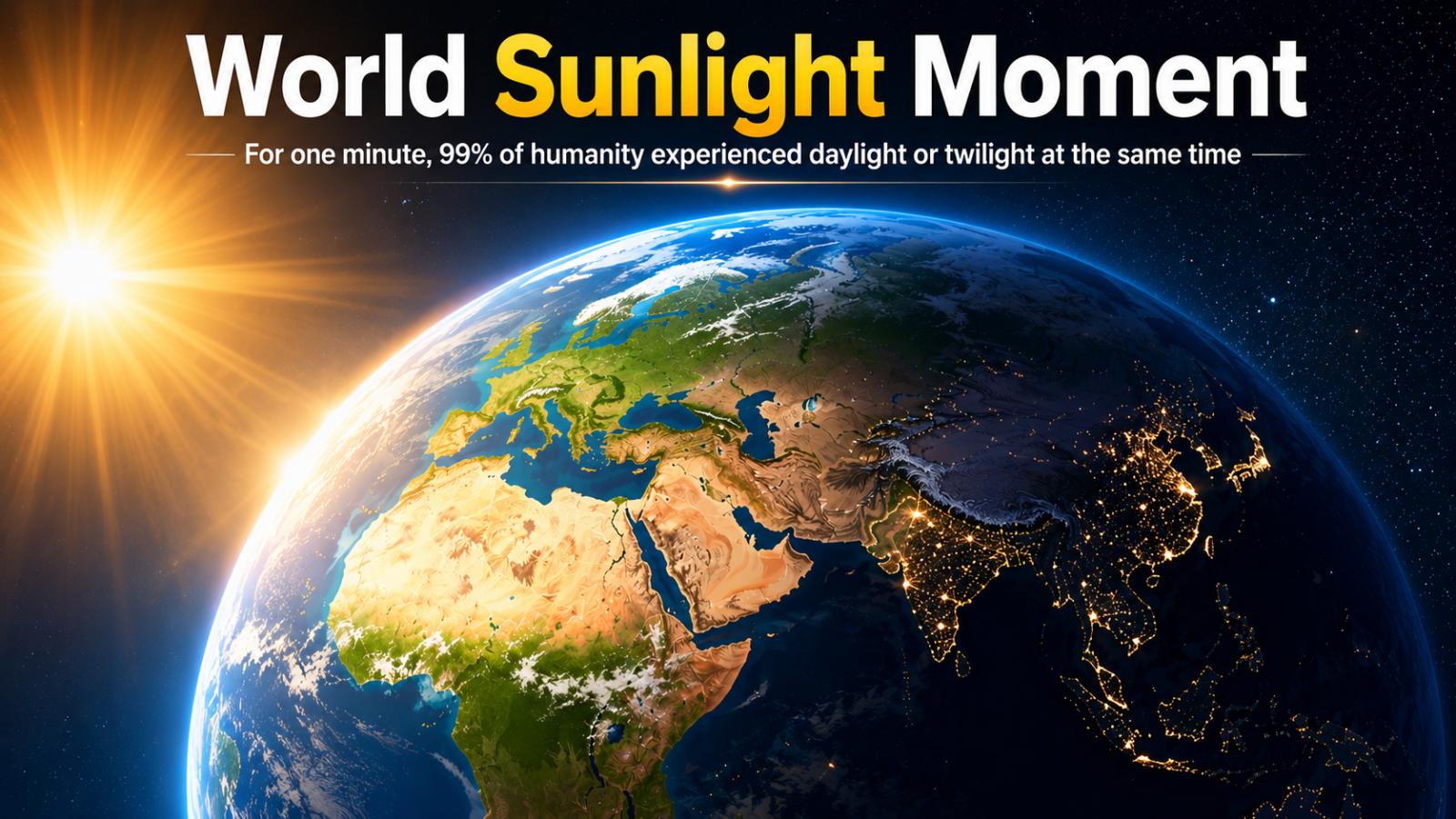
For a brief moment on July 8, almost the entire human population shared daylight or twilight at the same time. The unusual event happened because of a mix of Earth’s seasonal tilt and the way people are spread across the planet.
At around 11:10 GMT, which was about 4:40 pm in India, nearly 99 per cent of the world’s population was either under direct sunlight or in some form of twilight. Only a small portion of humanity was in full darkness during that short period.
Why so many people were in daylight
The reason is not a sudden space event or a rare solar phenomenon. It is mainly geography. Most of the world’s population lives in the Northern Hemisphere, including large parts of Asia, Europe, North America, and Africa. In early July, this part of Earth is tilted towards the Sun, creating longer days across many populated regions.
At the same time, the areas left in darkness included Australia, New Zealand, parts of Southeast Asia, Antarctica, and wide stretches of the Pacific Ocean. Since much of that dark zone is ocean or sparsely populated land, the number of people experiencing night was very low compared to the rest of the world.
Twilight played an important role
The 99 per cent figure includes people who were not necessarily seeing the Sun directly. Some were in twilight, which is the soft glow seen before sunrise or after sunset. Twilight occurs when sunlight scatters through the atmosphere even though the Sun is below the horizon.
If only direct sunlight is counted, the percentage becomes lower. However, even after removing the faintest twilight zones, a very large share of humanity was still experiencing visible natural light at the same time.
Why July 8 stood out
Many people may assume the peak should happen on June 21, the summer solstice in the Northern Hemisphere. However, the best alignment for population coverage comes slightly later. After the solstice, sunlight shifts in a way that still covers highly populated regions while darkness remains mostly over oceans and less populated areas.
This type of near-global daylight moment is not limited to one day. A similar situation can occur for several weeks between May and July, but July 8 gained attention because it clearly showed how Earth’s tilt and human settlement patterns can combine to create a striking global moment.
For most people, the sky looked completely ordinary. What made the moment special was not the light itself, but the fact that almost everyone on Earth was sharing it.