
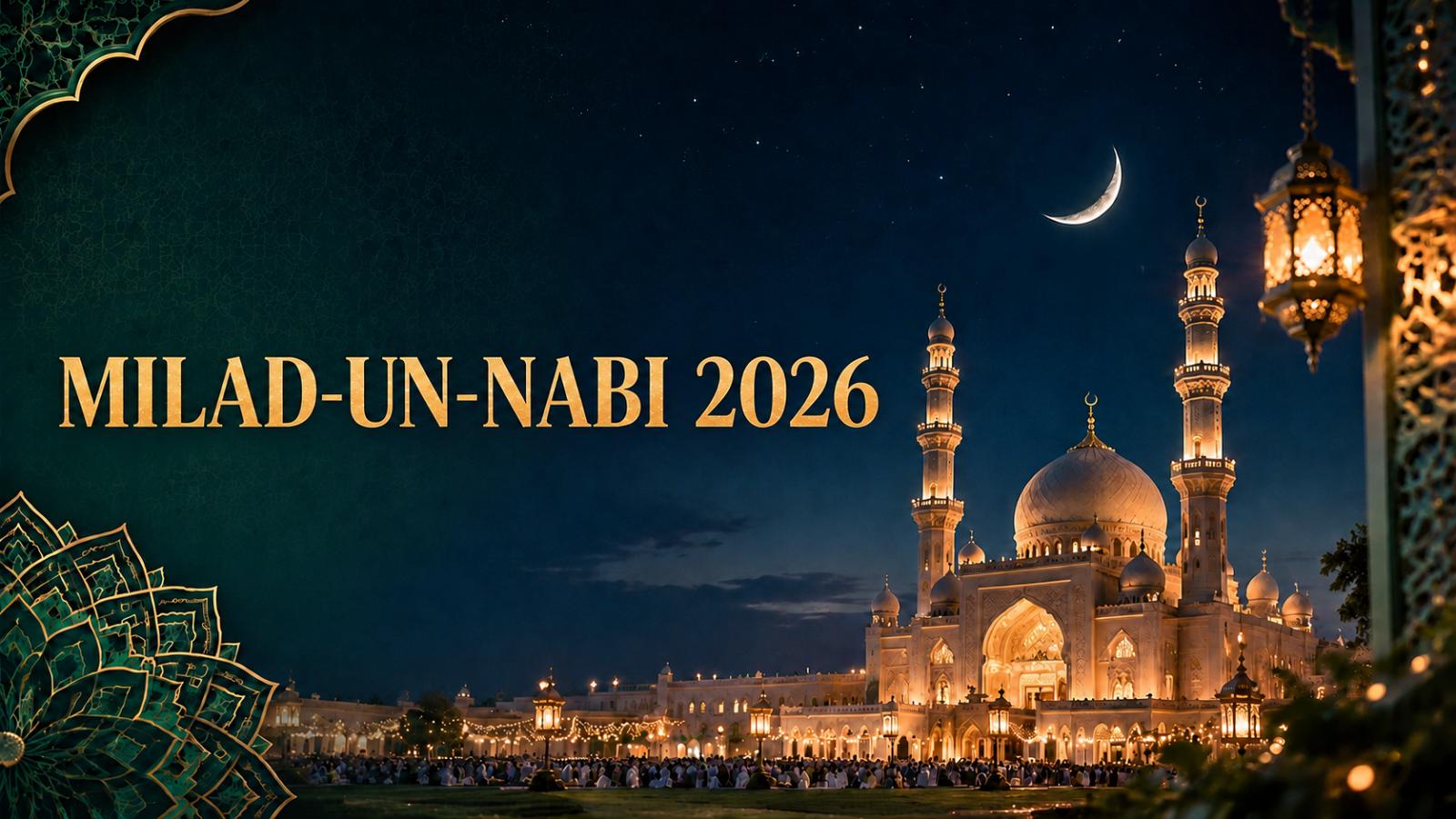
Milad-un-Nabi, also known as Eid-e-Milad or Mawlid, is listed for observance in India on Wednesday, August 26, 2026. The occasion commemorates the birth of Prophet Muhammad and is marked by prayers, religious talks, charity and community gatherings.
The date appears in the Central Government holiday calendar and the Reserve Bank of India calendar. However, observance may differ by a day in some places depending on local moon-sighting practices and community announcements.
Milad Un Nabi 2026 Date In India And Holiday Details
Milad-un-Nabi is observed on the 12th day of Rabi al-Awwal, the third month in the Islamic lunar calendar. In 2026, the Central Government’s holiday calendar lists August 26 as the date for the occasion in India.
Since the Islamic calendar follows lunar cycles, the exact observance can vary in some regions. Local religious authorities and mosque committees may announce the final timing based on moon sighting and established local practice.
For many people, Eid-e-Milad is a day of spiritual reflection and community participation. Mosques often hold special prayers, Quran recitations and talks on the life, teachings and values of Prophet Muhammad.
Those planning travel, bank visits or official work should check local holiday notifications because closures and observance practices can vary by state, city and institution. The listed date serves as the national holiday reference, while local announcements remain important.
Milad Un Nabi History Traces Back Through Islamic Traditions
The observance of Mawlid has a long and varied history across the Islamic world. Public commemorations developed over centuries, with historical accounts linking formal gatherings to the Fatimid period in Egypt.
Over time, the practice expanded across different regions, including parts of the Middle East, Turkey, South Asia and Africa. Communities developed their own ways of marking the occasion while maintaining the central focus on remembering the Prophet’s life, compassion, teachings and contribution to humanity.
One of the earliest widely documented large public Mawlid gatherings took place in Erbil during the early 13th century. It was organised under Muzaffar al-Din Gökböri, a ruler associated with the era of Salahuddin Ayyubi.
Today, practices differ among Muslim communities. Some observe Milad-un-Nabi through large congregational events, while others prefer private prayer, religious study and charitable acts. The common thread is reverence for Prophet Muhammad and reflection on his message of mercy, justice, service and peace.
Milad Un Nabi Significance For Muslim Communities
Milad-un-Nabi holds deep spiritual importance for Muslims who observe it. The day provides an opportunity to revisit the Prophet’s teachings and apply their values in everyday life.
Religious scholars and speakers often discuss his character, kindness, patience, concern for the poor and emphasis on social harmony. Such programmes encourage believers to reflect on personal conduct, family responsibilities and service to the wider community.
In towns and cities across India, mosques, public spaces and neighbourhoods may be decorated with lights and banners. Religious gatherings can include recitations from the Quran, speeches, Naats and devotional prayers.
Processions, commonly called Julus in some regions, are also organised by local groups. Participants may carry green flags, offer prayers and recite devotional poetry. These events are generally planned with local coordination and safety arrangements.
Milad Un Nabi India Celebrations Highlight Charity And Unity
Charity is an important part of Milad-un-Nabi observances in many communities. Families, mosques and voluntary groups may distribute meals, sweets, clothes or other essential items to people in need.
Community kitchens and food-distribution drives are organised in several places, reflecting the emphasis on compassion and helping those facing hardship. Some families also hold small gatherings at home, where relatives and neighbours recite prayers and share traditional food.
The occasion brings people together across generations. It offers children and young people a chance to learn about Islamic history and values, while elders share religious traditions and stories from the Prophet’s life.
As India prepares to observe Eid-e-Milad on August 26, 2026, the focus will remain on devotion, community service and peaceful participation. For many, the occasion is not only a festival date but also a reminder of values that continue to guide daily life.