
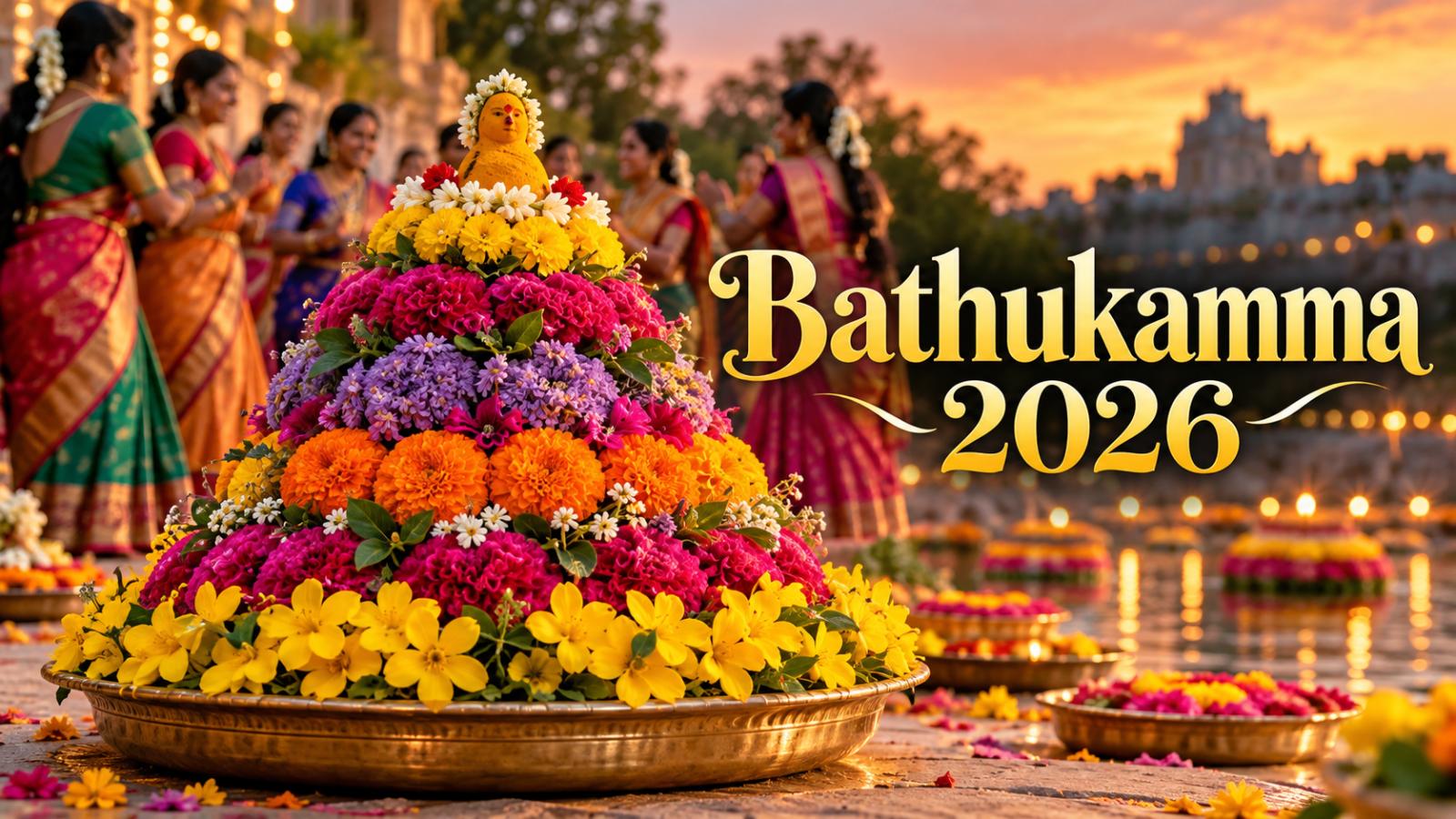
Bathukamma 2026 will be celebrated from October 10 to October 18 across Telangana. The nine-day flower festival begins with Engili Pula Bathukamma on Mahalaya Amavasya and concludes with Saddula Bathukamma. Women prepare colourful floral arrangements, offer traditional food, and gather to sing and dance in celebration of Goddess Gauri.
Bathukamma’s Cultural and Spiritual Significance
Bathukamma is one of Telangana’s most cherished festivals, bringing together devotion, nature and community life. Its name is commonly interpreted as “Mother, come alive,” expressing prayers to Goddess Gauri for the well-being of families. A small turmeric figure called Gauramma is placed on top of the floral arrangement and worshipped during the celebrations.
The festival takes place after the monsoon, when seasonal flowers bloom and water bodies are replenished. Its flower stacks, folk songs and shared offerings reflect the region’s cultural traditions. Women of different generations gather to celebrate, passing down songs, preparation methods and family customs.
- Goddess Gauri, a form of Parvati, is the principal deity worshipped.
- Seasonal flowers form the centrepiece of the celebrations.
- Women sing traditional songs while clapping and moving around the flower stacks.
- Families pray for prosperity, happiness and the well-being of loved ones.
- Customs and offerings may differ between households and villages.
Nine Days of Bathukamma and Their Offerings
Each day of Bathukamma has a distinct name, usually associated with the food offered to Gauramma. These simple, vegetarian preparations use ingredients such as rice, lentils, sesame, milk and jaggery. Preparing and sharing the offerings is an important part of the festival.
- October 10 — Engili Pula Bathukamma: Sesame seeds with rice flour or broken rice are offered.
- October 11 — Atukula Bathukamma: Flattened rice, known as atukulu, is offered with jaggery.
- October 12 — Muddapappu Bathukamma: Soft-cooked moong dal, milk and jaggery form the offering.
- October 13 — Nanabiyyam Bathukamma: Soaked rice is offered with milk and jaggery.
- October 14 — Atla Bathukamma: Small rice dosas, traditionally called atlu, are prepared.
- October 15 — Aligina Bathukamma: Many families observe a pause without playing Bathukamma or making an offering; local traditions vary.
- October 16 — Vepakayala Bathukamma: Rice-flour fritters shaped like neem fruit are offered.
- October 17 — Vennamuddala Bathukamma: Offerings include butter, ghee, sesame and jaggery.
- October 18 — Saddula Bathukamma: Five varieties of prepared rice mark the grand finale.
How to Prepare Bathukamma at Home
A Bathukamma is a carefully arranged stack of flowers, built in circular layers that become smaller towards the top. The shape resembles a temple tower. Families usually prepare it in the afternoon so that the flowers remain fresh for the evening gathering.
Traditional flowers include yellow tangedu, gunugu, marigolds, chrysanthemums, pumpkin flowers and other locally available seasonal blooms. A brass plate, called a thambalam, supports the arrangement, while leaves provide a stable base.
- Clean the plate and line it with pumpkin leaves or a banana leaf.
- Trim flower stems and organise the blooms into small bunches.
- Arrange a broad circular layer with the flower heads facing outward.
- Fill the centre with leaves and loose flowers to support the next layer.
- Add progressively smaller rings, alternating colours.
- Finish with a pumpkin flower or lotus, where available.
- Shape Gauramma using moist turmeric paste and decorate it with kumkum.
- Place Gauramma on top and keep the day’s offering ready.
- Light a diya safely beside the arrangement.
Saddula Bathukamma Celebrations and Immersion
Saddula Bathukamma is the largest gathering of the festival. Families prepare elaborate flower stacks, and women assemble at community spaces, temple grounds or designated locations near lakes and tanks. The arrangements are placed together while participants sing, clap and move around them in circles.
Traditional songs, including those with the refrain “Bathukamma Bathukamma uyyalo,” create a lively atmosphere. Towards the evening, the floral stacks are carried to designated water bodies for immersion. The ritual symbolises a farewell to Gauramma and the return of the flowers to nature.
- Common Saddula offerings include curd, tamarind, lemon, coconut and sesame rice.
- Families may share maleeda, a sweet made with crumbled roti and jaggery.
- Turmeric from Gauramma is traditionally shared or applied as a blessing.
- Follow local arrangements and instructions at immersion sites.
- Keep plastic, foil, thermocol, jewellery and other artificial materials out of the water.
Traditional Dress and Accessories
Bathukamma is also an occasion to wear festive traditional clothing. Women commonly choose silk or cotton sarees, while girls wear langa voni or half sarees. Men participating in the celebrations may wear kurtas. Bright yellow, pink, green and purple complement the colourful flowers.
Comfortable clothing and light jewellery make it easier to carry the arrangement, clap and move during the gathering. Crystal or rudraksha bracelets may be worn as personal accessories, but they are not required for the rituals. Beliefs associated with these items are spiritual traditions rather than established health benefits.
- Choose clothing that allows easy movement.
- Wear secure, lightweight jewellery that will not catch on flowers or fabric.
- Keep bracelets away from turmeric and kumkum, which can stain beads.
- Avoid immersing jewellery or accessories with the flower stack.
- Wear comfortable footwear suitable for walking and crowded gathering places.