
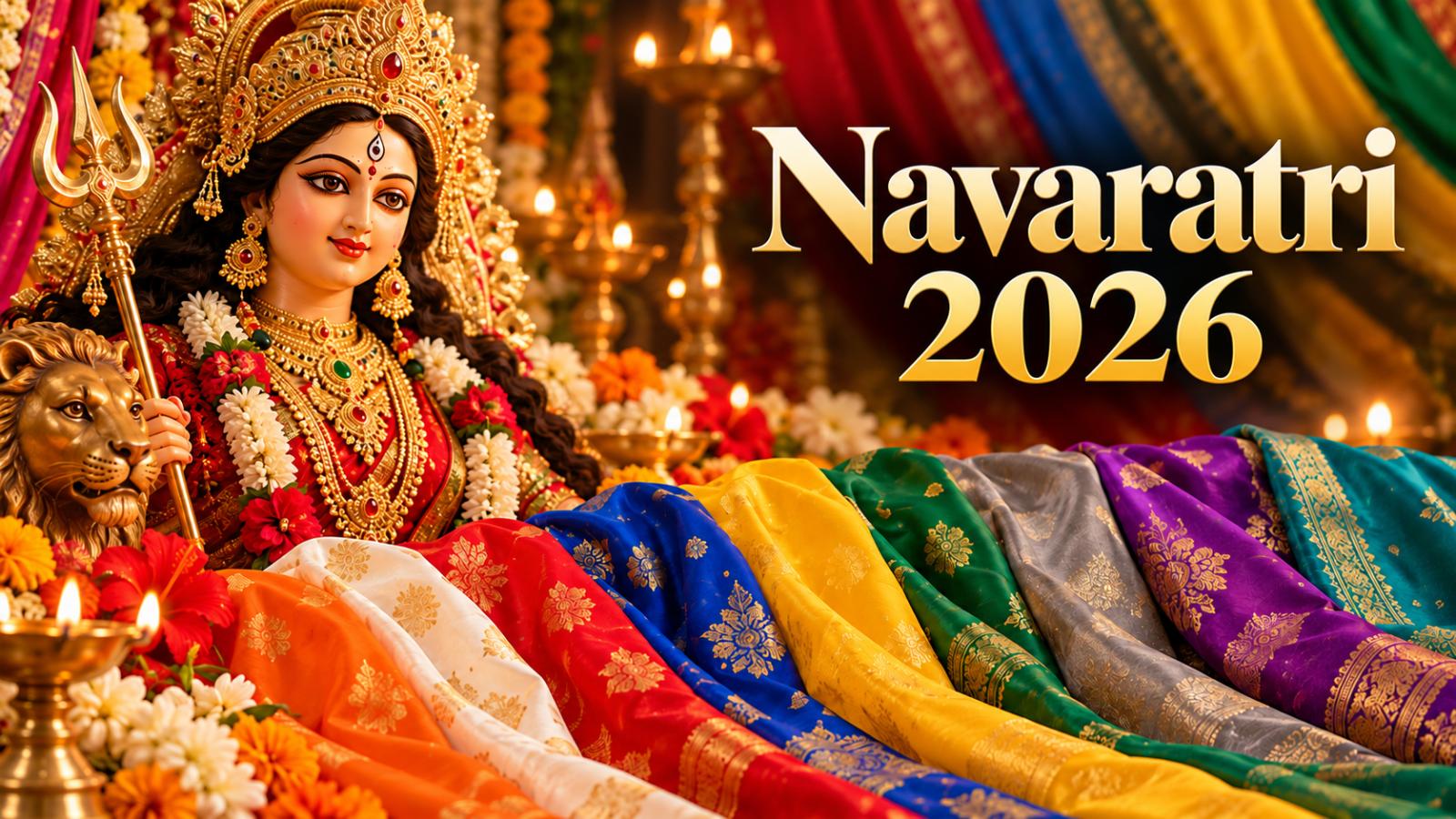
Sharad Navratri 2026 begins on Sunday, October 11, bringing a season of devotion, family celebrations and colourful festive dressing. The nine-day colour sequence runs through October 19, beginning with orange and ending with peacock green. Devotees can use the daily shades to plan sarees, kurtas, dupattas and accessories for home prayers, community gatherings and Garba evenings.
Navratri 2026 Dates and Spiritual Significance
Observed during the Hindu lunar month of Ashwin, Sharad Navratri honours Goddess Durga and her nine forms, collectively known as Navdurga. These forms represent qualities such as strength, discipline, courage, compassion and spiritual wisdom. Families celebrate through worship, fasting, devotional songs and community events, with practices differing across regions.
Navratri begins on October 11 this year, while Vijayadashami, also called Dussehra, follows on October 20. The concluding festival celebrates the victory of good over evil. Devotees should consult a local panchang for ritual timings because lunar dates and regional observances do not always align with a simple numbered-day calendar.
Colour Guide: Nine-Day Navratri Calendar
Many devotees choose a different clothing colour each day for prayers, temple visits and festive gatherings. The supplied article lists the following sequence. It is a clothing-colour guide, rather than an exact daily tithi schedule.
| Day | Date | Goddess Alankaram | Suggested Colour |
|---|---|---|---|
| 1 | October 11, Sunday | Sri Bala Tripurasundari Devi | Orange |
| 2 | October 12, Monday | Sri Gayatri Devi | White |
| 3 | October 13, Tuesday | Sri Annapurna Devi | Red |
| 4 | October 14, Wednesday | Sri Maha Chandi Devi | Royal blue |
| 5 | October 15, Thursday | Sri Lalitha Tripurasundari Devi | Yellow |
| 6 | October 16, Friday | Sri Saraswati Devi | Green |
| 7 | October 17, Saturday | Sri Mahalakshmi Devi | Grey |
| 8 | October 18, Sunday | Sri Durga Devi | Purple |
| 9 | October 19, Monday | Sri Mahishasuramardini Devi | Peacock green |
| 10 | October 20, Tuesday | Sri Rajarajeshwari Devi — Vijayadashami |
Colour sequences may vary across communities and publications. Families in India and the USA can follow their customary colours while checking ritual dates separately with their local temple.
Durga Puja and the Nine Forms of the Goddess
The traditional Navdurga worship sequence includes Shailputri, Brahmacharini, Chandraghanta, Kushmanda, Skandamata, Katyayani, Kalaratri, Mahagauri and Siddhidatri. Together, these forms express different aspects of divine feminine power, from nurturing care to protection against evil.
The outfit colour calendar should be treated separately from the precise timing of each goddess’s puja. Worship follows lunar tithis, and important observances such as Durga Ashtami and Maha Navami may fall differently from the dates suggested by simply counting festival days. Local temple schedules and family traditions provide guidance for these rituals.
Garba Dress Ideas and Colour Traditions
Coordinating clothes with the daily Navratri colour is especially popular in Gujarat and Maharashtra and has spread to workplaces, housing communities and cultural celebrations. Participants can choose a complete outfit in the designated shade or add it through a dupatta, scarf, jewellery or another accessory.
Comfortable clothing is useful for Garba and Dandiya evenings, while simple traditional outfits suit home worship. Wearing the daily colour remains an optional cultural practice. Devotees can participate in prayers and celebrations regardless of their clothing choice, keeping devotion and community spirit at the centre of Navratri.