
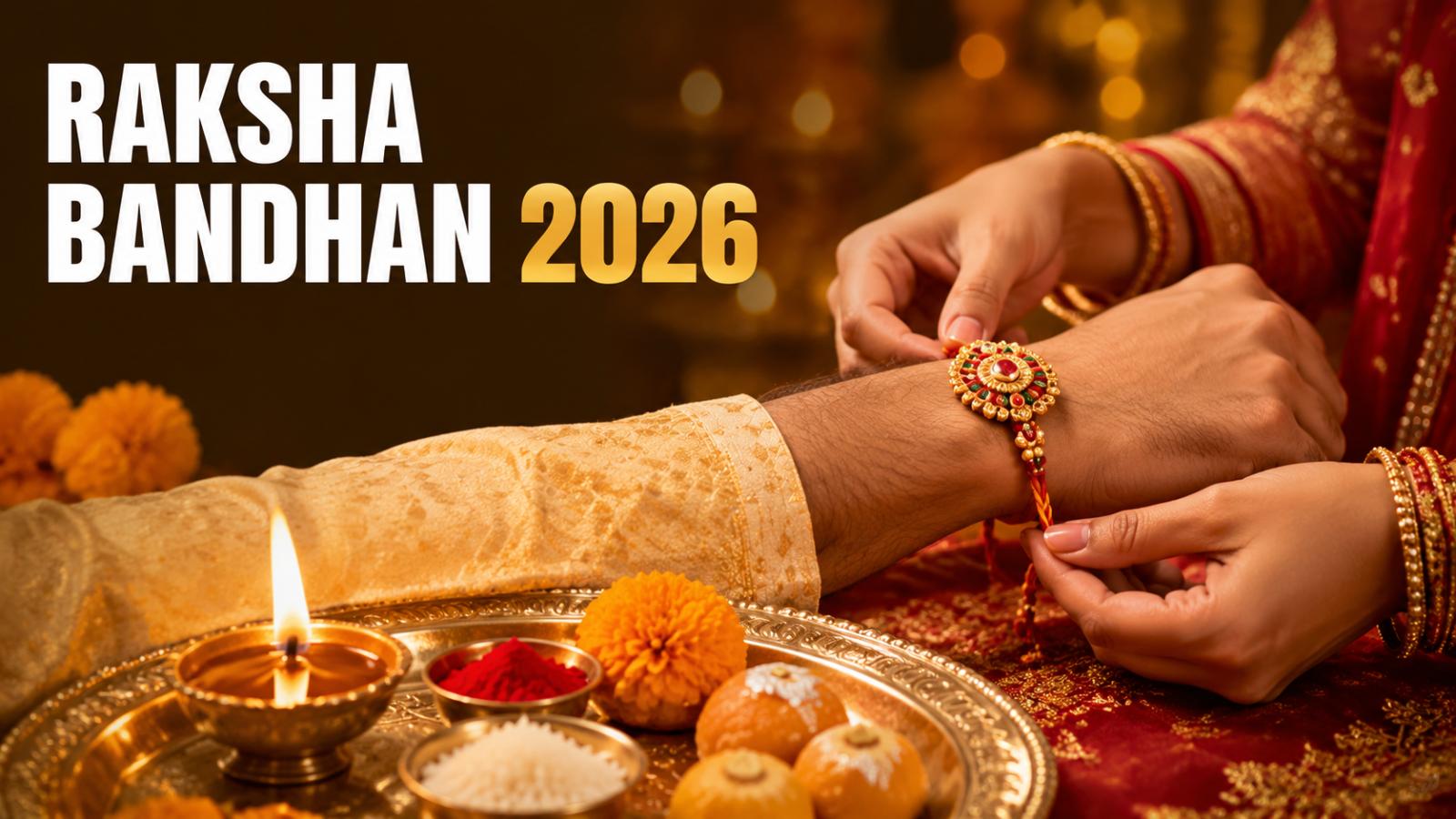
Raksha Bandhan 2026 will be observed on Friday, August 28. The festival celebrates the enduring bond between siblings through the tying of a rakhi, prayers for well-being and a shared promise of love and support.
The occasion falls on Shravan Purnima, the full-moon day of the Hindu month of Shravan. Families across India mark the day through rituals, sweets, gifts, home gatherings and regional traditions.
Raksha Bandhan 2026 Date And Muhurat Details
Raksha Bandhan, also called Rakhi Purnima, will be celebrated on Friday, August 28, 2026. The festival follows the Hindu lunar calendar, which is why its date changes on the Gregorian calendar each year.
The Purnima tithi begins on August 27 and continues into the morning of August 28. Since the full-moon tithi is present at sunrise on August 28, that day is widely observed for Raksha Bandhan.
Many families avoid tying rakhi during Bhadra Kaal, which is considered inauspicious in traditional practice. In 2026, Bhadra is expected to end before sunrise, allowing families to perform the ceremony during the morning. Exact muhurat timings can vary by city and Panchang, so local calendars should be checked before planning the ritual.
Raksha Bandhan 2026: India And USA Timings
Raksha Bandhan 2026 will be celebrated in India on Friday, August 28, during Shravan Purnima. The festival is traditionally observed by tying a rakhi after Bhadra Kaal ends and while the Purnima tithi remains active.
For families in the United States, the local observance falls on Thursday, August 27, 2026. This happens because the Hindu lunar-calendar timings are calculated locally and the United States is behind India by several hours. Families should follow the local city Panchang rather than simply converting the India timing.
| Location | Raksha Bandhan date | Thread ceremony time | Bhadra ends | Time zone |
|---|---|---|---|---|
| India / New Delhi | Friday, August 28, 2026 | 5:57 AM–9:48 AM | Before sunrise | IST |
| USA / New York | Thursday, August 27, 2026 | 11:58 AM–9:44 PM | 11:58 AM | EDT |
| USA / Chicago | Thursday, August 27, 2026 | 10:58 AM–9:41 PM | 10:58 AM | CDT |
| USA / Los Angeles | Thursday, August 27, 2026 | 8:58 AM–9:18 PM | 8:58 AM | PDT |
Raksha Bandhan History And Legends Behind Rakhi
The name Raksha Bandhan means “bond of protection.” Its roots are found in Indian religious and cultural traditions, where a sacred thread symbolises protection, affection and responsibility.
One popular legend connects Goddess Lakshmi and King Bali. According to the story, Lakshmi tied a sacred thread around Bali’s wrist, and the gesture established a bond of care and protection. Another widely narrated tradition is associated with Yamuna and her brother Yama, expressing a sister’s prayers for her brother’s long life and well-being.
The festival has also been linked to historical and folk narratives, including the story of Rani Karnavati and Emperor Humayun. Historians debate the details of that account, but it remains part of the popular cultural memory surrounding Raksha Bandhan.
Raksha Bandhan Significance For Modern Families
Raksha Bandhan is traditionally associated with the relationship between a sister and brother. The sister ties a rakhi and prays for her brother’s health, happiness and success, while the brother offers a gift and promises lifelong care and support.
In modern families, the meaning has become more mutual. The festival is increasingly viewed as a promise to stand by one another emotionally, practically and respectfully. It is also celebrated among sisters, cousins, close friends and people who share a sibling-like bond.
For families living in different cities or countries, Raksha Bandhan is a meaningful way to remain connected. Rakhis sent by post, video-call ceremonies and digital gifts have become common, showing that distance does not reduce the emotion behind the festival.
Planning your celebration:Rakhi 2026: How Gen Z Shows Sibling Love Through Chaos
Raksha Bandhan Rituals And Celebration Ideas
Most families begin by preparing a puja thali with rakhi, roli or kumkum, rice grains, a diya and sweets. The sister performs aarti, applies tilak on her brother’s forehead and ties the rakhi on his right wrist while offering prayers for his well-being.
The brother then gives sweets and a gift, followed by a promise of support. The ritual often ends with a family meal and time spent together. Customs vary across regions, but the central emotion of affection remains the same.
Shravan Purnima is also celebrated as Narali Purnima in parts of Maharashtra, Gujarat and coastal India, where prayers are offered to the sea. Some northern and farming communities observe associated local traditions such as Kajari Purnima.
Families can make Raksha Bandhan 2026 more thoughtful with a simple home gathering, handmade cards, favourite sweets or eco-friendly rakhis. The true celebration lies in spending time together and reaffirming the bond of care that the sacred thread represents.