
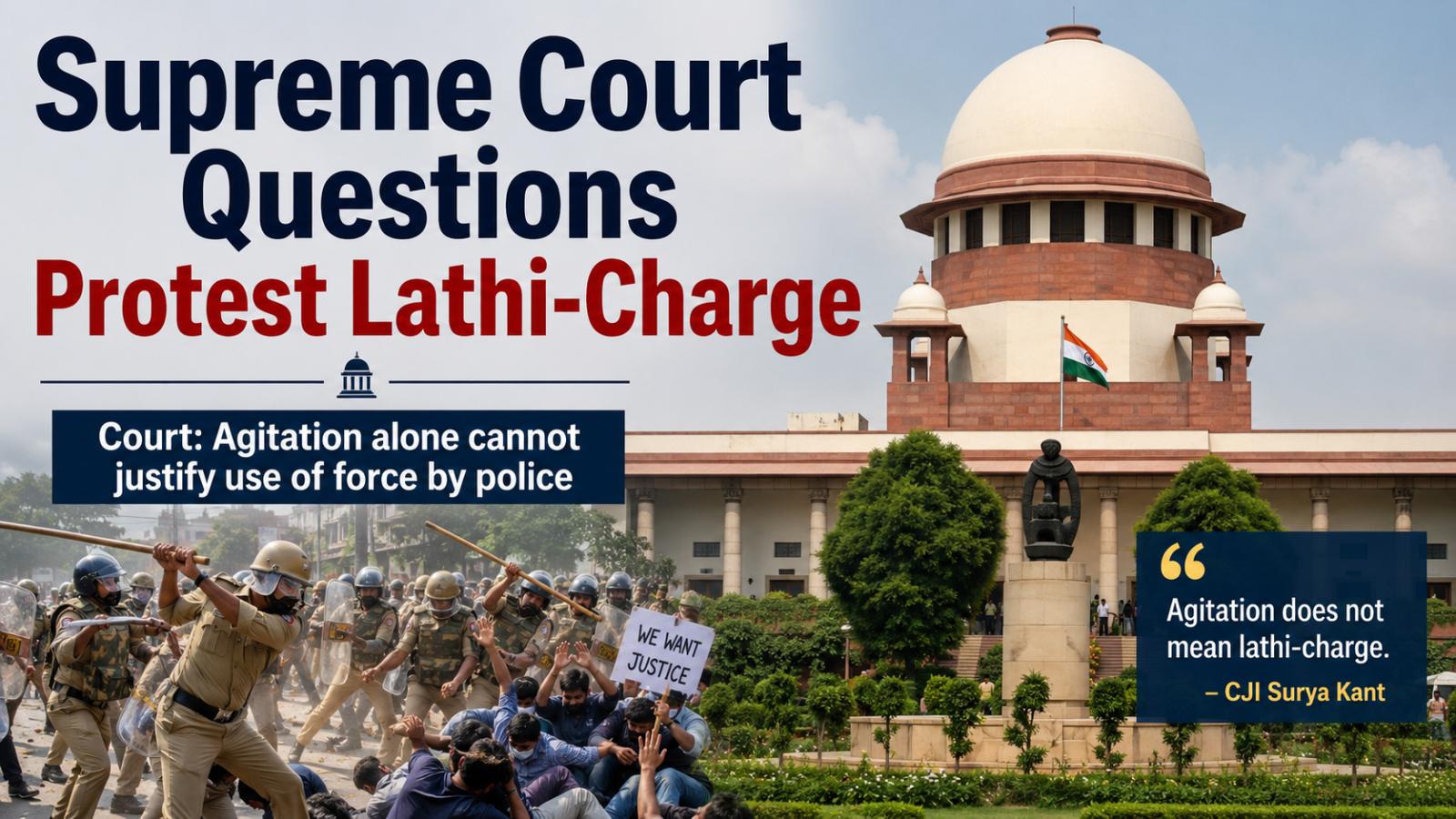
Court Raises Concern Over Protest Lathi-Charge
The Supreme Court said peaceful agitation alone cannot justify a lathi-charge while hearing petitions alleging police excesses during recent student protests. The bench also opposed violence by demonstrators and called for a uniform national protocol.Agitation Alone Cannot Justify Lathi-Charge, Supreme Court Says
The Supreme Court on lathi charge during protests made an important oral observation on Monday, stating that the mere existence of an agitation cannot justify excessive police action.
The court was hearing a group of petitions alleging disproportionate force, arbitrary detentions, and other police excesses during recent student-led protests in Delhi and other parts of the country.
Supreme Court on Lathi Charge During Protests
New Delhi, July 27, 2026: A Supreme Court bench led by Chief Justice of India Surya Kant observed that the Constitution protects the right to hold peaceful and lawful protests.
The Chief Justice said that agitation alone does not provide sufficient grounds for a lathi-charge. At the same time, the bench made it clear that the right to demonstrate does not permit violence or attacks on police personnel.
“Agitation does not mean lathi-charge,” the bench orally observed, while also stressing that agitation cannot be treated as a licence for violence.
These were oral observations made during the hearing and not a final judgment or binding set of guidelines. The petitions are scheduled to be considered further.
Court Seeks Balance Between Protest Rights and Public Order
The bench said allegations of excessive police force should be independently examined when credible concerns are raised.
It also emphasised that injuries suffered by police officers deserve the same attention as injuries sustained by students or other demonstrators. Justice Joymalya Bagchi questioned whether officers deployed for crowd control had been provided adequate protective equipment.
The court indicated that India may require a consistent nationwide protocol for handling peaceful demonstrations. Such a framework could include designated protest spaces, clear crowd-control procedures and safeguards allowing authorities to isolate people who engage in violence without treating an entire gathering as unlawful.
The bench said discipline was an essential part of the democratic process and suggested that the issue should not be approached as a confrontation between protesters and governments.
Petitions Allege Police Excesses Against Students
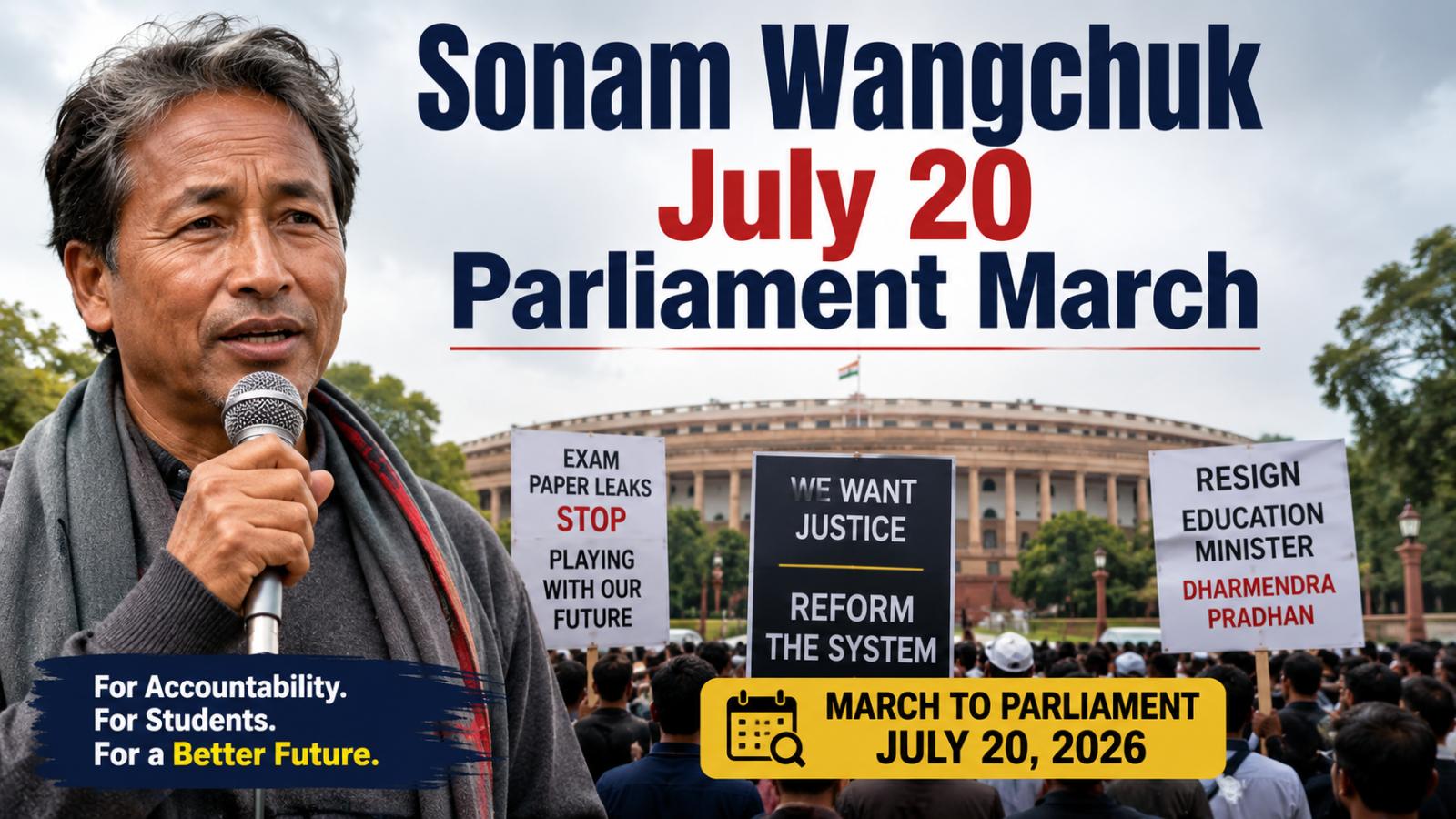
The petitions followed the July 20 student demonstration in New Delhi, during which protesters attempted to march towards Parliament over alleged examination paper leaks and demands for reforms in the education system.
Police used barricades, tear gas, and lathis after sections of the crowd attempted to move beyond restricted areas. Petitioners allege that peaceful participants were also assaulted and detained. Delhi Police has maintained that force became necessary after clashes, stone-pelting, and attempts to breach barricades.
One of the petitions seeks an independent investigation into the July 20 police action. It also requests national guidelines regulating the use of plainclothes personnel during crowd-control operations and clearer rules governing prohibitory orders under Section 163 of the Bharatiya Nagarik Suraksha Sanhita.
The allegations raised by the petitioners have not yet been conclusively established by the court.
Siwan AK-47 Incident Raised During Proceedings
The proceedings also referred to a separate incident in Siwan, Bihar, where an armed police officer was reportedly seen firing an AK-47 during protest-related violence.
Bihar authorities later said that the personnel involved had been suspended. Officials also reported injuries to police officers and damage to vehicles during clashes in different districts.
The available reports did not conclusively establish that the firearm was deliberately discharged at protesters. The circumstances surrounding the incident remain subject to investigation.
Why the Supreme Court’s Observation Matters
The hearing places renewed attention on how authorities should protect public order while respecting the constitutional freedom of citizens to assemble and express dissent peacefully.
The court’s approach indicates that any future framework may impose responsibilities on both sides. Police could be required to follow clearer and more proportionate crowd-control procedures, while protest organisers and participants may be expected to maintain discipline and prevent violence.
The Supreme Court is expected to hear the connected petitions together on Tuesday, July 28, 2026. Until further directions are issued, the remarks remain part of an ongoing judicial examination rather than a final ruling.