
Health Fears Grow as Wangchuk Prepares Parliament March
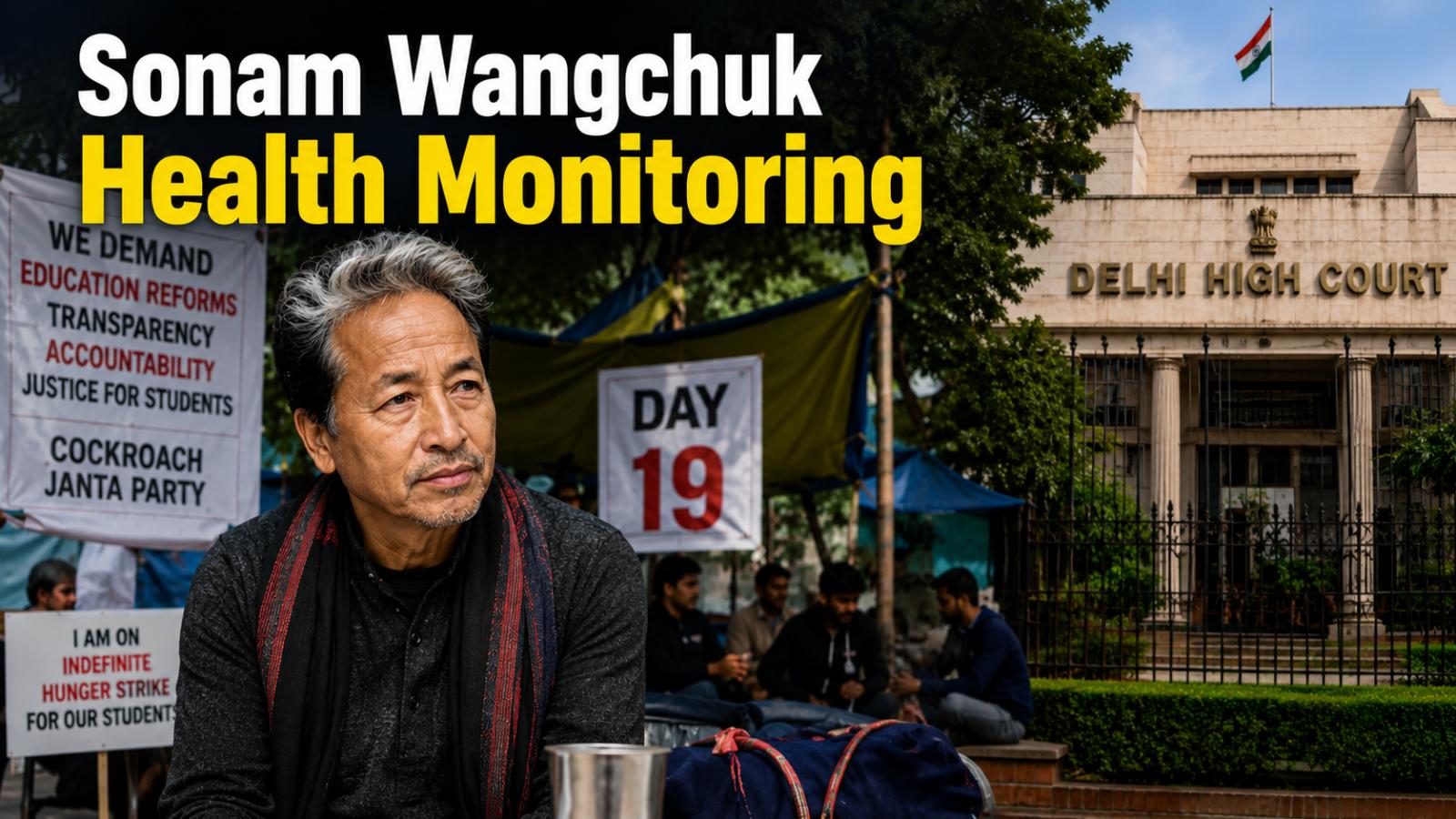
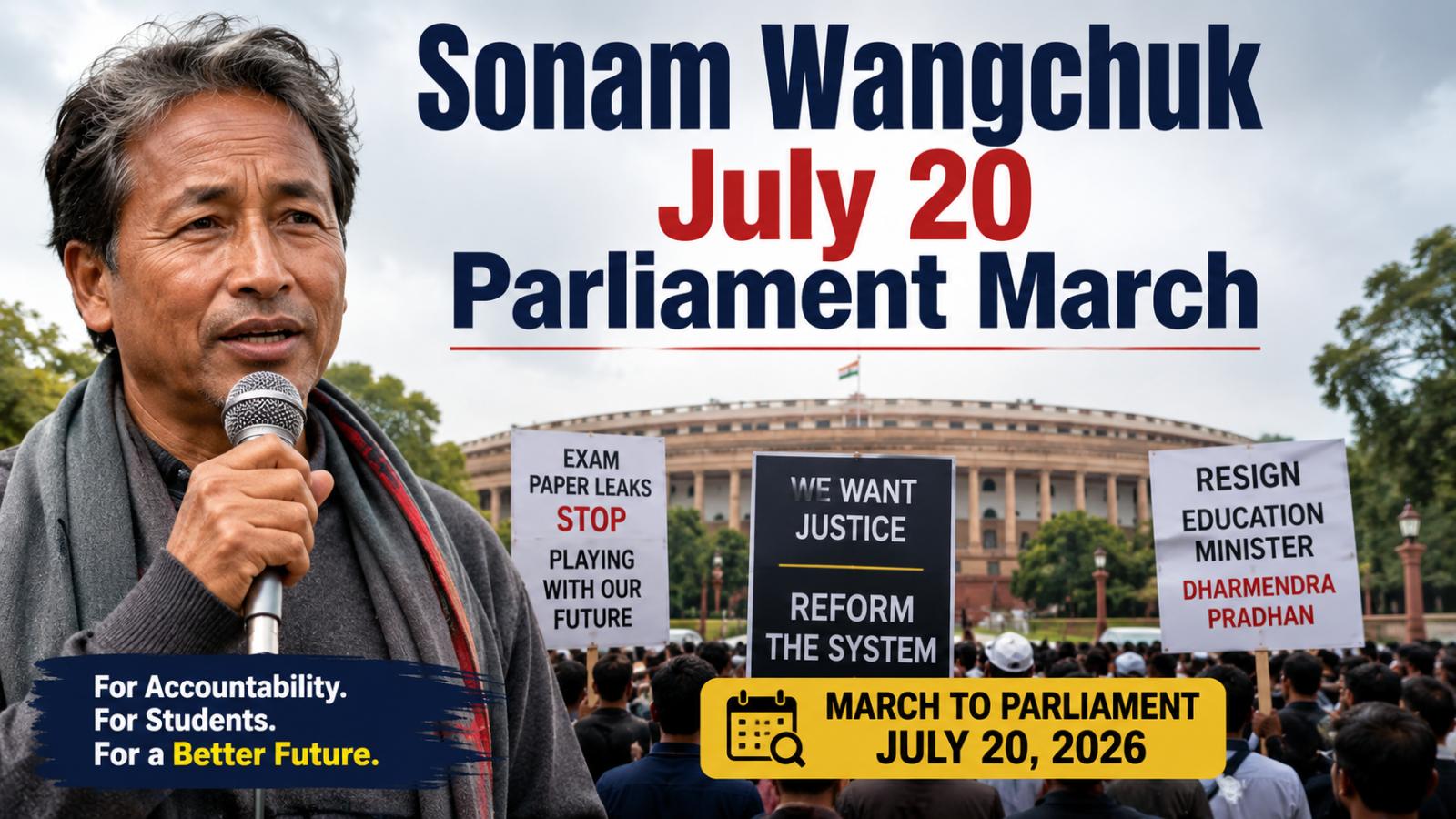
New Delhi, July 17, 2026: The proposed Sonam Wangchuk July 20 march to Parliament has become the central focus of the youth-led protest at Jantar Mantar as the activist’s indefinite hunger strike entered its 20th day on Friday.
Despite growing concerns about his deteriorating health, Wangchuk has indicated that he intends to remain alive and continue the protest until the planned Parliament march on July 20. He has urged supporters to join the demonstration rather than repeatedly asking him to end his fast.
The 59-year-old educationist joined the protest on June 28 in support of the Cockroach Janta Party, or CJP, which has been campaigning over alleged examination paper leaks and wider failures in the education system. The sit-in itself began several days earlier and has gradually attracted students, activists, political leaders, and public figures.
Sonam Wangchuk Hunger Strike Day 20 Raises Health Concerns
Wangchuk’s physical condition has become an increasingly urgent concern. Reports suggest that he has lost more than nine kilograms since beginning the fast, while his weakness and declining blood sugar levels have alarmed supporters and medical professionals.
Earlier this week, Reuters reported that Wangchuk had already lost 8.5 kilograms by the 17th day of his strike. Organisers said his health was continuing to deteriorate, but he remained determined to prepare for the march to Parliament.
The Delhi High Court has also directed authorities to arrange daily medical monitoring and take necessary action if his condition worsens. The Centre assured the court that government doctors and medical experts would regularly assess his health.
Concern over Wangchuk’s survival is now dominating public discussion. However, that attention has also raised questions about whether the original purpose of the protest is being pushed into the background.
Why Is Sonam Wangchuk on Hunger Strike in 2026?
The protest is connected to alleged irregularities and repeated question-paper leaks affecting competitive and entrance examinations.
The CJP and its supporters are demanding the resignation of Union Education Minister Dharmendra Pradhan. They have also called for major reforms in the examination system and compensation for families of students who reportedly died by suicide following disputes involving leaked papers or examination results.
A medical entrance examination involving approximately 2.3 million candidates was cancelled and later conducted again, intensifying frustration among students and job seekers who depend heavily on competitive examinations for access to education and government employment.
The protest movement has received substantial attention online, although physical attendance at Jantar Mantar has remained smaller than its digital following. Opposition leaders and members of the film industry have visited the site or appealed to Wangchuk to protect his health.
Health Appeals Risk Overshadowing Protest Demands
As Wangchuk has grown weaker, the public conversation has shifted from demands for ministerial accountability towards efforts to persuade him to discontinue the fast.
Several opposition leaders have asked him to end the hunger strike. However, according to the India Today analysis, many of those appeals did not place equal emphasis on the original demand for the education minister’s resignation.
This has created a difficult situation for the movement. Ending the protest without any formal government response could be presented as a setback, while continuing the fast may place Wangchuk’s health at greater risk.
The Education Ministry and government representatives had not publicly responded to requests for comment cited by Reuters and the Associated Press. Protest organisers have accused the government of ignoring the agitation, while officials have not announced negotiations with the group.
July 20 Parliament March Becomes Crucial
The Wangchuk Parliament march in Delhi is planned for July 20, coinciding with the beginning of the Monsoon session of Parliament. Organisers hope the demonstration will bring their demands directly to lawmakers and revive attention on examination reforms.
Wangchuk has maintained that peaceful civil disobedience is preferable to violence or unrest. The coming days will therefore be critical for both his health and the future direction of the movement.
Whether the Parliament march leads to dialogue remains uncertain. However, the protest has already brought national attention to examination accountability, student frustration, and the consequences of unresolved paper-leak allegations.