
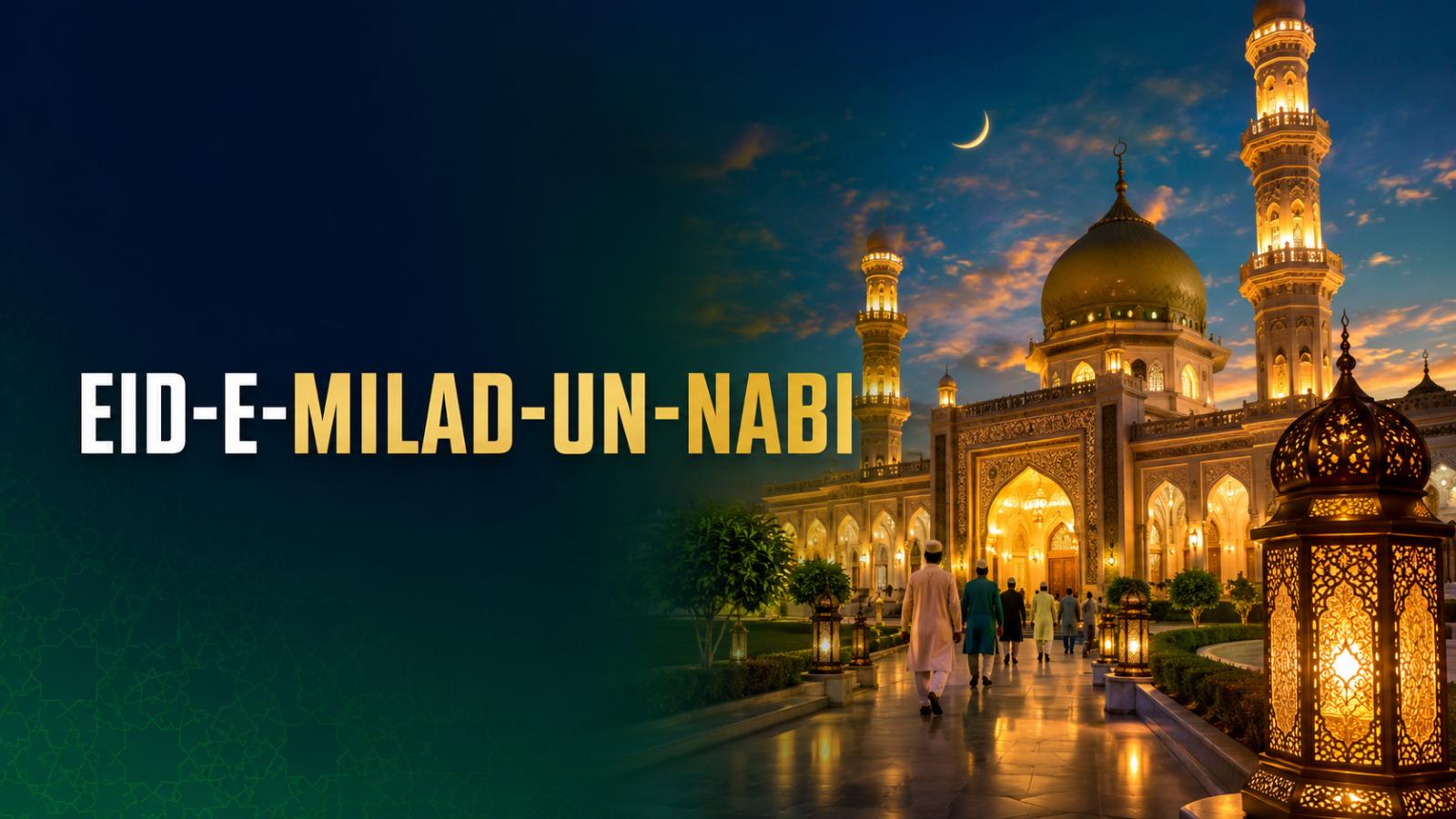
Muslims in many parts of India are observing Eid-e-Milad-un-Nabi, also known as Milad-un-Nabi, with prayers, religious gatherings, processions, charity initiatives and family celebrations.
The occasion commemorates the birth of Prophet Muhammad, regarded in Islam as the final prophet and messenger of God. It falls in the Islamic month of Rabi’ al-Awwal and provides an opportunity for those who observe it to remember the Prophet’s life and teachings.
The values associated with his teachings, including compassion, forgiveness, patience, humility, generosity and service to others, remain at the centre of the observance. For many families and local communities, the day combines religious reflection with acts that strengthen social bonds.
Observances vary across regions and communities. While some organise large public gatherings and processions, others mark the day through prayers at home, visits to mosques, charitable giving and shared meals with relatives and neighbours.
Eid-e-Milad-un-Nabi processions and mosque gatheringsJuloos, or religious processions, are held in several cities and towns as part of the observance. Streets and neighbourhoods may be decorated with lights and festive displays, while community groups arrange programmes centred on faith and remembrance.
Mosques host special gatherings where scholars and religious speakers discuss the life, teachings and example of Prophet Muhammad. Naats, devotional poems in praise of the Prophet, are also recited at many programmes.
Volunteers in some localities distribute water, food, sweets and drinks to participants and passers-by. These activities reflect the day’s emphasis on sharing and community care.
The scale and form of the events differ widely. Some communities hold public programmes, while others choose quiet prayer, reading and reflection within families or smaller neighbourhood groups. The common focus remains on respect, spiritual learning and harmony.
Eid-e-Milad-un-Nabi charity drives support communitiesCharity and service form an important part of Milad-un-Nabi observances for many people. Local organisations, mosques and volunteer groups often arrange food-distribution programmes for people in need.
In some places, community welfare activities include providing meals, distributing essentials and organising blood-donation camps. The efforts are designed to translate the values of kindness and generosity into practical support for others.
Such initiatives bring together residents, youth volunteers and community leaders. They also give families an opportunity to involve children in acts of service and explain the importance of compassion in everyday life.
The emphasis on helping others is one reason the occasion holds special meaning beyond religious gatherings. For many observers, the day is a reminder that faith is reflected not only in prayer but also in empathy, responsibility and concern for the wider community.
Eid-e-Milad-un-Nabi traditions include shared festive mealsTraditional food is another familiar part of the day, with recipes differing across India’s diverse Muslim communities. Families prepare special dishes and share them with relatives, friends and neighbours.
In Hyderabad and some other regions, Kupra Puri is among the delicacies associated with Milad celebrations. The sweet puri is commonly prepared with ingredients such as sweetened dal, coconut, sugar, dry fruits or khowa before being deep-fried. Kheer, or rice pudding, is also prepared in many homes.
The sharing of food adds a warm community dimension to the occasion. Families may distribute festive dishes as gifts or serve meals to guests and neighbours, reinforcing the values of generosity and togetherness.
While Milad-un-Nabi is observed differently across communities, the day continues to bring attention to love, compassion, service and peaceful coexistence. Across India, prayers, gatherings, charity and family traditions reflect the enduring message of faith and community.