
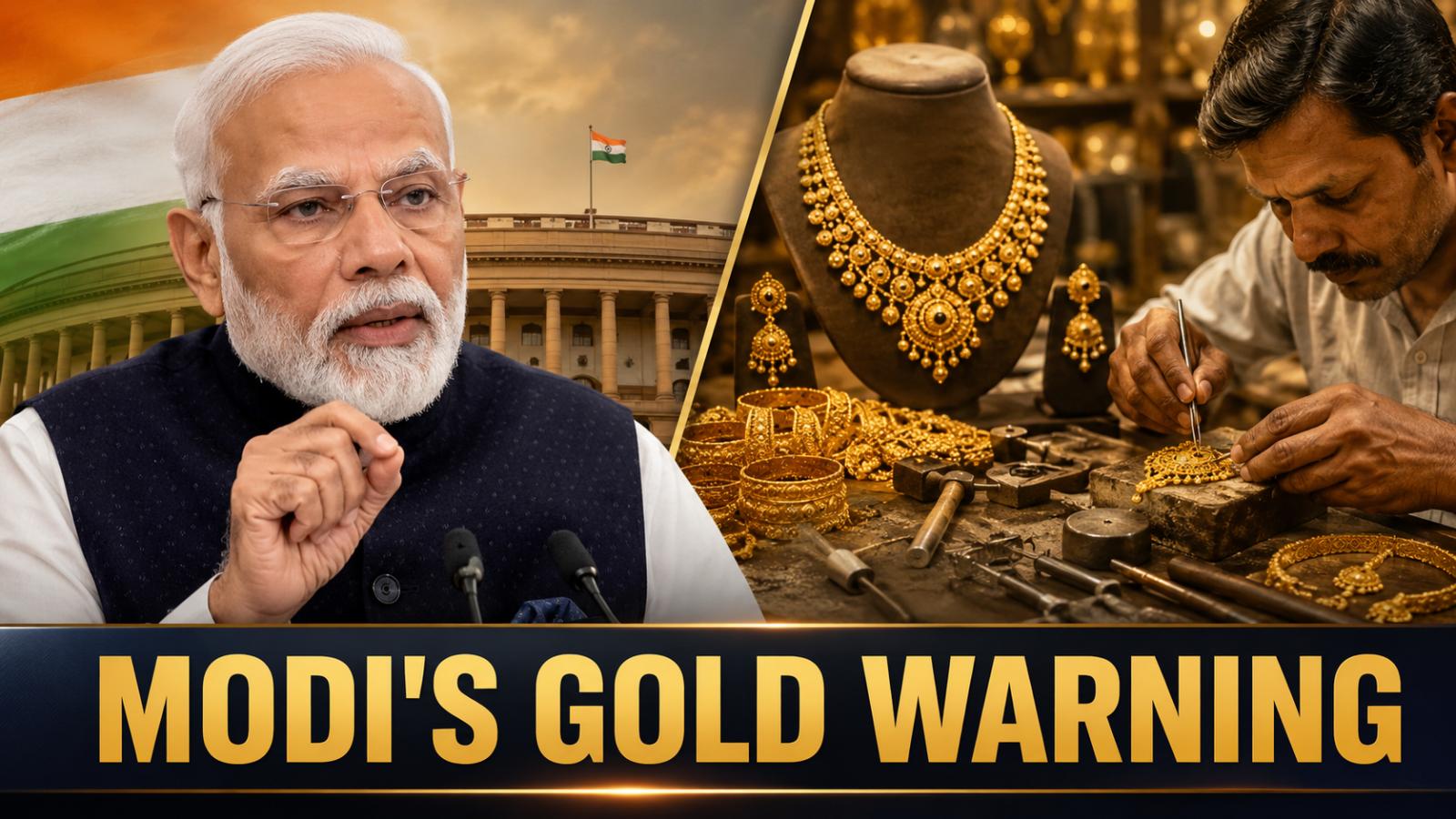
Prime Minister Narendra Modi renewed his appeal to limit unnecessary gold purchases and overseas spending through a video message. Speaking during an official visit to Bishkek, he promoted local consumption, while sections of the jewellery trade raised livelihood concerns.
Prime Minister Narendra Modi has renewed his appeal to Indians to avoid purchasing gold unless necessary, reduce non-essential foreign travel and hold weddings within the country. The message, delivered through a social media video during his official visit to Bishkek, formed part of his broader campaign to promote domestic spending and economic self-reliance.
Modi linked the appeal to India’s strong economic performance and highlighted the country’s 7.8% real GDP growth during the April-June quarter of the 2026-27 financial year. Official government data showed that the quarterly growth rate exceeded the Reserve Bank of India’s earlier estimate of 7%.
The prime minister said India’s economic progress remained notable at a time when several countries were facing geopolitical uncertainty, conflicts, supply-chain disruptions and pressure on energy markets. He credited Indian workers, entrepreneurs and consumers for helping the economy maintain its momentum.
Modi Promotes Vocal For Local And Wed In IndiaIn his message, Modi urged citizens to make everyday spending decisions that support Indian workers and businesses. He repeated the “Vocal for Local” message and encouraged people to choose products manufactured within the country whenever possible.
The prime minister also promoted the “Wed in India” initiative, asking families to reconsider destination weddings held overseas. According to the appeal, weddings and leisure spending conducted within India can benefit domestic hotels, event companies, transport operators, artisans, caterers and other service providers.
Modi further advised citizens to postpone avoidable foreign vacations. The appeal was presented as a way to retain more consumer spending within India and reduce pressure on the country’s foreign-exchange resources during a period of global instability.
Gold Buying Warning Draws Industry ConcernsThe renewed warning against unnecessary gold purchases has generated questions among jewellers, goldsmiths and other workers whose incomes depend on the jewellery trade. Industry members argue that a broad reduction in demand could affect artisans, small retailers and family-run workshops, particularly during the wedding and festival seasons.
India’s jewellery sector supports a wide network of designers, goldsmiths, polishers, traders and shop employees. Critics of the appeal say public messaging should distinguish between excessive gold accumulation and legitimate jewellery purchases that sustain employment across the industry.
The prime minister did not call for a legal restriction or ban on gold purchases. His message was an appeal for voluntary restraint, especially when buying gold is not essential. Consumers therefore remain free to make purchasing decisions according to their personal, cultural and financial needs.
India GDP Growth Supports Economic MessageIndia recorded 7.8% real GDP growth in the first quarter of FY 2026-27, compared with 6.9% in the corresponding period a year earlier. Real gross value added increased by 8.2%, while investment rose by 11.9% and household consumption expanded by 7.1%, according to the
Modi used these figures to reinforce his argument that consumer choices can contribute to national economic strength. However, the debate over gold highlights the difficulty of balancing foreign-exchange conservation with the livelihoods of people employed in domestic jewellery production.
The impact of the renewed appeal will ultimately depend on how consumers interpret it. While supporters may view it as a practical step toward self-reliance, jewellery workers want the government’s economic message to acknowledge their dependence on continued domestic demand.