

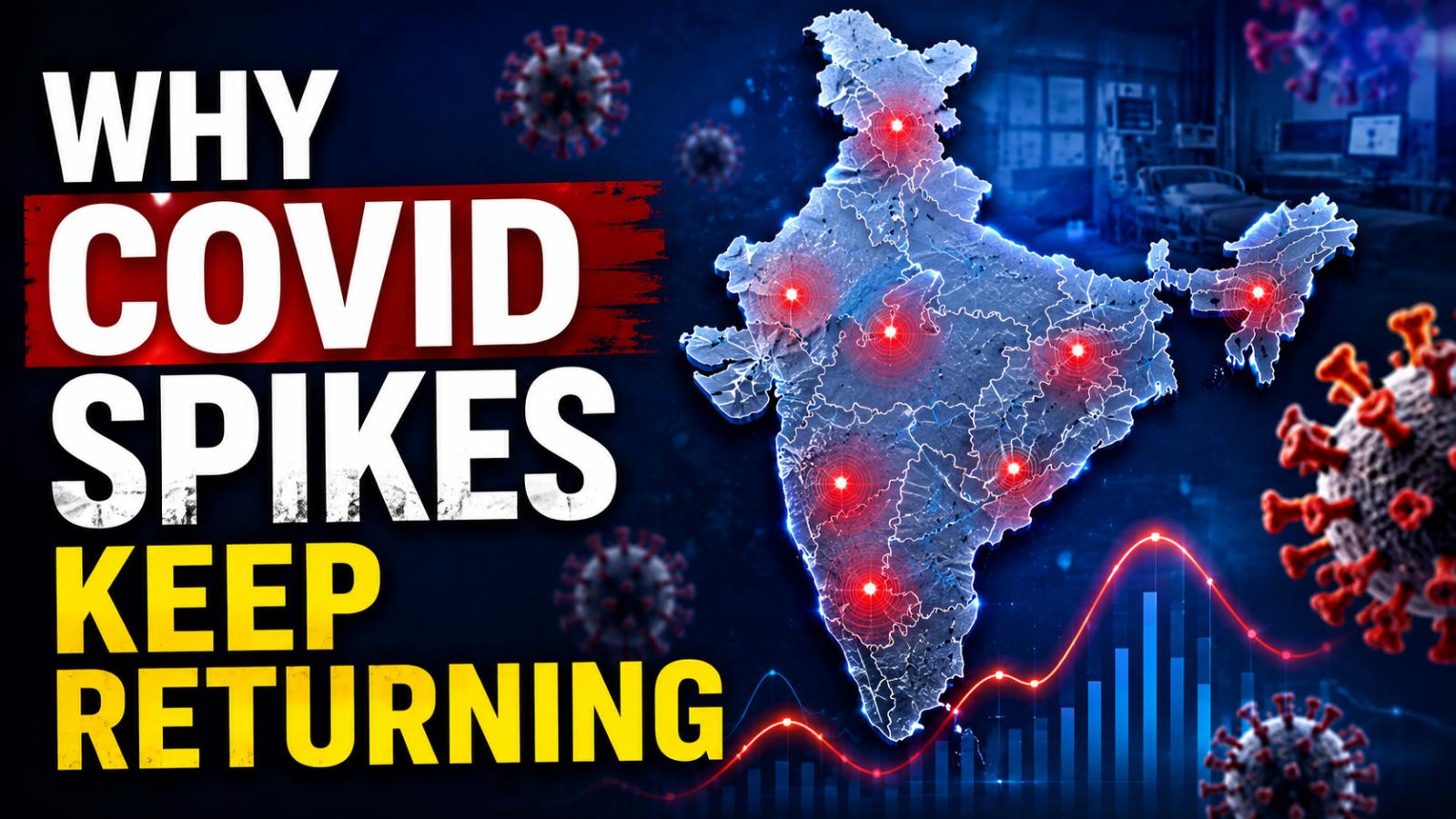
Small increases in Covid-19 infections are once again being reported from parts of India, including Andhra Pradesh, Kolkata and a few other locations. The developments have raised familiar concerns about whether the country is entering another major wave.
Health specialists, however, say the present pattern appears to be different from the large nationwide surges seen during the pandemic. The increases are limited, uneven and largely concentrated in specific regions.
Experts believe the pattern reflects the continued circulation of an endemic coronavirus that is still evolving and finding opportunities to infect people whose protection against infection has weakened.
Covid Infections in India Are Not Rising Uniformly
Covid infections in India rarely increase at the same pace across every state or city. One region may experience a noticeable rise while nearby areas continue to report only a small number of cases.
This happens because transmission is influenced by several local factors, including population density, travel, social gatherings, weather conditions, immunity levels and testing activity.
A new variant may also enter one city earlier than another. This can create a brief local spike without producing a simultaneous national increase. For this reason, experts say isolated increases should be studied carefully before they are described as a new Covid wave.
New Omicron Variants Can Trigger Reinfections
The coronavirus continues to change through natural mutations. Many of the newer strains are descendants of the Omicron family, which has remained dominant because of its ability to spread efficiently.
Some new Omicron variants may partially avoid antibodies created by previous infections or vaccination. This gives the virus another chance to infect people who have already had Covid-19.
Reinfection does not automatically mean that the virus has become more dangerous. A variant may spread more easily while causing a similar or lower level of severe illness.
Scientists therefore examine several indicators, including hospital admissions, intensive-care cases and deaths, rather than judging the situation only by infection numbers.
Declining Immunity Creates New Transmission Opportunities
Protection against catching Covid-19 gradually declines after vaccination or a previous infection. This process is commonly described as waning or declining immunity.
As antibody levels fall, people may become susceptible to infection again, especially when a new subvariant enters the community.
However, the immune system can retain memory of the virus. This often helps the body respond faster and lowers the risk of serious disease in many vaccinated or previously infected individuals.
This is one reason why recent regional increases have generally not produced the same level of hospital pressure seen during earlier pandemic waves.
Regional Covid Outbreaks Depend on Local Conditions
Regional Covid outbreaks can be influenced by conditions that differ widely across India. Crowded public places, festivals, public transport, travel and poorly ventilated indoor environments can temporarily increase transmission.
Testing patterns can also affect reported case numbers. When more people seek medical care for respiratory symptoms, authorities may detect infections that would otherwise have gone unreported.
A rise in detected cases may therefore reflect both increased transmission and increased testing.
The scale of a local outbreak should be assessed through a combination of case data, hospital trends and laboratory findings.
Endemic Coronavirus Still Requires Attention
Describing Covid-19 as endemic does not mean that it has disappeared. It means the virus continues to circulate within the population and may cause periodic increases.
Most healthy individuals may now experience mild or moderate symptoms, but some people remain at greater risk.
Older adults, people with weakened immune systems and patients with serious underlying health conditions are more likely to develop complications. They should seek medical advice early if symptoms appear.
Public-health authorities must also continue watching for unusual changes in severity or hospitalisation levels.
Public Health Surveillance Remains Important
Genomic surveillance helps scientists identify which Covid variants are circulating and whether a new strain is spreading unusually fast.
It also allows researchers to examine whether a variant is linked to greater immune escape, more reinfections or more severe disease.
Hospital data is equally important. A sudden increase in serious illness would be more concerning than a limited increase in mild infections. Reliable surveillance helps health authorities respond early without creating unnecessary public alarm.
Is India Entering Another Covid Wave?
The available pattern of scattered local increases does not by itself prove that India is facing another nationwide Covid wave.
A major wave would usually involve sustained growth across several states, accompanied by rising hospital admissions and broader pressure on the healthcare system.
At present, the situation appears more consistent with limited endemic flare-ups caused by virus mutations, declining immunity and regional transmission conditions.
The assessment must still be updated if hospitalisations, deaths or disease severity begin to rise.
Why Covid-19 Spikes May Continue
Small Covid-19 spikes may continue to appear periodically as the virus evolves and population immunity changes.The timing of these increases may remain irregular until the virus develops a more predictable seasonal pattern. For now, continued monitoring, responsible health reporting and timely protection for vulnerable groups remain the most practical response.
India’s repeated local Covid-19 spikes should not be ignored, but they should also not be treated as proof of a new pandemic emergency without stronger evidence.