
Israel Election 2026 Puts Netanyahu’s Future In Focus
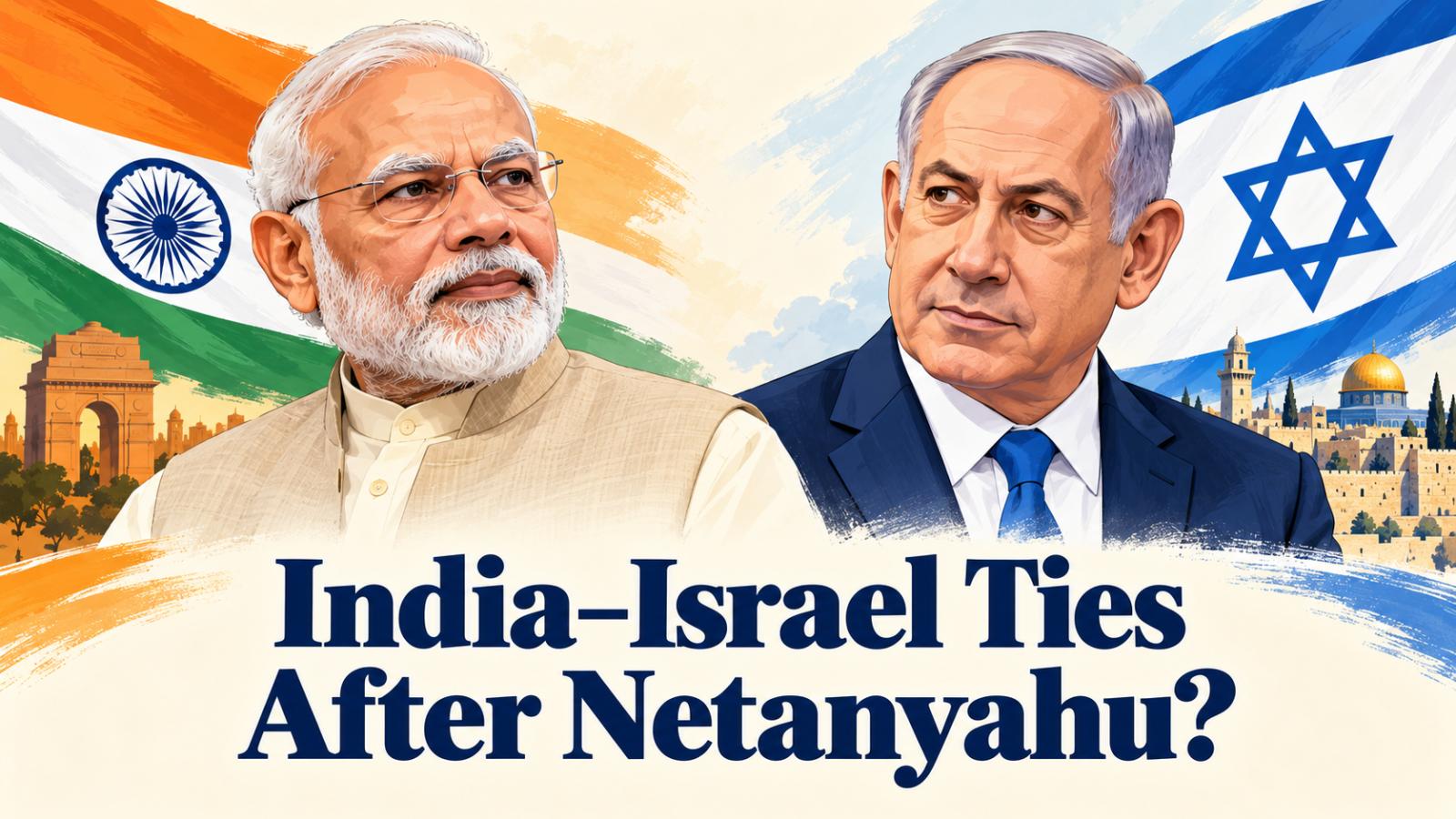
Israel’s parliamentary election on Tuesday, October 27, has raised a question for New Delhi: could a government without Benjamin Netanyahu change Israel’s approach to India?
Netanyahu faces a closely contested election, with former military chief Gadi Eisenkot emerging as a leading challenger. However, voting alone will not determine the next prime minister. Coalition negotiations could take weeks or months, and neither side is assured of a governing majority.
For India, the immediate issue is how any incoming government would approach existing cooperation, rather than assuming that Netanyahu’s departure would end a strategic relationship.
India-Israel Partnership Extends Beyond Personal Diplomacy
Prime Minister Narendra Modi’s rapport with Netanyahu has given bilateral ties considerable visibility. Yet the relationship rests on diplomatic institutions, commercial links and cooperation developed over decades.
During Modi’s February 2026 visit, the two countries elevated relations to a Special Strategic Partnership for Peace, Innovation and Prosperity. Their discussions covered defence, technology, innovation and other areas of shared interest.
These arrangements provide a basis for continuity under a different Israeli administration. A successor could change the diplomatic tone or pace of engagement, but predicting a fundamental policy shift would be premature. Continuity is an assessment based on shared interests, not a guaranteed election outcome.
Defence And Trade Interests Remain Important
India’s stakes include defence cooperation, technology partnerships, investment linked to Haifa Port, proposed free trade negotiations and the India-Middle East-Europe Economic Corridor.
A leadership change would not, by itself, cancel existing agreements or commercial investments. However, future decisions could affect new negotiations, project priorities and implementation schedules.
There is also a distinction between preserving bilateral cooperation and delivering ambitious regional projects. Connectivity plans depend on security, financing and coordination among several countries. Their progress cannot be attributed solely to Netanyahu’s political future.
Regional Stability Shapes India’s Wider Concerns
India must manage its relationship with Israel alongside important ties with Iran, Gulf countries and the United States. Regional conflict can affect energy supplies, shipping, investments and the welfare of Indians living and working across the Middle East.
A new Israeli government could bring different diplomatic priorities, but its policies would depend on coalition partners and security developments. A change of leadership would therefore not automatically produce either a break with India or an end to regional hostilities.
The likely implication for New Delhi is a need to build rapport with whoever forms the next government while protecting established cooperation. India-Israel ties have substantial foundations beyond the Modi-Netanyahu relationship, although their future direction will depend on policy choices after the election.