
Washington, D.C. | The House voted 214-211 to advance legislation targeting Russia and major countries purchasing its oil and gas.
US House Advances Russia Bill With 100% Tariff Risk for India
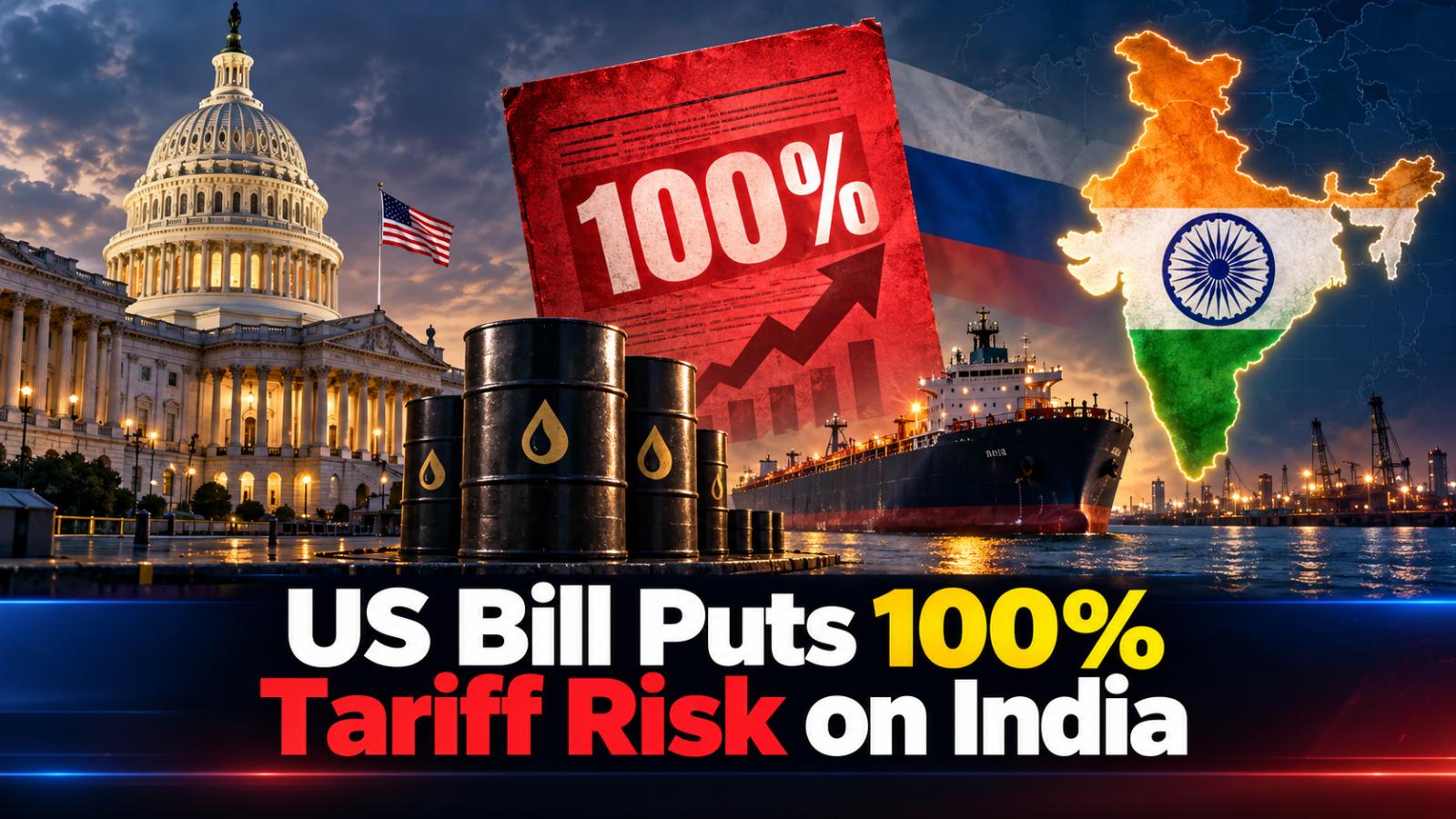
The US House of Representatives has cleared a procedural hurdle for legislation that could authorise President Donald Trump to impose tariffs of up to 100 per cent on India, China and other major purchasers of Russian oil and gas.
The resolution allowing the Lindsey O. Graham Sanctioning Russia and Iran Act of 2026 to advance was approved by a narrow 214-211 vote on Tuesday evening. Two Democratic lawmakers reportedly joined Republicans, surprising the House Democratic leadership.
The vote did not constitute final passage of the sanctions legislation, and no new tariff has been imposed on India at this stage. The House is expected to consider the bill for final approval on Wednesday before beginning an early recess on Thursday.
US House clears procedural hurdle
The legislation seeks to increase economic pressure on Moscow over the war in Ukraine by targeting Russian officials, energy interests and entities accused of helping Russia evade existing sanctions.
A key provision would authorise, rather than automatically require, the US president to impose tariffs of up to 100 per cent on goods imported from countries that remain among Russia’s five largest oil and gas buyers by volume. Although the Senate-passed text does not directly name India or China, both countries are viewed as potential targets because of their substantial energy purchases from Russia.
The House Rules Committee considered the Senate amendment to the legislation before it moved to the floor. The measure was introduced in the House with bipartisan sponsorship from lawmakers including Joe Wilson, Steny Hoyer and Michael McCaul.
Russia sanctions extend to energy and shadow fleet
The bill proposes sanctions against individuals and entities linked to Russia’s leadership, energy industry and so-called shadow fleet. The term refers to vessels and networks allegedly used to transport Russian oil while avoiding international sanctions and price restrictions.
Supporters argue that Russia’s energy revenue helps finance its continuing military operations in Ukraine. They contend that secondary sanctions and tariffs targeting major trading partners would force importing countries to reduce their dependence on Russian energy.
The proposal also extends and strengthens existing restrictions connected to Iran. Its supporters describe the measure as a broader attempt to counter cooperation between Moscow and Tehran and limit funding available to both governments.
India faces tariff risk but no immediate levy
For India, the bill creates a significant potential trade risk, but it does not mean that a 100 per cent tariff has already been approved or imposed. The legislation would first need to pass the House in a final vote and then be sent to the president.
Even after enactment, the precise impact would depend on how the administration exercises the authority provided by Congress. The proposed language gives the president considerable discretion over whether tariffs should be introduced, which countries would be covered and how the measures might be adjusted or waived.
Democratic Congressman Gregory Meeks, the ranking member of the House Foreign Affairs Committee, opposed the legislation on the grounds that it would hand the president expansive tariff authority without sufficient congressional safeguards. Critics also warn that such tariffs could raise costs for American importers and complicate relations with major partners.
Senate approval raises prospects of passage
The Senate approved the legislation by an 86-11 vote on August 7, demonstrating strong bipartisan support for additional pressure on Russia. The House version has also attracted lawmakers from both parties, although disagreement remains over the tariff provisions and the transfer of trade powers to the executive branch.
The measure is moving forward as pro-Ukraine organisations intensify lobbying on Capitol Hill. The American Coalition for Ukraine is holding its Ukraine Action Summit in Washington to encourage lawmakers to continue political, financial and military support for Kyiv.
The House’s approaching recess adds urgency to the schedule. If the bill does not secure final approval before lawmakers leave Washington, further consideration could be delayed until the House returns on November 9 after the midterm elections.