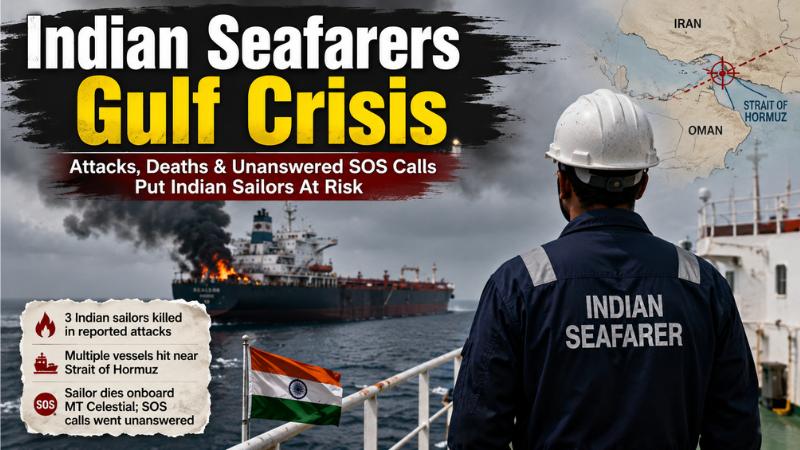

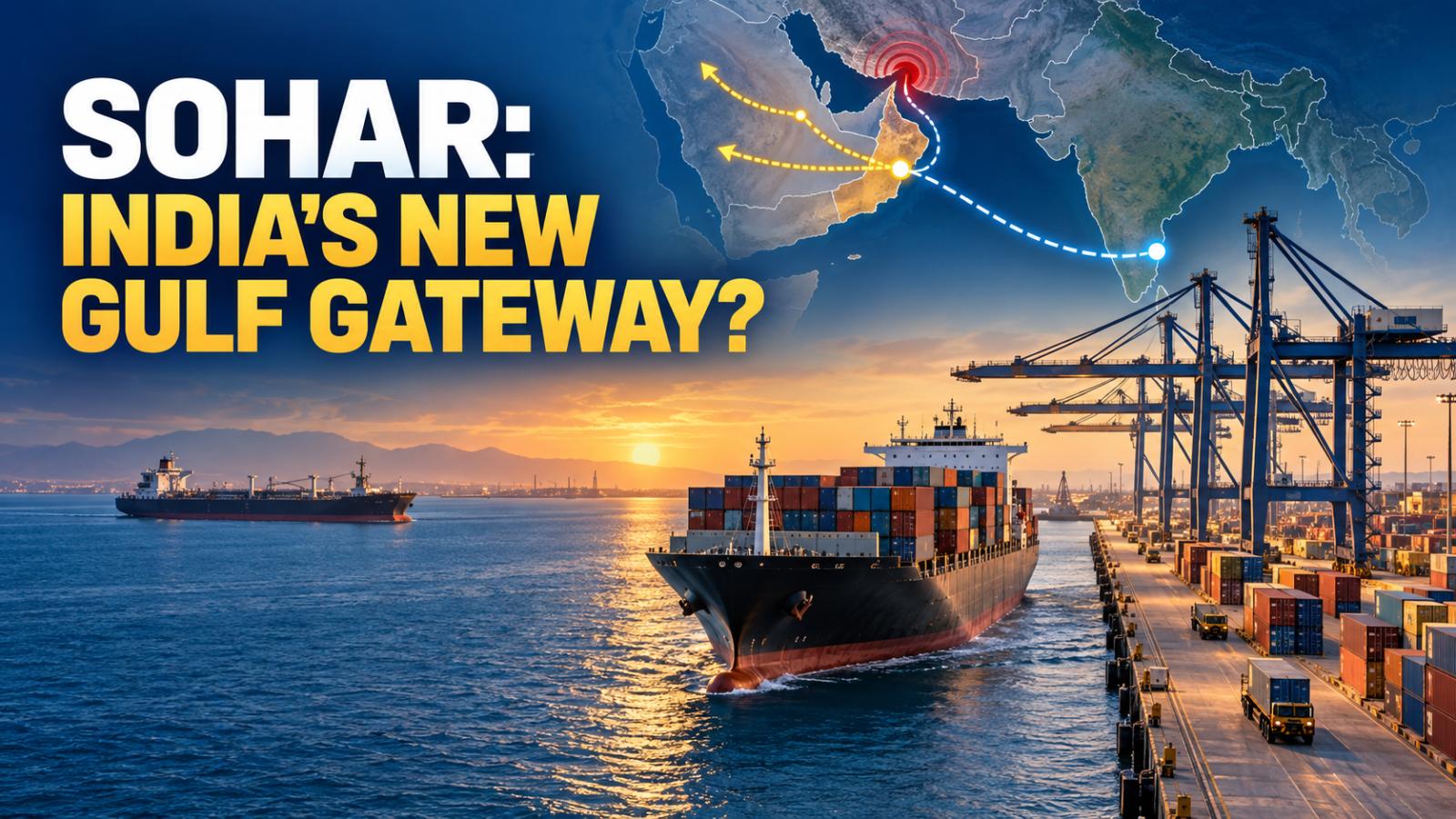
Oman’s Sohar Port is gaining attention as a potential alternative gateway for Indian companies seeking safer and more flexible access to Gulf markets amid disruptions around the Strait of Hormuz.
Located on the Gulf of Oman coast and beyond the narrowest section of the Hormuz chokepoint, Sohar offers connections through sea routes, highways and a planned rail link with the United Arab Emirates. Its location does not eliminate regional risks, but it gives businesses another option for moving cargo when conventional Gulf shipping routes face delays or security concerns.
Omani officials promoted Sohar Port and Freezone to Indian businesses during investment events held in New Delhi in September. The discussions, organised with groups including ASSOCHAM and the Federation of Indian Export Organisations, focused on manufacturing, logistics, exports and Indian investment in Sohar’s industrial clusters.
Cargo movement between India and Sohar has increased significantly since the Middle East crisis began affecting regional supply chains. Feeder vessel services on the route have reportedly increased fourfold, with some cargo previously shipped directly to Gulf Cooperation Council destinations now moving through Oman before continuing by road.
Sohar Port and Freezone has attracted investments exceeding $30 billion and can handle more than 72 million tonnes of cargo annually. During the first half of 2026, its container throughput reportedly increased by 40 percent year-on-year to 545,000 twenty-foot equivalent units. Breakbulk cargo volumes also nearly doubled to 1.24 million metric tonnes.
The port is now discussing possible terminal operations and industrial investments with Indian companies. Its adjoining freezone could allow businesses to manufacture, store and distribute products from Oman to other Gulf markets.
Sohar has also become important for energy shipments. Saudi crude is reportedly being transferred between tankers off Oman’s coast before continuing towards Asian buyers. Such ship-to-ship operations provide flexibility during disruptions, although they can bring additional operational, environmental and insurance risks.
Sohar’s value extends beyond maritime cargo. Oman and Saudi Arabia are developing a secure land corridor through the Rub Al Khali desert, potentially allowing goods arriving in Sohar to travel directly to Saudi markets.
A planned Oman-UAE rail corridor could further improve freight connectivity between Sohar and the wider Gulf logistics network. Together, the port, freezone, road links and proposed railway could provide Indian exporters with a multimodal route serving Oman, the UAE and Saudi Arabia.
India has strong commercial interests in the region. Bilateral trade with Oman reached $11.19 billion in the 2025-26 financial year, while more than 6,000 India-Oman joint ventures reportedly operate in the sultanate.
Sohar is unlikely to replace established hubs such as Jebel Ali or Fujairah immediately. It also cannot completely remove India’s exposure to regional conflict. However, the port can help diversify supply chains, reduce dependence on a single chokepoint and offer an additional route for Indian exports and energy shipments during periods of disruption.