
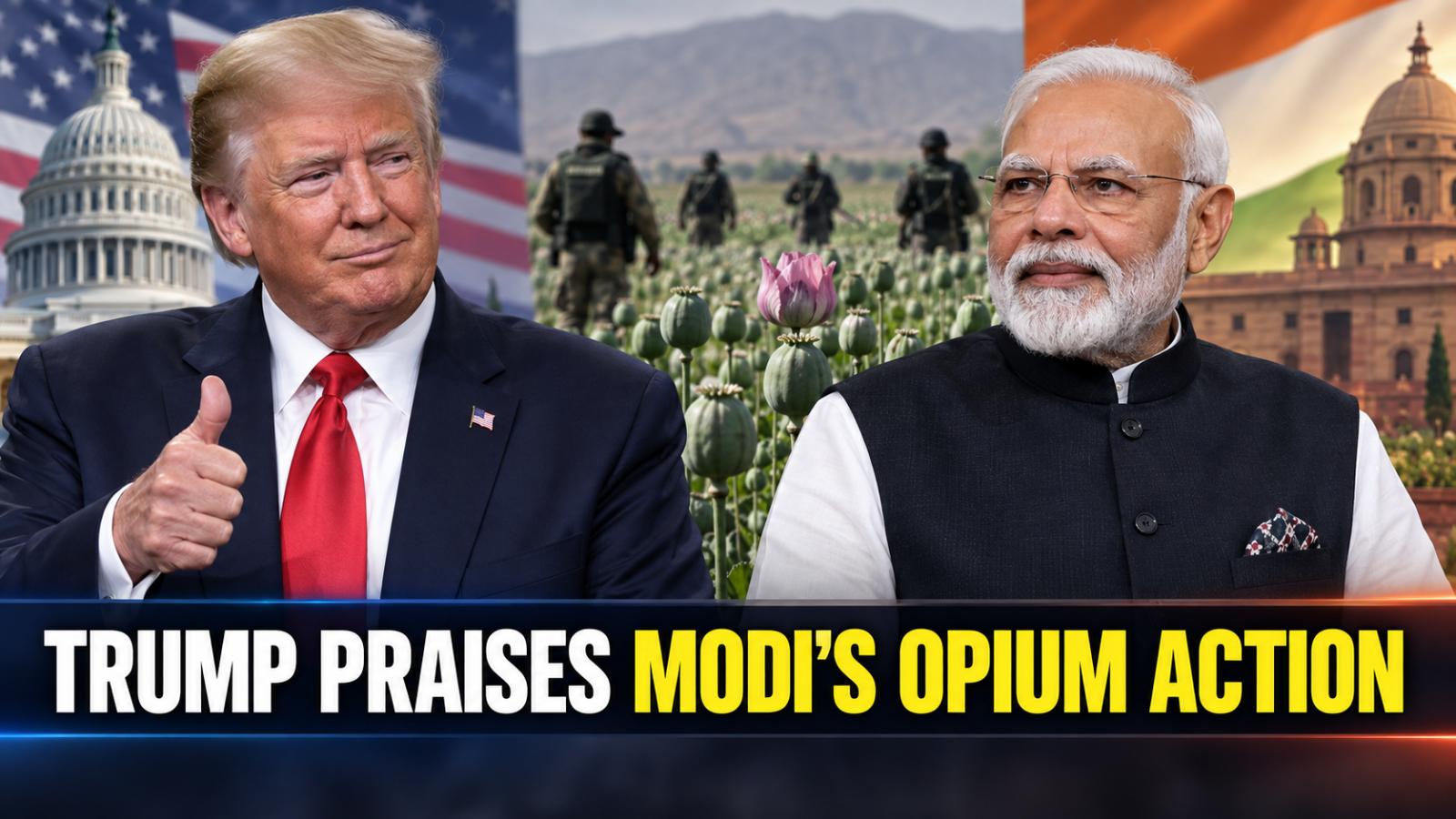
Washington, DC | Trump welcomed India’s action against illicit opium cultivation while the country remained on the US drug transit and production list.
US President Donald Trump has praised Prime Minister Narendra Modi and the Indian government for taking steps against illicit opium poppy cultivation and strengthening the integrity of pharmaceutical and narcotics-related supply chains.
The recognition comes even as the United States continues to include India on its official list of major illicit drug-producing or drug-transit countries for the upcoming year 2027. The list contains more than 20 countries whose location, trade networks, agricultural conditions or commercial importance make them significant to the international movement or production of illegal drugs.
In a statement communicated through the US Department of State, Trump welcomed the Modi government’s efforts to address illegal opium poppy cultivation and improve supply-chain safeguards.
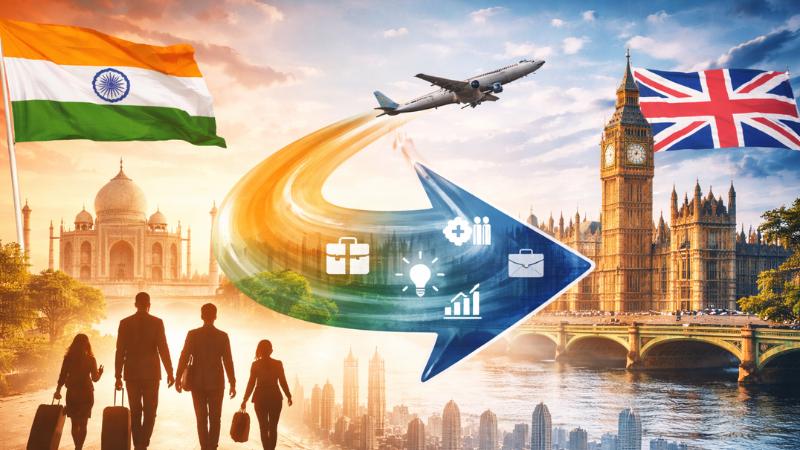
The President also expressed interest in continuing bilateral coordination under the United States-India Drug Policy Framework. The mechanism is intended to strengthen cooperation between the two countries in areas such as law enforcement, information sharing, narcotics regulation and the prevention of illegal drug trafficking.
Trump’s remarks indicate that Washington views India as an important partner in controlling the production and cross-border movement of narcotics. They also underline the wider role India can play in protecting legitimate pharmaceutical supply chains from diversion and criminal exploitation.
For 2027, the United States has placed India alongside countries including Afghanistan, Pakistan, China, Mexico, Colombia and Venezuela on its inventory of major illicit drug-producing or transit nations.
However, inclusion on the list does not automatically mean that a government has failed to cooperate with the United States or has neglected its responsibility to combat narcotics. American authorities have explained that the designation can be influenced by geographic, economic and commercial circumstances.
India’s extensive international borders, large pharmaceutical sector, major ports and position along regional trade routes are among the factors that can make the country relevant to global drug-control assessments. The designation, therefore, should be distinguished from a separate finding that a country has failed to meet its international anti-narcotics obligations.
The annual US determination identifies countries that play a substantial role in illicit drug production or trafficking. A country may appear on the list because illegal substances pass through its territory, because narcotic crops are cultivated there or because its commercial networks are used by trafficking organisations.
India’s continued inclusion alongside Trump’s praise illustrates this distinction. Washington can recognise enforcement efforts by New Delhi while still identifying India as an important location in international narcotics routes and supply-chain monitoring.
The two developments are therefore not necessarily contradictory. The listing reflects the scale and strategic relevance of the challenge, while Trump’s statement evaluates the measures being taken by the Modi government to confront it. Reports on the determination similarly note that inclusion does not by itself indicate inadequate cooperation or weak enforcement.
Turning to US domestic and regional security, Trump claimed that his administration had made historic progress against drug cartels and organisations described by Washington as narcoterrorist networks.
He attributed reported reductions in drug interceptions at the southern US border to tighter border controls. He also claimed that overdose deaths had declined and that American enforcement agencies had achieved record narcotics seizures.
Trump further pointed to the extradition of alleged cartel leaders by international partners as evidence of stronger global cooperation. He said individuals responsible for trafficking drugs into the United States were being killed, arrested or placed under growing pressure from American authorities.
These statements represent the Trump administration’s assessment of its enforcement record. The President also said US forces had been authorised to act against external narcoterrorist threats, signalling a more aggressive approach to international drug networks.
For India and the United States, the latest declaration places renewed attention on cooperation against illicit cultivation, trafficking and supply-chain diversion. India’s place on the 2027 list is likely to keep narcotics enforcement on the bilateral agenda, while Trump’s praise could support closer policy coordination between Washington and New Delhi.