
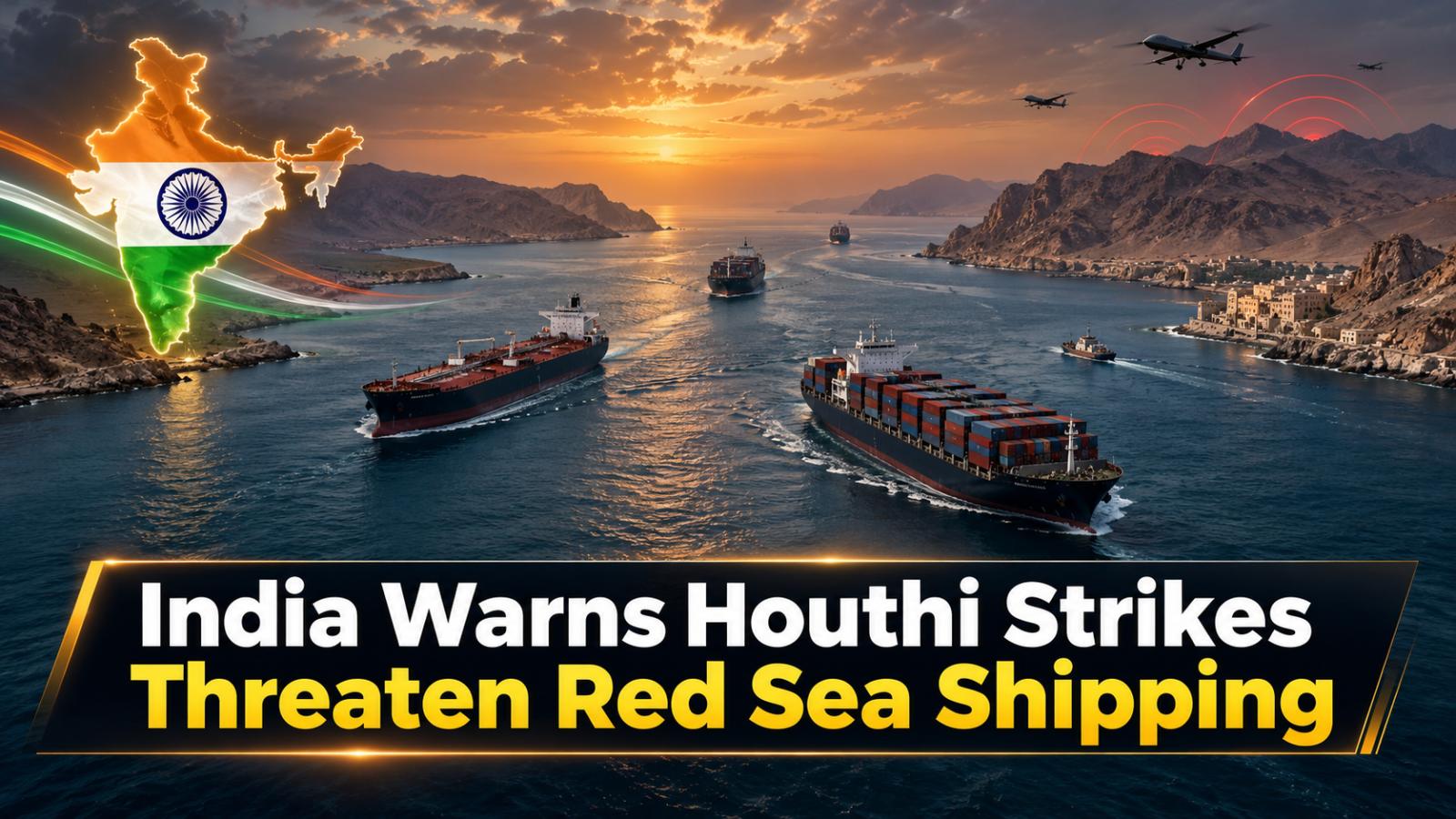
India condemned attacks on Saudi territory and warned that escalating violence threatens Bab-el-Mandeb navigation and Red Sea stability.
India Warns Houthi Strikes Threaten Bab-el-Mandeb Shipping
India has expressed serious concern over the escalating conflict involving Yemen’s Houthi movement and Saudi Arabia, warning that attacks on civilian infrastructure and economic assets could destabilise the region and endanger navigation through the Bab-el-Mandeb Strait.
External Affairs Ministry spokesperson Randhir Jaiswal said New Delhi had condemned attacks on Saudi sovereign territory, including those directed at civilian and commercial facilities. He described such strikes as unacceptable and called for the early restoration of peace and stability in the region. The statement follows a series of attacks targeting Saudi cities and infrastructure as tensions rise across the Red Sea and the Arabian Peninsula.
India condemns attacks on Saudi territory
Jaiswal said attacks on Saudi Arabia’s civilian infrastructure and economic assets undermine regional security. He warned that continuing violence could directly affect freedom of navigation through Bab-el-Mandeb, one of the world’s most strategically important maritime passages.
India has maintained that commercial shipping routes and energy-supply corridors must remain secure and accessible. The country has repeatedly stressed the protection of merchant vessels, maritime trade and seafarers during recent discussions on West Asian conflicts.
New Delhi’s concern is linked both to its economic interests and to the safety of Indian nationals working aboard commercial vessels in the region. Any prolonged disruption could increase shipping costs, delay cargo deliveries and affect energy-importing countries.
Jaishankar discusses escalation with Saudi minister
External Affairs Minister S Jaishankar discussed the latest regional developments with Saudi Foreign Minister Prince Faisal bin Farhan Al Saud on the sidelines of the BRICS summit on Sunday.
According to Jaiswal, the two ministers also discussed the Houthi issue and the recent attacks on Saudi Arabia. The talks took place as Riyadh strengthened diplomatic engagement with regional partners over maritime security and attacks on its territory.
India said it hoped peace and stability would be restored quickly through measures that protect civilians, infrastructure and international shipping. Egyptian President Abdel Fattah al-Sisi and Saudi Crown Prince Mohammed bin Salman have also emphasised the importance of protecting navigation through the Red Sea and Bab-el-Mandeb.
Bab-el-Mandeb remains vital trade route
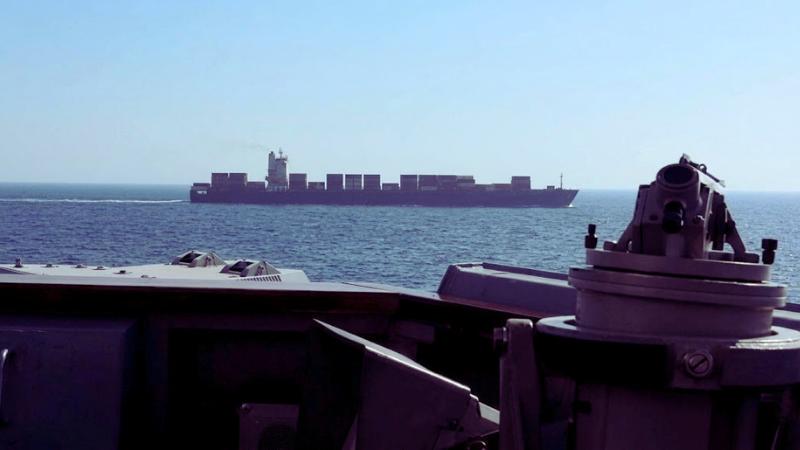
Bab-el-Mandeb lies between the Arabian Peninsula and the Horn of Africa. It connects the Red Sea with the Gulf of Aden and the Arabian Sea, forming a critical route for ships travelling between Europe and Asia through the Suez Canal.
The narrow passage carries commercial cargo, container traffic and energy supplies. Disruption at Bab-el-Mandeb can force vessels to take the longer route around Africa’s Cape of Good Hope, increasing fuel expenses, insurance premiums and delivery times.
Recent Houthi advances and attacks in areas close to the waterway have renewed concerns about the safety of ships passing through the region. Saudi Arabia and Egypt have called for stronger protection of maritime traffic as fighting in Yemen intensifies. Reports that Houthi forces have expanded their presence along Yemen’s Red Sea coast have added to concerns over the group’s ability to influence shipping movements near the strait.
Energy supplies continue despite tensions
Jaiswal said India continues to receive energy supplies from West Asia despite the worsening security situation. However, disruptions involving the Strait of Hormuz, Saudi infrastructure and Bab-el-Mandeb have increased concern over the reliability of regional oil-transport routes.
Saudi Arabia’s East-West pipeline has gained importance because it allows crude oil to reach Red Sea ports without passing through the Strait of Hormuz. Recent attacks on Saudi energy infrastructure have therefore raised questions about the security of alternative export routes.
India depends heavily on imported crude oil and gas, making stability in both the Gulf and Red Sea regions important to its energy security. New Delhi is monitoring developments while continuing diplomatic engagement with Saudi Arabia, Iran and other regional partners.