

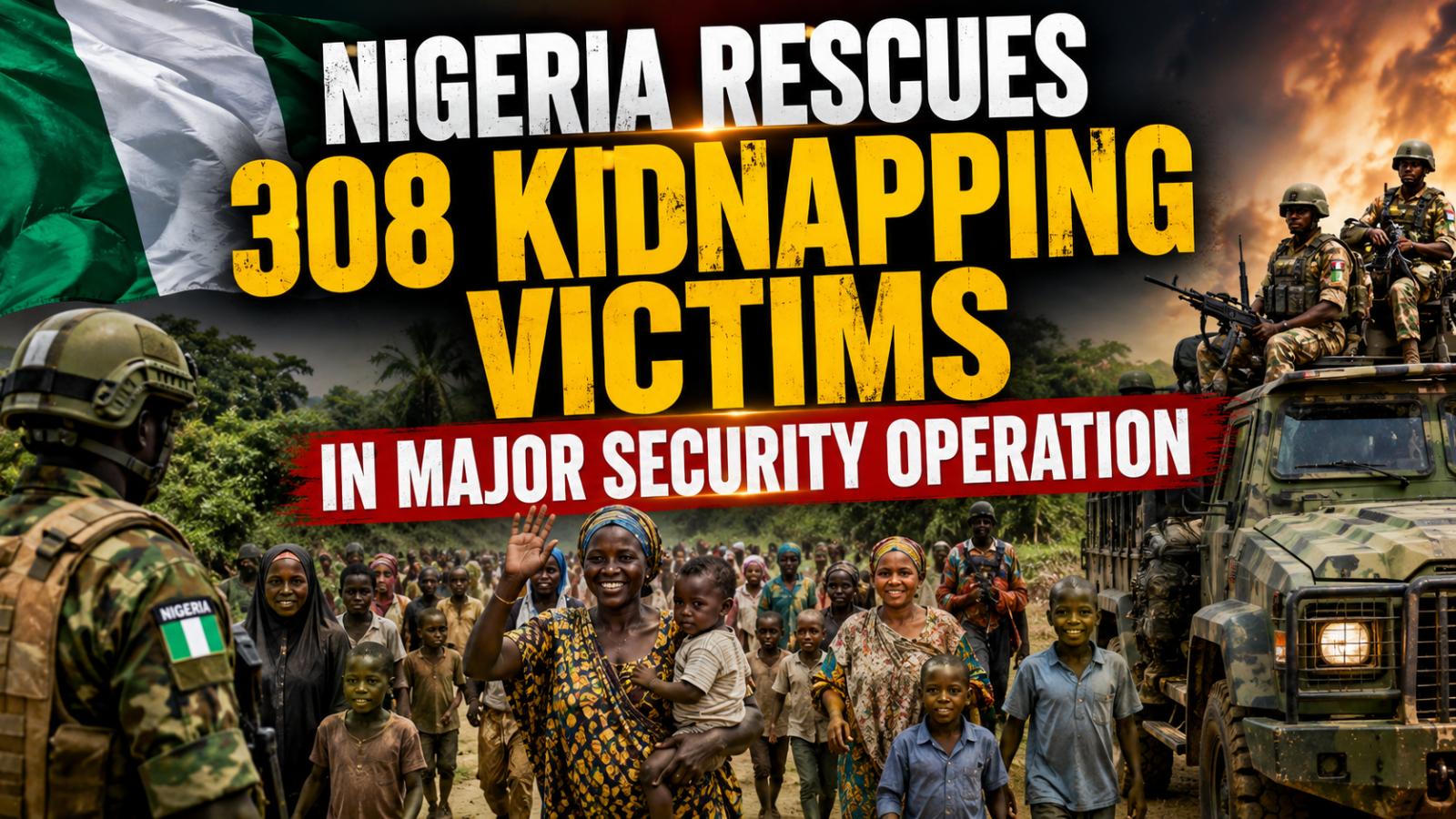
Nigerian security forces have rescued 308 people abducted in separate attacks in Niger and Kwara states, including 163 victims taken from Woro village. Authorities described the coordinated mission as one of the country’s largest single-day rescue operations amid Nigeria’s worsening kidnapping crisis.
Nigeria Rescues 308 Kidnapping Victims From Forest HideoutNigeria has announced the rescue of 308 kidnapping victims in a major security operation involving the military, intelligence agencies, police and counter-terrorism officials.
Presidential spokesperson Bayo Onanuga said President Bola Ahmed Tinubu welcomed the release of the victims, who had been abducted during separate attacks in Niger and Kwara states.
Among those rescued were 163 people from Woro village in Kwara State and another 145 victims from Niger State. Authorities said the hostages were recovered from an area in the Kainji Lake National Park Forest.
Nigeria’s large and sparsely governed forests have increasingly become hideouts for armed criminal gangs, bandits and extremist groups involved in kidnapping, raids and ransom operations. The government described the mission as the largest rescue operation carried out in the country in a single day. It involved the National Counter-Terrorism Centre, Nigerian military, Department of State Services and police.
Nigeria Woro Village Victims Held Since February AttackMany of the rescued victims had reportedly been held captive since a deadly attack on Woro village earlier this year. Suspected jihadist fighters attacked the Kwara State community in February, killing scores of residents, burning homes and abducting a large number of people.
Residents had earlier told AFP that more than 160 people may have been killed during the assault, although official estimates varied. Reports also differed over the exact number of people kidnapped from the village.
Large sections of Woro were reportedly destroyed during the attack, leaving buildings reduced to ash and rubble. President Tinubu condemned the violence at the time and ordered additional military forces into the region. The attack highlighted growing insecurity in areas close to Nigeria’s border with Benin.
Kwara State has also attracted increased security attention after the Al-Qaeda-linked Group for the Support of Islam and Muslims, known as JNIM, claimed an earlier attack in the region.
Nigeria Kidnapping Crisis Driven By Ransom And Armed GroupsKidnapping for ransom has developed into one of Nigeria’s most serious security challenges, particularly across northern and central parts of the country where government presence can be limited.
A range of groups are involved, including criminal gangs, jihadist organisations and armed groups commonly referred to as bandits. Victims can remain in captivity for weeks or months while kidnappers demand ransom payments from families, communities or authorities.
According to figures cited from Lagos-based consultancy SBM Intelligence, kidnappings generated around $1.66 million in ransom payments between July 2024 and June 2025.
The scale of the problem remains significant despite intensified security operations. Armed attackers reportedly abducted at least 52 people, including children, during another recent attack in Zamfara State in northwestern Nigeria.
Nigeria Security Forces Intensify Operations Against KidnappersThe rescue of more than 300 hostages represents a significant success for Nigerian security agencies, but it also underscores the scale of the country’s abduction crisis.
Authorities are increasingly focusing on forests and remote areas used by armed groups to establish camps and hold kidnapping victims. President Tinubu’s administration has faced growing pressure to improve security, particularly in rural areas affected by banditry, jihadist violence and organised kidnapping networks.
The coordinated operation involving counter-terrorism officials, intelligence services, military personnel and police suggests Nigerian authorities are expanding joint efforts against these groups. While the rescue brought relief to hundreds of families, recent attacks demonstrate that kidnapping remains a persistent threat. Security agencies are expected to continue operations targeting armed groups and suspected hideouts across affected regions.