
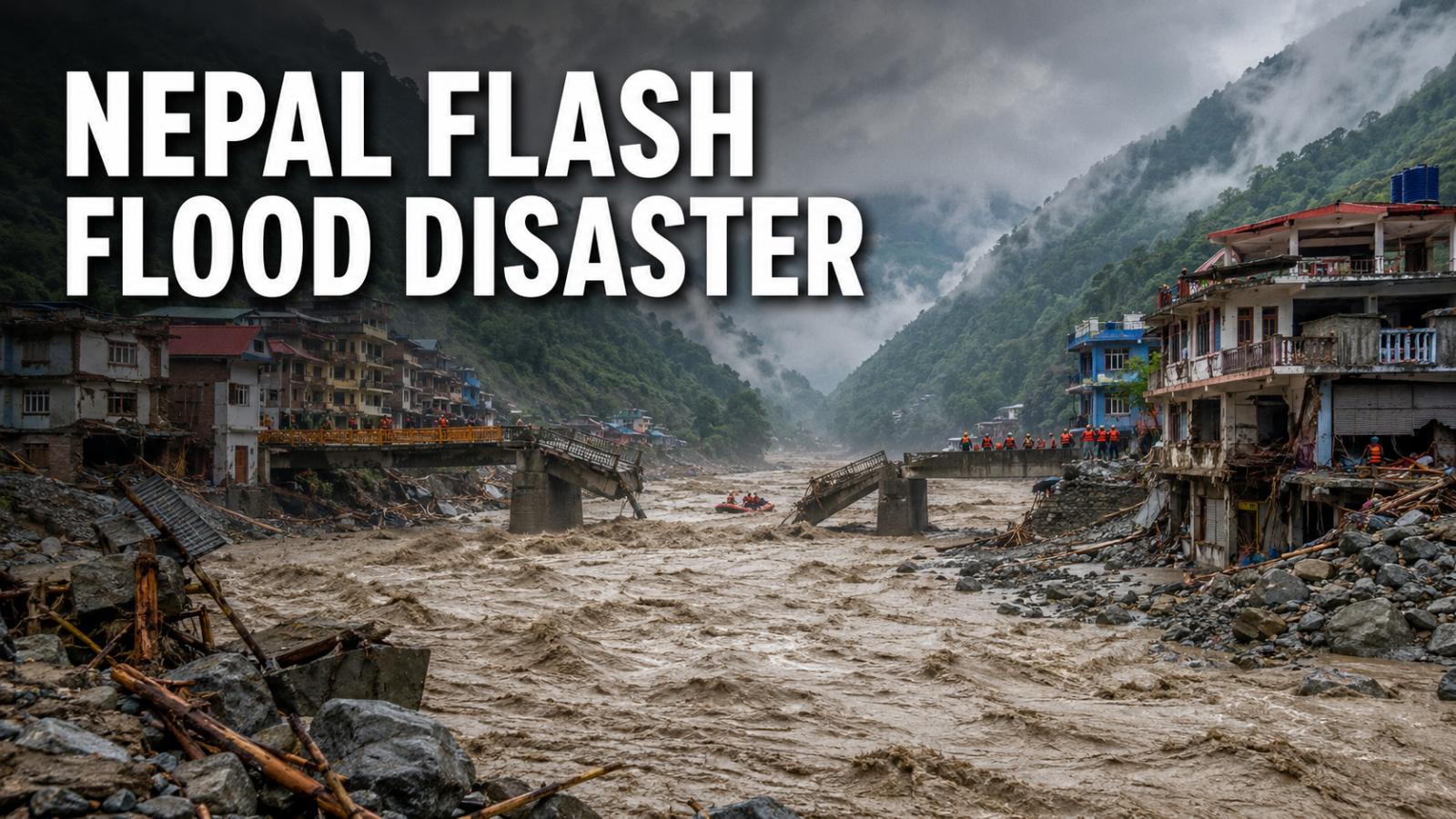
Nearly 100 people died and more than 750 remained missing after a Tibet-origin flash flood devastated several districts in Nepal on Wednesday, August 26, 2026. The missing included 133 Indian nationals as rescue teams searched damaged towns along the Bhote Koshi and Trishuli rivers.
Nepal Flash Flood Leaves Nearly 100 Dead, 133 Indians Missing
Nearly 100 people were reported dead and more than 750 remained missing after a catastrophic flash flood originating in Tibet swept through central Nepal on Wednesday. The missing included 133 Indian nationals, according to figures available in the initial official assessment.
The Nepal government said rescuers had recovered 95 bodies while approximately 500 people remained unaccounted for within the country. China’s state-run CGTN reported three deaths and 265 missing people on the Chinese side of the border. The figures were expected to change as emergency teams reached isolated communities and verified lists of residents, workers and travellers.
The powerful flood entered Nepal through the Bhote Koshi River and caused extensive destruction in Rasuwa and Dhading districts near the Tibet border. Entire settlements were inundated, bridges were washed away and important road connections were cut off.
Officials said the disaster also disrupted communications and damaged about a dozen hydropower projects. The destruction complicated rescue operations because several affected locations could no longer be reached by road.
Bhote Koshi Flood Sweeps Through Towns And Villages
Nepal’s Foreign Minister Shisir Khanal told parliament that an earthquake was detected in the Tibet region shortly before the flash flood. Flooding was reported about three minutes after the tremors, prompting an early theory that the earthquake may have triggered a glacial collapse, rockslide or glacial lake outburst.
The exact cause remained under investigation. Initial reports indicated that a rockslide and the sudden swelling of the Lhende River along the Nepal-Tibet border contributed to the destructive surge.
The floodwater travelled through the Bhote Koshi and entered the Trishuli River near Timure, a border town in Rasuwa district. It then moved downstream towards Nuwakot, Chitwan, Gorkha, Tanahun and Nawalparasi East.
Communities located between approximately 70 kilometres and nearly 200 kilometres from Kathmandu were affected as the muddy torrent moved through the river system. Authorities warned people living near swollen rivers to move to safer ground and avoid damaged roads and bridges.
Videos recorded in the disaster zone showed fast-moving water carrying rocks, mud and other debris towards homes, commercial buildings and vehicles. Residents were seen running from the riverbank as the flood advanced through populated areas.
One video showed a four-storey structure being pulled into the raging water. Another showed a vehicle floating in the powerful current. Roads, border infrastructure and homes were left buried under thick layers of mud and scattered debris.
Indian Nationals Among Hundreds Still Unaccounted For
The report that 133 Indians were missing raised concern among families and authorities as efforts continued to identify foreign travellers caught in the disaster. Officials were working with tourism operators, local administrations and diplomatic missions to verify passenger and accommodation records.
Communication failures made it difficult to determine whether every person listed as missing had been swept away or was stranded in an area without telephone and internet services. Authorities said missing-person figures could decline as contact was restored, although the rising recovery of bodies also raised fears of a higher death toll.
Search teams faced damaged highways, unstable slopes, strong river currents and debris-covered settlements. Helicopters and ground personnel were being used to reach isolated areas wherever weather and visibility permitted.
Nepal Flood Rescue Operations Continue Amid Further Risks
Emergency personnel were searching riverbanks, damaged buildings and areas buried beneath mud and rocks. Restoring road access and communications remained a priority as officials attempted to move injured residents and deliver food, drinking water and medical supplies.
Authorities were also monitoring upstream waterways for fresh landslides, blockages and sudden releases of accumulated water. Residents in vulnerable downstream communities were urged to follow official evacuation orders and remain away from river corridors.
The disaster highlighted the growing danger faced by Himalayan communities from unstable glaciers, landslides and sudden floods. Experts said a detailed geological investigation would be required to establish whether an earthquake, glacial collapse, rockslide or a combination of factors caused the deadly surge.
Rescue agencies continued to verify casualty figures and search for the hundreds still missing as Nepal began assessing widespread damage to villages, bridges, highways and electricity infrastructure.