

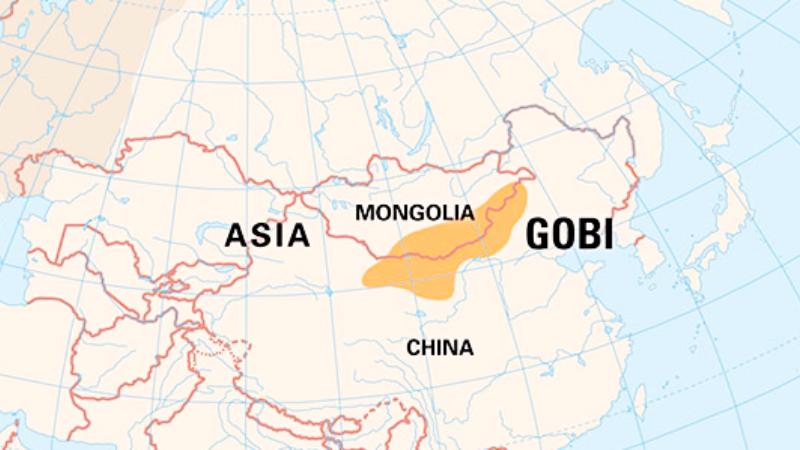
The Gobi Desert, stretching across China and Mongolia, is the largest in Asia, covering nearly 1.3 million square kilometers. Unlike the typical image of vast dunes, much of the Gobi consists of rocky terrain, gravel plains, and barren landscapes shaped by powerful winds and extreme temperature variations. It occupies nearly 30% of Mongolia’s land area and experiences both scorching summers and freezing winters, making it one of the harshest environments on Earth.
Despite its rugged conditions, the Gobi Desert is home to remarkable natural features and biodiversity. Landmarks such as the towering Khongoryn Els (Khongor Sand Dunes) highlight its dramatic terrain, while its remote regions support rare wildlife. Species like the Bactrian camel, snow leopard, and the critically endangered Gobi bear have adapted to survive in this extreme climate.
The Gobi is also a site of major scientific importance, known for its rich fossil beds that have revealed dinosaur eggs and remains of ancient species. These discoveries have made the desert a key location for paleontological research, adding historical depth to its already striking natural landscape.