Plot:
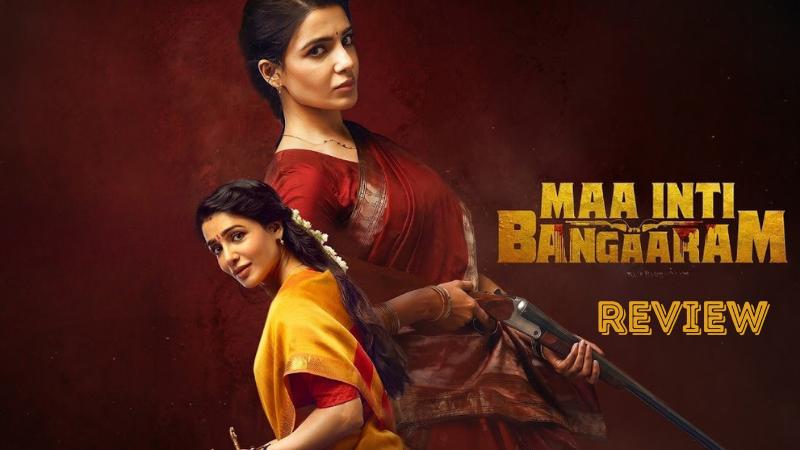
Anirudh marries Swarna against his family’s wishes. After staying away from his family for three years, he takes Swarna to his village for his sister’s wedding. During the visit, a stranger notices Swarna and feels that she resembles Jhansi. This raises questions about whether Swarna and Jhansi are two different people or connected by a hidden past. The story then explores Jhansi’s backstory, her connection with ex-Naxalite leader Karuna and the danger surrounding her.
Performances:
Samantha delivers a strong performance in the dual shade role of Swarna and Jhansi. Her subtle comedy timing in family scenes and confident body language in action portions stand out. Gulshan Devaiah makes a solid impact as the antagonist despite limited character depth. Both Samantha and Gulshan deserve credit for attempting the Rayalaseema dialect with sincerity. Dignath Manchale performs decently, while Sreemukhi, Gauthami, Lakshmi, Srinivas Gavireddy, Chaitanya and Anand support the film well.
Technical Aspects:
The film looks stylish and polished despite being made on a controlled budget. Om Prakash’s cinematography gives the film a rich and pleasant visual tone. The action sequences are slickly choreographed and Samantha’s effort is clearly visible in those scenes. The first half benefits from neat writing, natural humour and smooth scene flow.
Music:
Santhosh Narayanan’s background score is one of the biggest strengths of the film. Instead of going loud, his music gives the film a fresh and controlled feel. The popular song “Thassadiya” also works well on screen and adds good energy.
Editing:
Dharmendra Kakarala’s editing is effective in the first half, where the film moves at a good pace. However, the second half could have been sharper, especially during the routine portions and rushed backstory scenes.
Positives:
- First half
- Clean humour
- Samantha’s performance
- Background score
- Action sequences
- Rayalaseema dialect usage
Negatives:
- Routine second half
- Limited twists and turns
- Rushed backstory
- Weak antagonist writing
- Predictable conflict
Analysis:
Maa Inti Bangaaram starts with an interesting mix of family drama, humour and suspense. Raj Nidimoru’s writing influence is visible in the first hour, where the comedy feels organic and the situations are neatly created. Nandini Reddy handles the lighter portions well and avoids forced comedy, which helps the film connect with family audiences.
The curiosity around Samantha’s character is built effectively in the first half. The action scenes, especially the village confrontation, temple sequence, bus fight and climax episode, give the film good commercial appeal. Samantha’s performance adds strength to these moments and makes the action believable.
However, the film begins to lose freshness after the backstory is revealed. The second half becomes a routine conflict between the protagonist and antagonist without strong twists or emotional depth. The writing does not offer enough surprises, and the rushed backstory weakens the impact. A stronger second half could have turned the film into a much bigger winner.
Overall, Maa Inti Bangaaram is watchable for Samantha’s performance, clean humour, strong first half, impressive background score and action blocks. It may work better with family audiences, but the predictable second half stops it from becoming a complete entertainer.
Bottomline: Family Fight
Rating: 2.75/5