
SIT Files 7,000-Page Report in Dharmasthala Burial Case
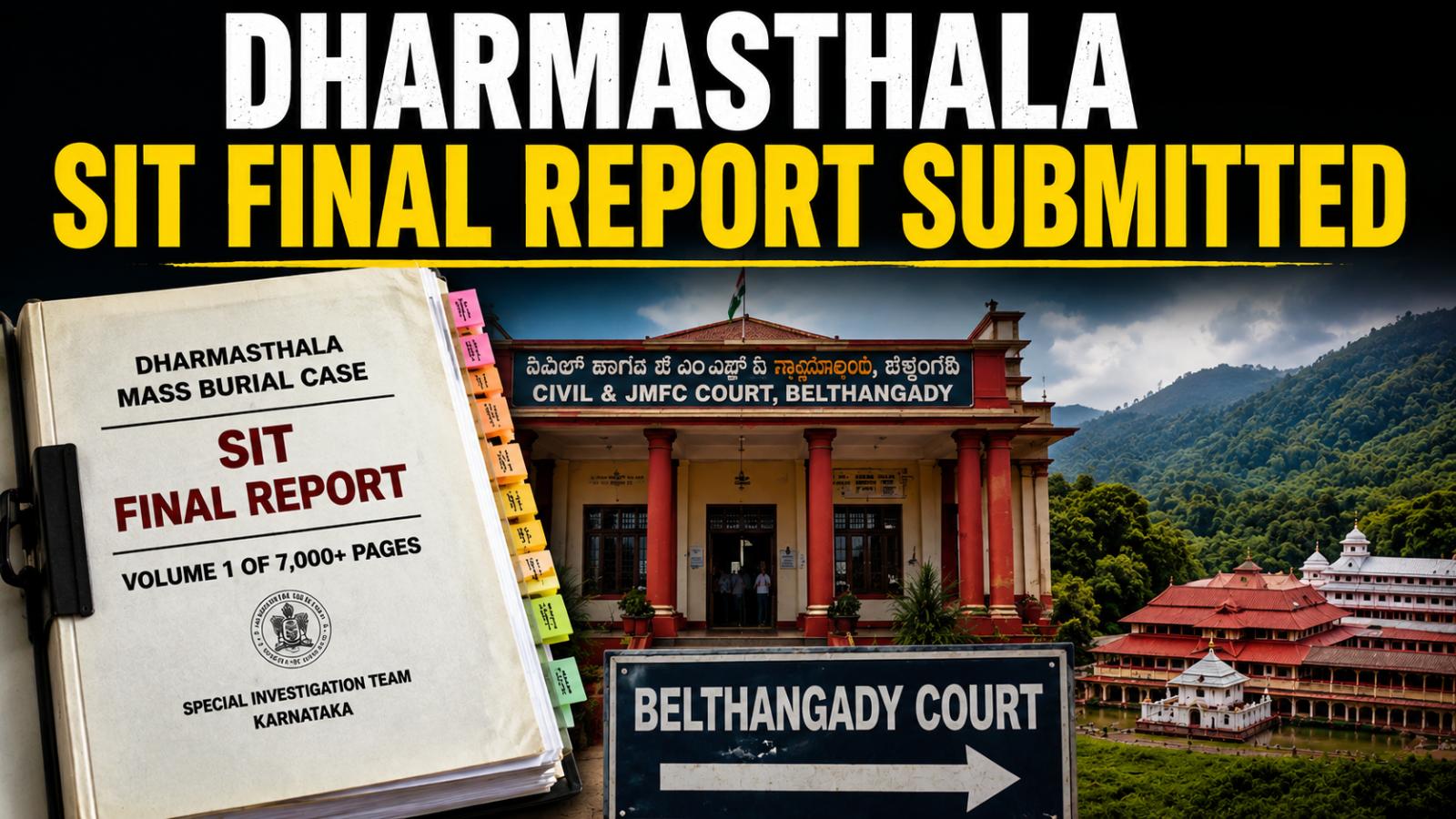
The Dharmasthala SIT final report, containing nearly 7,000 pages of investigation records, was submitted before a Karnataka court on Tuesday, July 14, 2026. The filing marks a significant development in the year-long investigation into allegations of illegal burials, unnatural deaths, sexual violence, and possible cover-ups in and around Dharmasthala.
The Special Investigation Team submitted the report along with documents, statements, forensic material, and evidence gathered during the inquiry. A property or asset register recovered by investigators was also reportedly included among the materials placed before the court.
Report Filed Before Belthangady Court
The Dharmasthala 7,000-page SIT report was filed before the court in Belthangady, Dakshina Kannada district. Former sanitation worker CN Chinnayya and his wife were reportedly present alongside SIT officials during the submission.
The investigation is now expected to move into the judicial scrutiny stage. The court will examine the evidence and findings before deciding whether further legal proceedings, additional investigation, or other judicial action is required.
The submission of a final report does not by itself establish the guilt or innocence of any individual. The allegations and the evidence collected by investigators will have to be considered by the court in accordance with the law.
Allegations That Triggered the Investigation
The controversy began after Chinnayya, a former sanitation worker who came to be described as the “masked man” in sections of the media, made serious allegations concerning Dharmasthala.
He initially claimed that he had been forced to assist in burying the bodies of several people, including women and minors, between 1995 and 2014. He alleged that some victims appeared to have been subjected to sexual violence or murder before their bodies were disposed of.
These allegations generated widespread public concern and renewed attention on unexplained deaths, disappearances and old criminal cases associated with the region. However, the claims remained allegations requiring independent verification by investigators and the courts.
Calls for an impartial inquiry intensified after the Karnataka State Commission for Women became involved. The Karnataka government subsequently constituted a 20-member Special Investigation Team to investigate the allegations and examine connected cases.
Excavations and Forensic Examination
During the Dharmasthala mass burial probe, investigators identified several locations for excavation based on information provided during the inquiry.
The SIT reportedly examined 15 locations and collected skeletal remains, bone fragments, and soil samples from some of the sites. The materials were sent to forensic laboratories for scientific analysis.
Media reports later stated that poisonous substances had been detected in skeletal remains recovered from at least two locations. However, the complete forensic findings and their relevance to individual cases will become clearer only after the court examines the final report and supporting evidence.
The investigation also expanded beyond the originally identified locations. Old cases involving unnatural deaths and disappearances in the Dharmasthala and Belthangady areas were reportedly reviewed after the Human Rights Commission took suo motu cognisance of the matter.
Chinnayya’s Statements Came Under Scrutiny
The case took a major turn when investigators reportedly identified inconsistencies in Chinnayya’s statements and questioned the accuracy of some of his initial allegations.
He was subsequently arrested on allegations including perjury and providing misleading information. Authorities alleged that parts of his account were inconsistent with material uncovered during the investigation.
Chinnayya later approached the Karnataka High Court and alleged that activists and other individuals had pressured him into making false claims as part of a campaign to damage the reputation of Dharmasthala and its administration.
He maintained that he had been used as a pawn in a wider conspiracy. Chinnayya was later granted bail by a Mangaluru court. His allegations of coercion, like the original burial claims, remain matters requiring judicial examination. Previous proceedings also recorded that he had sought the early completion of the SIT investigation.
Court to Decide the Next Course of Action
With the Karnataka mass burial probe final report now placed before the Belthangady court, attention will turn to the conclusions reached by the SIT and the evidence supporting them.
The court may examine witness statements, forensic reports, excavation records, seized documents, and the sequence of events that led to the investigation. It will also consider the allegations against Chinnayya and his subsequent claim that he was pressured into presenting a fabricated account.
The report’s submission formally concludes the SIT’s principal investigation but does not necessarily bring the wider legal controversy to an immediate end. Further proceedings will depend on the court’s assessment of the report.
Given the sensitive nature of the allegations and the competing claims made by those involved, the judicial process will be crucial in separating verified evidence from speculation and determining whether any additional criminal or legal action is necessary.