
India-Bound Oil Supertanker Booked At Nearly 9 Times Freight Rate
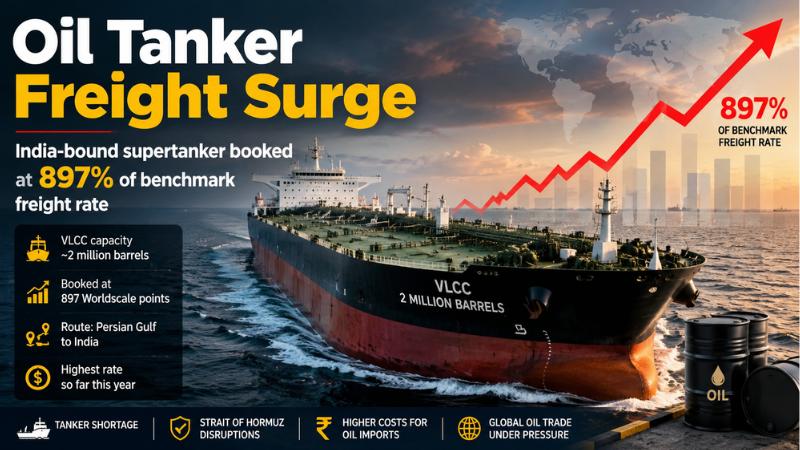
A supertanker heading toward India has been provisionally booked from the Persian Gulf at an unusually high freight rate, highlighting a sharp shortage of available vessels in the region.
According to shipbrokers cited in the report, the very-large crude carrier, or VLCC, was booked at 897 Worldscale points, meaning the rate is nearly 897% of the benchmark freight cost. The vessel is capable of carrying around two million barrels of crude oil.
Freight Rate Jumps Amid Tanker Shortage
The sharp rise in freight cost comes at a time when buyers are rushing to secure tankers for oil cargoes from the Persian Gulf. Many shipments had reportedly been delayed or stuck due to disruptions linked to the Iran conflict and restrictions around the Strait of Hormuz.
The limited availability of empty vessels has pushed charter rates sharply higher, forcing oil buyers to pay a heavy premium to move crude cargoes.
What Is Worldscale Rate?
Worldscale is a standard pricing system used in the tanker shipping industry. It sets benchmark freight rates every year for different oil transport routes.
Tankers are usually booked at a percentage of this benchmark. In this case, the India-bound shipment was booked at 897 Worldscale points, making it one of the highest reported rates so far this year.
Sinokor Linked To The Booking
The supertanker is expected to be supplied by South Korean shipowner Sinokor, which has been active in the Persian Gulf tanker market in recent months.
The reported booking was linked to the Persian Gulf-to-Singapore route benchmark, even though the cargo is India-bound. Sinokor has not publicly commented on the reported booking.
Strait Of Hormuz Traffic Still Under Pressure
The Strait of Hormuz remains one of the world’s most important oil transport routes. Any disruption in the area can affect global crude movement, freight rates, and shipping availability.
Although vessel movement has resumed after an interim understanding between Iran and the US, tanker supply remains tight. Many shipowners had earlier diverted vessels to other routes, and it may take weeks for enough ships to return to the Persian Gulf.
India’s Oil Supply Chain Faces Higher Costs
For India, the development shows how geopolitical tensions and shipping shortages can quickly raise oil transportation costs. While crude cargo movement is resuming, the higher freight rates could add pressure on import costs.
The situation also reflects wider uncertainty in global oil logistics, where vessel availability, route safety, and regional tensions continue to influence prices.