
Pakistan Satellite Push Puts NavIC In Focus
Pakistan’s recent launch of multiple Earth-observation satellites has raised fresh concern in India’s strategic circles. At the same time, India’s NavIC system is facing pressure due to ageing satellites, clock failures, and the NVS-02 setback. The situation has brought space security and sovereign navigation back into focus.
Pakistan Satellite Build-Up Raises Concern
Pakistan’s rapid expansion of Earth-observation satellites has created fresh discussion around space-based surveillance in South Asia. In the past 16 months, Pakistan has launched six satellites, many with Chinese support, improving its ability to monitor ground activity from space.
The development is being watched closely because these satellites can help capture imagery, track changes on the ground, and support surveillance of strategically important areas. While India still has a much stronger space programme overall, Pakistan’s recent satellite push has created concern because of the speed and timing of the launches.
Why NavIC Is Important For India
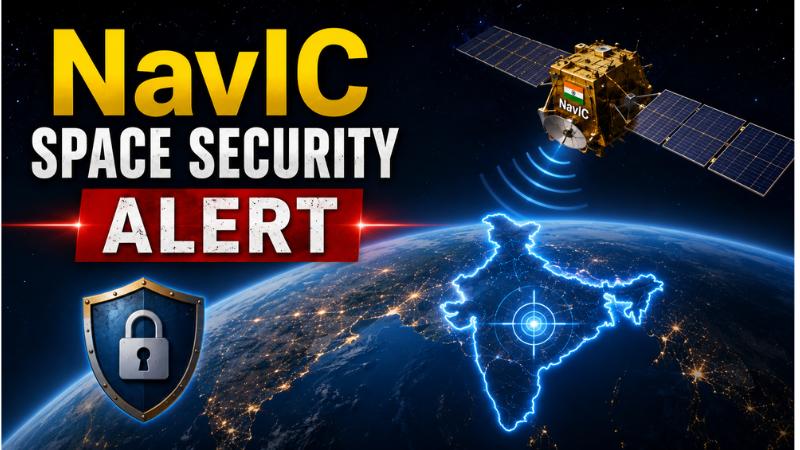
The debate has come at a time when India’s Navigation with Indian Constellation, known as NavIC, is facing operational challenges. NavIC is India’s own regional navigation system and was developed to reduce dependence on foreign systems like GPS during critical situations.
The system provides positioning, navigation, and timing services across India and around 1,500 km beyond the country’s borders. This makes NavIC important for civilian use, defence operations, maritime movement, disaster response, fleet tracking, and strategic communication.
What Went Wrong With NavIC
Several first-generation NavIC satellites launched between 2013 and 2016 are now ageing or nearing the end of their design life. Some satellites also faced rubidium atomic clock failures. These atomic clocks are very important because satellite navigation depends on extremely accurate timing.
The problem became more serious after NVS-02, a second-generation replacement satellite, faced a propulsion-related issue and failed to reach its intended operational orbit. This delayed India’s plan to strengthen the NavIC constellation.
As a result, the number of fully operational satellites in the system has reduced. A strong regional navigation network ideally needs seven operational satellites, while at least four are generally needed for reliable three-dimensional positioning.
India’s Plan To Strengthen NavIC
ISRO is working on second-generation NavIC satellites to restore and improve the system. These new satellites are expected to support L1-band signals along with the existing L5 and S-band frequencies.
The L1 signal is important because it can help NavIC work better with smartphones and other civilian devices. This could make India’s own navigation system more useful for ordinary users in the future.
The upgrade is also important for defence and strategic needs. NavIC supports missile guidance, naval operations, secure timing, disaster management, and other critical services.
Space Security Becomes A Bigger Priority
Pakistan’s satellite push and India’s NavIC challenges show that space is becoming a major area of strategic competition. Satellites are no longer only about science or communication. They are now closely linked to defence, surveillance, navigation, and national security.
For India, restoring NavIC to full strength is important for technological independence and security readiness. As countries in the region improve their space-based capabilities, India will need to move quickly to strengthen its own navigation and surveillance systems.
Pakistan’s growing satellite network has sharpened attention on India’s NavIC challenges. While India remains ahead in several areas of space technology, the current situation shows why maintaining a strong and reliable navigation system is important. NavIC is not just a satellite project. It is a key part of India’s strategic independence and future space security.