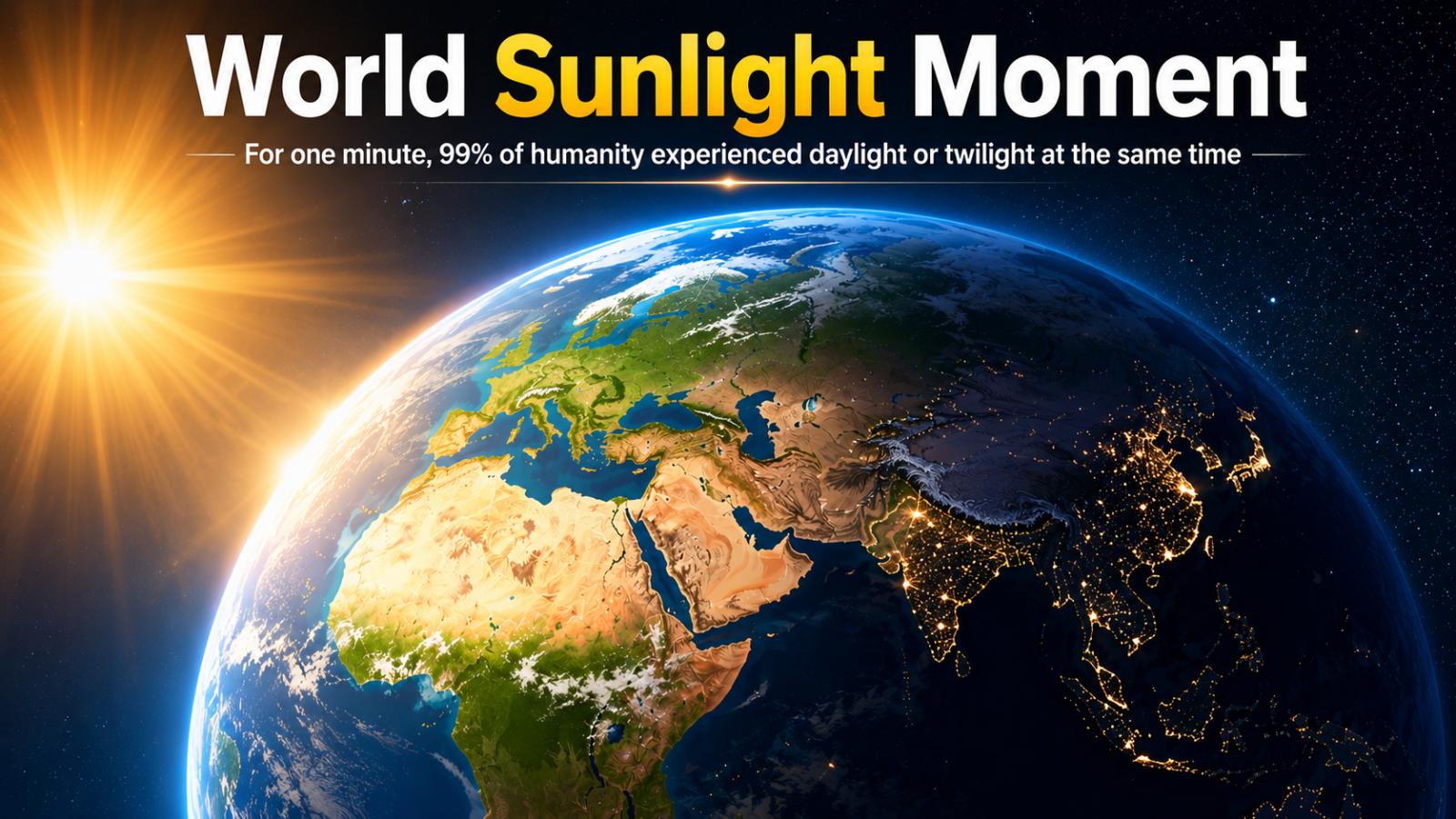


Recent satellite data have revealed that Earth’s nights are becoming increasingly brighter due to a sharp rise in artificial lighting across the globe. Scientists have found that this change is not uniform, with different regions showing varied trends based on development, energy access, and socio-political factors.
A global study has shown that artificial lighting increased by around 16% between 2014 and 2022. The findings highlight that nighttime brightness does not simply grow in line with population or economic expansion. Instead, the global nightscape is highly dynamic and constantly changing.
Rapid Growth In Developing Regions
The most significant increase in lighting has been observed in emerging economies, particularly in parts of sub-Saharan Africa and Southeast Asia. Countries such as Somalia, Burundi, and Cambodia have recorded rapid growth in nighttime illumination. This rise is largely driven by urbanisation, infrastructure development, and improved access to electricity.
Researchers note that many regions are transitioning from near-total darkness to becoming part of the global electric network, marking a major shift in development patterns.
Decline In Conflict And Policy-Driven Regions
In contrast, some regions have experienced a decline in nighttime brightness. Countries affected by conflict, including Ukraine, Yemen, Afghanistan, and Lebanon, have seen reduced lighting due to disruptions in infrastructure and economic instability.
Europe stands out as a region where the reduction in lighting is largely intentional. The continent recorded a 4% decrease in nighttime brightness, driven by energy-efficient technologies, environmental regulations, and efforts to curb light pollution. Measures such as switching off streetlights during low-activity hours have contributed to this decline.
Environmental And Health Concerns
Experts warn that the rise in artificial lighting has serious consequences for both the environment and human health. Increased light pollution can disrupt wildlife behaviour, migration patterns, and natural ecosystems. It can also affect human sleep cycles and overall well-being.
As Earth’s nightscape continues to evolve, scientists emphasise the importance of balancing development with sustainability. Managing artificial lighting efficiently will be crucial in reducing its negative impacts while supporting global growth.