
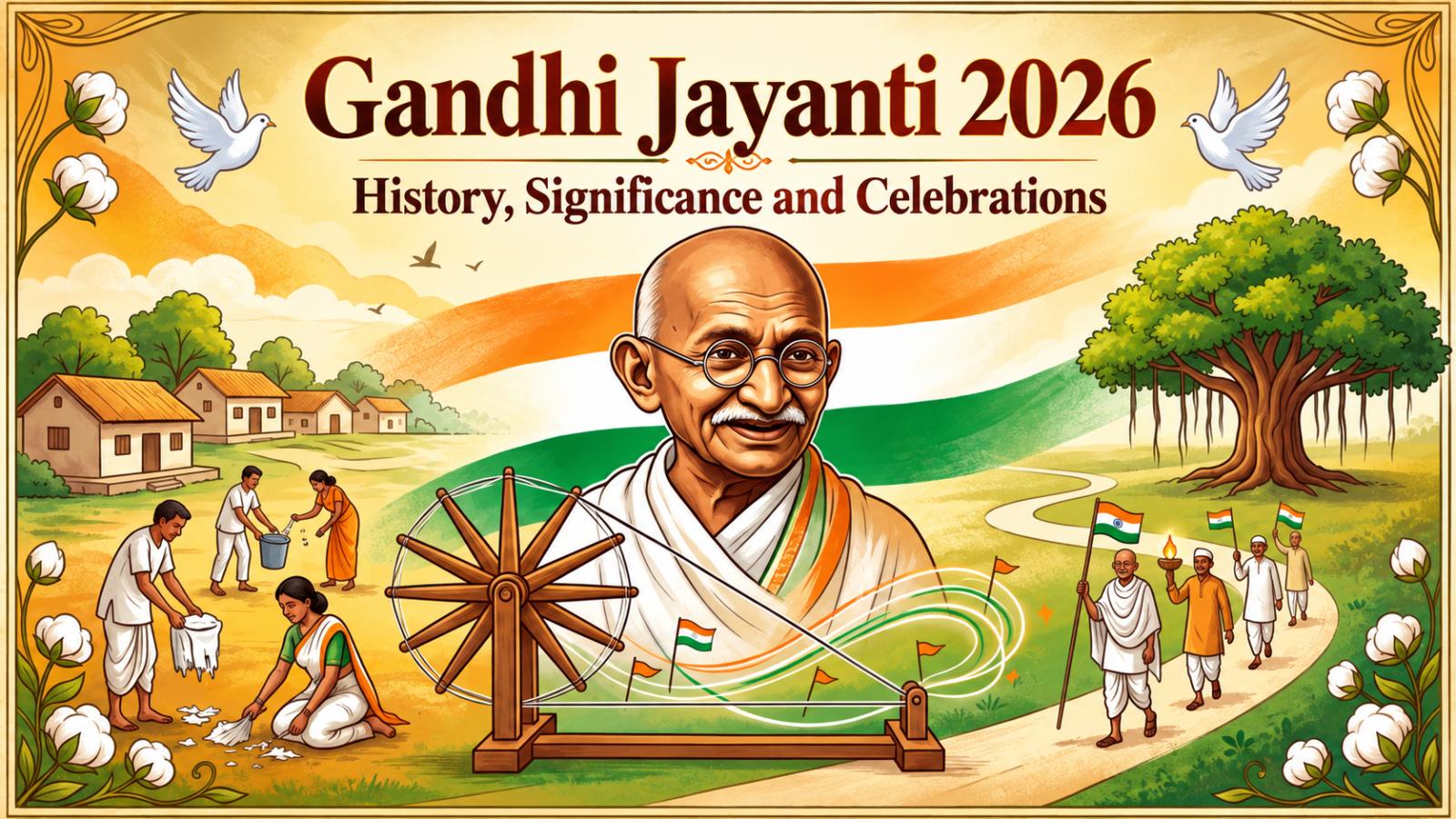
Gandhi Jayanti will be observed on Friday, October 2, 2026, marking the 157th birth anniversary of Mahatma Gandhi. The day honours his contribution to India’s freedom struggle and highlights his principles of truth, non-violence, simplicity and social responsibility. It is also an occasion to reflect on how these values can guide individuals and communities today.
Born on October 2, 1869, in Porbandar, in present-day Gujarat, Mohandas Karamchand Gandhi became one of the most influential leaders of India’s independence movement. His belief in peaceful resistance encouraged people to challenge injustice through collective action. October 2 is also recognised internationally as the International Day of Non-Violence.
History and contribution to India’s freedom struggle
Gandhi studied law in London and travelled to South Africa in 1893. The racial discrimination he encountered there shaped his political thinking and strengthened his commitment to equality. During his years in South Africa, he developed Satyagraha, an approach to resisting injustice grounded in truth and non-violence.
After returning to India in 1915, Gandhi became a leading figure in the struggle against British rule. He encouraged public participation through peaceful protests, boycotts and campaigns promoting self-reliance.
- Non-Cooperation Movement: Gandhi encouraged Indians to withdraw cooperation from British institutions through peaceful action.
- Swadeshi: He promoted locally produced goods, particularly khadi, and encouraged the boycott of foreign-made products.
- Salt March: In 1930, Gandhi marched from Sabarmati Ashram to Dandi to challenge the British salt tax.
- Quit India Movement: In 1942, he called for an end to British rule, helping intensify the demand for independence.
- Social reform: He campaigned against untouchability and promoted dignity, communal harmony and sanitation.
Significance of Gandhi Jayanti
Gandhi Jayanti commemorates more than a historical leader’s birthday. It encourages people to consider the relationship between personal conduct and social change. Gandhi’s emphasis on peaceful resistance continues to inform discussions about justice, conflict and civic responsibility.
- Non-violence: The day promotes resolving disagreements through dialogue and peaceful action.
- Truth: Gandhi’s commitment to truth encourages honesty and integrity in public and personal life.
- Equality: His work invites reflection on discrimination and the dignity of every individual.
- Self-reliance: Swadeshi highlights the importance of local production and community livelihoods.
- Social responsibility: The occasion encourages service, cleanliness and concern for others.
- Global relevance: Gandhi’s methods influenced civil rights leaders, including Martin Luther King Jr.
How Gandhi Jayanti is celebrated
Across India, Gandhi Jayanti is observed through tributes, prayer meetings and educational programmes. Rajghat, his memorial in New Delhi, is a prominent location for remembrance. Schools, colleges and community organisations arrange activities that help people understand his life and ideas.
- Prayer meetings: Participants gather for prayers and songs associated with Gandhi.
- Floral tributes: People pay their respects at his memorials and statues.
- Speeches and discussions: Educational institutions explore his contribution to independence and social reform.
- Essay and quiz competitions: Students learn about major events in his life and the principles of Satyagraha.
- Art and cultural programmes: Posters, exhibitions and performances present themes of peace and unity.
- Cleanliness drives: Communities organise activities reflecting Gandhi’s emphasis on sanitation.
- Community service: Volunteering and helping those in need provide practical ways to observe the day.
International Day of Non-Violence
In 2007, the United Nations designated October 2 as the International Day of Non-Violence. The observance promotes the message of non-violence through education and public awareness. It connects Gandhi’s legacy with international efforts to build a culture of peace, tolerance and understanding.
- Encourages peaceful approaches to resolving conflict.
- Supports education about non-violent resistance.
- Promotes respect across cultural and religious differences.
- Highlights the role of individuals in creating peaceful communities.
Key facts about Gandhi Jayanti 2026
- Date: October 2, 2026.
- Day: Friday.
- Anniversary: Gandhi’s 157th birth anniversary.
- Full name: Mohandas Karamchand Gandhi.
- Date of birth: October 2, 1869.
- Birthplace: Porbandar, Gujarat.
- Major principles: Truth, non-violence and Satyagraha.
- International observance: International Day of Non-Violence.
- Memorial: Rajghat, New Delhi.
- Death anniversary: January 30, observed as Martyrs’ Day in India.
Gandhi Jayanti remains relevant because it brings questions of peace, fairness and responsibility into everyday life. Learning about Gandhi’s achievements and examining his ideas thoughtfully can help younger generations understand India’s history while considering how to respond to present-day challenges.