
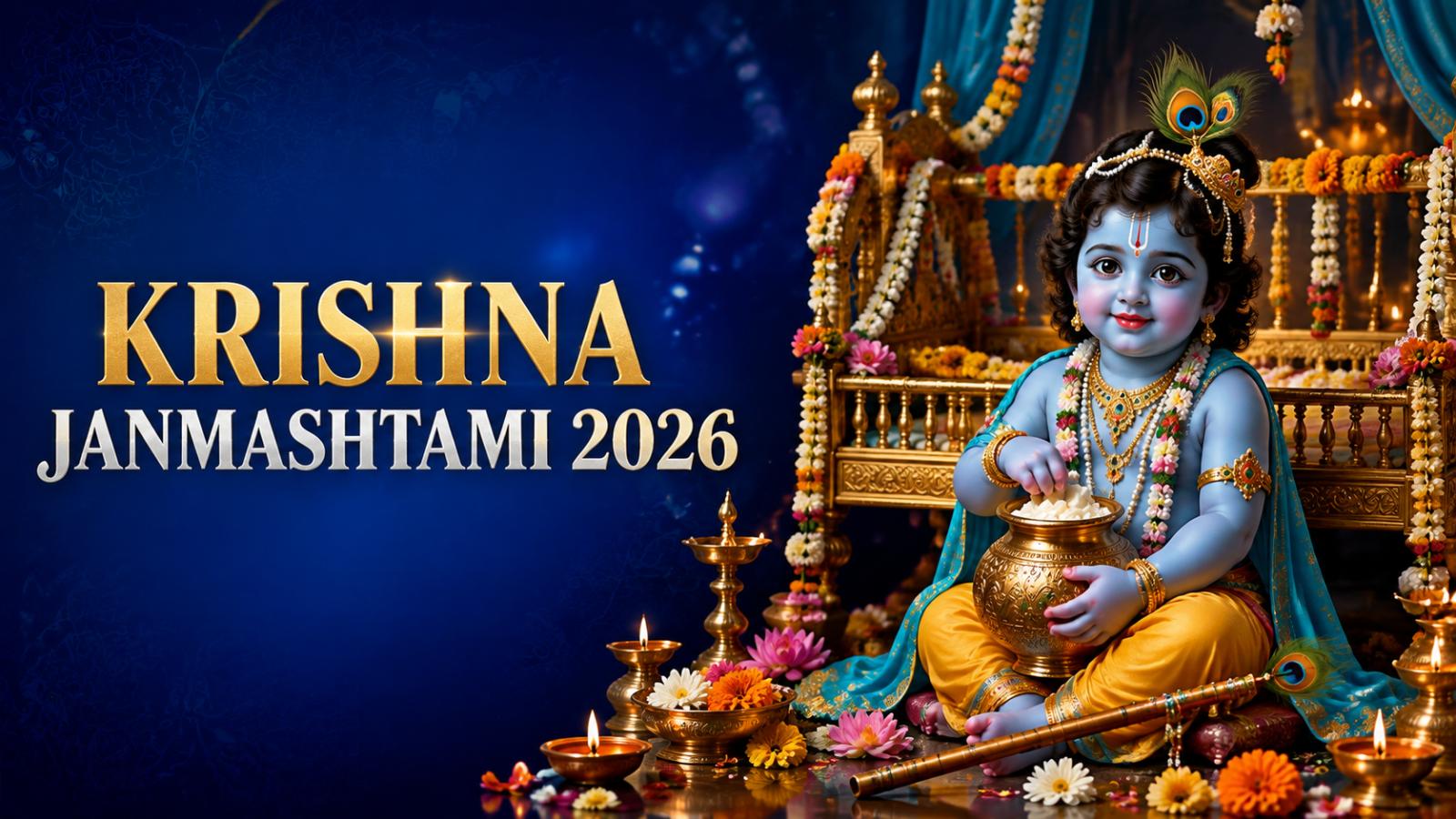
Krishna Janmashtami 2026 will be celebrated on Friday, September 4, with fasting, bhajans, abhishekam and midnight worship across India. The puja continues into the early hours of September 5, while Dahi Handi and Nandotsav will be celebrated later that day.
Devotees celebrate the occasion with fasting, midnight puja, bhajans, temple visits, abhishekam and devotional readings. Homes are decorated with flowers, lights and small footprints representing the arrival of Bal Gopal. The celebrations continue into Saturday, September 5, when Dahi Handi and Nandotsav will be observed in several regions.
Krishna Janmashtami 2026 date and main observancesWidely followed panchangs place both the Smarta household observance and the ISKCON or Vaishnava celebration on September 4 in 2026. ISKCON temples in Delhi and Gurugram have also scheduled their principal Janmashtami programs for Friday.
The midnight puja begins late on September 4 and concludes during the early hours of September 5 in many cities. However, the Hindu observance is associated with the day beginning at sunrise on September 4.
| Observance | Date | Main rituals |
|---|---|---|
| Krishna Janmashtami | Friday, September 4, 2026 | Fasting, bhajans, decoration and midnight puja |
| ISKCON Janmashtami | Friday, September 4, 2026 | Abhishekam, kirtan, maha aarti and prasadam |
| Nishita Kaal Puja | Night of September 4–5 | Krishna Janmotsav and midnight worship |
| Dahi Handi | Saturday, September 5, 2026 | Human pyramids and breaking the curd pot |
| Nandotsav | Saturday, September 5, 2026 | Celebration of Krishna’s arrival in Gokul |
| Parana | Saturday, September 5, 2026 | Breaking the Janmashtami fast |
Some regional temples and communities may follow a different panchang. Devotees should confirm the date and timings with the temple or religious tradition they normally follow.
Why Krishna Janmashtami is celebratedAccording to Hindu tradition, Krishna was born to Devaki and Vasudeva in a prison in Mathura. Devaki’s brother Kamsa had imprisoned the couple after learning that their eighth child would bring an end to his rule.
The traditional account says that when Krishna was born at midnight, the prison guards fell asleep, the chains opened and the doors became unlocked. Vasudeva carried the newborn across the flooded Yamuna River to Gokul, where Krishna was raised by Nanda and Yashoda.
Krishna’s birth at midnight is interpreted as the arrival of divine hope during a period of darkness and injustice. His life and teachings are associated with dharma, devotion, courage, wisdom and protection from wrongdoing.
Janmashtami celebrations particularly honour Krishna’s childhood form as Bal Gopal or Laddu Gopal. Devotees decorate a cradle, offer butter and mishri and treat the deity with the affection traditionally shown to a newborn child.
Janmashtami 2026 Nishita Puja timingsNishita Kaal is the traditional Hindu midnight calculated using the local sunset and sunrise. It does not always correspond exactly with 12:00 AM. Since the calculation depends on location, the puja window differs among Indian cities.
| City | Nishita Puja time |
|---|---|
| New Delhi | 11:57 PM–12:43 AM |
| Bengaluru | 11:55 PM–12:42 AM |
| Mumbai | 12:14 AM–1:01 AM |
| Chennai | 11:45 PM–12:31 AM |
| Kolkata | 11:13 PM–11:59 PM |
| Hyderabad | 11:52 PM–12:38 AM |
| Pune | 12:10 AM–12:57 AM |
| Ahmedabad | 12:16 AM–1:02 AM |
| Jaipur | 12:03 AM–12:49 AM |
| Chandigarh | 11:59 PM–12:45 AM |
All timings relate to the night of September 4–5, 2026, and are shown in the local time of each city. Panchangs may differ by several minutes, so devotees should verify the final muhurat for their location.
Janmashtami Puja Vidhi at homeThe prayer area should be cleaned during the morning and decorated with flowers, mango leaves, lights and rangoli. A Krishna idol or Laddu Gopal may be placed on a clean cloth over a wooden platform.
A decorated cradle or jhula is commonly arranged beside the prayer platform. Families may draw small footprints leading towards the home temple to symbolise Krishna entering the house.
| Step | Puja procedure |
|---|---|
| Morning preparation | Bathe, wear clean clothes and clean the prayer area |
| Sankalp | Make a prayerful commitment to observe the vrat and puja |
| Kalash placement | Place a water-filled kalash near the worship area |
| Jhula decoration | Decorate Krishna’s cradle with flowers and lights |
| Abhishekam | Bathe the idol with panchamrit and clean water |
| Shringar | Dress the idol and offer ornaments, sandalwood and flowers |
| Cradle ceremony | Place Laddu Gopal in the jhula and rock it gently |
| Bhog offering | Offer butter, mishri, panjiri, fruit, kheer and tulsi |
| Aarti | Light a diya and sing Krishna aarti and bhajans |
| Prasad | Distribute the offerings after the midnight puja |
The principal puja begins during Nishita Kaal. The idol is first bathed with panchamrit prepared using milk, curd, ghee, honey and sugar. It is then washed with clean water, dried and dressed in fresh clothes.
Devotees may offer a crown, flute, peacock feather, jewellery and a tulsi garland. Laddu Gopal is then placed in the decorated cradle, which each family member may rock while singing devotional songs.
Items required for Janmashtami PujaFamilies can adapt the worship according to their traditions and the items available at home. Elaborate decorations are optional, and a simple puja performed with devotion is considered meaningful.
| Category | Suggested items |
|---|---|
| Main worship | Krishna idol or image, chowki and clean cloth |
| Decoration | Flowers, mango leaves, rangoli, lights and cradle |
| Abhishekam | Milk, curd, honey, ghee, sugar and clean water |
| Shringar | Fresh clothes, crown, flute, jewellery and peacock feather |
| Worship | Diya, cotton wicks, oil or ghee, incense and sandalwood |
| Offerings | Butter, mishri, panjiri, fruit, sweets and kheer |
| Sacred leaves | Fresh tulsi leaves |
| Other items | Kalash, bell, conch, puja plate and aarti lamp |
Tulsi is traditionally regarded as an important part of Krishna worship. A clean tulsi leaf may be placed on the food offered to the deity.
Foods allowed and avoided during JanmashtamiMost devotees following a phalahar fast avoid grains and pulses while consuming fruits, dairy products and preparations made with vrat-approved ingredients.
| Foods generally permitted | Foods generally avoided |
|---|---|
| Fresh fruits | Wheat and rice |
| Milk, curd and buttermilk | Pulses and lentils |
| Makhana and dry fruits | Besan and grain flour |
| Sabudana dishes | Onion and garlic |
| Samak rice | Meat, fish and eggs |
| Kuttu or singhara flour | Alcohol and tobacco |
| Potato and sweet potato | Regular table salt |
| Coconut and peanuts | Processed foods containing grains |
| Sendha namak | Non-vegetarian food |
Popular vrat dishes include sabudana khichdi, sabudana vada, roasted makhana, fruit chaat, kuttu puri, samak rice, potato curry and milk-based desserts.
Bhog offered to Lord KrishnaKrishna is traditionally associated with milk, curd, butter and other dairy products. Makhan-mishri is one of the most common offerings because of stories describing Krishna’s childhood love of butter.
| Bhog | Description |
|---|---|
| Makhan-mishri | Fresh butter mixed with sugar crystals |
| Panjiri | Roasted devotional offering prepared in regional styles |
| Dhaniya panjiri | Coriander-based preparation commonly made for Janmashtami |
| Kheer | Milk-based sweet dish |
| Panchamrit | Milk, curd, ghee, honey and sugar mixture |
| Fruits | Seasonal fruits washed and arranged for offering |
| Sweets | Pedas, laddus or other milk-based sweets |
| Tulsi | A clean tulsi leaf placed over the bhog |
The offering should be prepared in a clean space and kept aside for worship before anyone tastes it. It is distributed as prasad after the puja.
When to break the Janmashtami fastParana refers to the formal conclusion of the vrat. The timing depends on the religious practice followed by the family or temple.
Under a widely followed household practice, devotees eat prasad after the midnight puja and aarti. Those observing the stricter rule wait until after sunrise on September 5 and break the fast after Ashtami Tithi and Rohini Nakshatra have ended.
First-time participants may choose a lighter fast and break it after the midnight worship. Anyone with medical concerns should follow professional health advice rather than attempting a strict vrat.
Janmashtami celebrations across IndiaMathura, believed to be Krishna’s birthplace, hosts major temple ceremonies, processions and midnight celebrations. Vrindavan marks the occasion with devotional singing, Ras Leela performances and special darshan.
In Maharashtra, Mumbai, Thane and Pune become centres of Dahi Handi celebrations on the following day. Teams known as Govinda pathaks form human pyramids to reach pots suspended above streets and public grounds.
Gujarat celebrates the festival at Dwarka and Dakor, while Odisha observes special ceremonies associated with Jagannath traditions. In South India, the festival is called Gokulashtami, Sri Krishna Jayanti or Ashtami Rohini. Families commonly draw small rice-flour footprints from the entrance to the prayer area.
ISKCON temples organise kirtans, abhishekam, spiritual discourses, midnight aarti and prasadam distribution. ISKCON Delhi has confirmed its Vaishnava Janmashtami observance for September 4, 2026.
Regional names of Krishna Janmashtami| Festival name | Region or tradition |
|---|---|
| Krishna Janmashtami | Common across India |
| Krishnashtami | Andhra Pradesh, Telangana and Karnataka |
| Gokulashtami | Maharashtra, Karnataka and Tamil Nadu |
| Sri Krishna Jayanti | Tamil Nadu and Kerala |
| Ashtami Rohini | Kerala and parts of coastal Karnataka |
| Saatam Aatham | Gujarat and Saurashtra |
| Gopalakala | Maharashtra and Goa |
| Nandotsav | Mathura, Vrindavan and the Braj region |
Despite variations in name, food and ritual, the central theme remains the celebration of Krishna’s birth and teachings. The festival brings families and communities together through devotion, music, worship, fasting and acts of charity.