
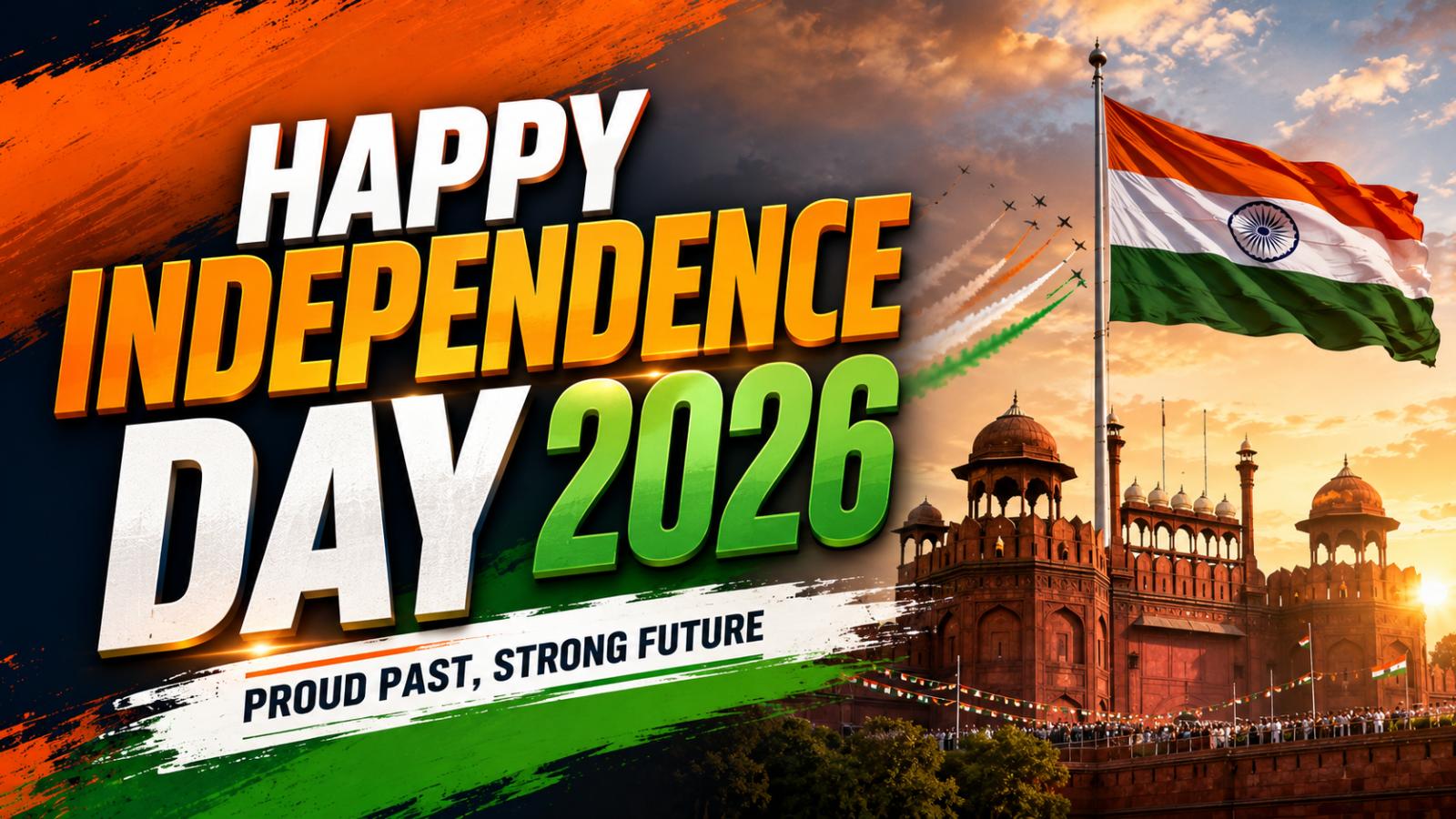
Saturday, August 15, 2026 | Time: Morning | Place: Red Fort, New Delhi, India
India completes 79 years of freedom in 2026 while celebrating its 80th Independence Day, a distinction that often causes confusion.
India will celebrate its 80th Independence Day on Saturday, August 15, 2026, marking 79 completed years since gaining independence from British rule in 1947. Although the two numbers may appear contradictory, they refer to different ways of counting India's journey since independence. The Government of India has officially described the 2026 celebration as the 80th Independence Day.
August 15, 1947, was India's first Independence Day. August 15, 1948, marked one completed year of freedom but was already the second Independence Day celebration. Therefore, subtracting 1947 from 2026 gives 79 completed years, while counting the annual Independence Day observances beginning with 1947 makes 2026 the 80th celebration.
Key points:
- India gained independence on August 15, 1947.
- August 15, 1947 was the first Independence Day.
- India completes 79 full years of independence in 2026.
- India celebrates its 80th Independence Day on August 15, 2026.
- The difference comes from counting celebrations from 1947 versus completed years.
The 2026 celebrations commemorate “150 Years of Vande Mataram” and “Yuva Shakti for Viksit Bharat@2047.” The focus highlights the energy, aspirations and contribution of young Indians to the country's goal of becoming a developed nation by 2047.
For the first time, Vande Mataram will be rendered as part of the Independence Day celebrations at the Red Fort. Around 5,000 special guests from different walks of life have also been invited to attend the ceremony.
Key highlights include:
- 150 Years of Vande Mataram
- Yuva Shakti for Viksit Bharat@2047
- Youth innovation and scientific achievements
- India's progress in nuclear and space technology
- Special recognition for achievers from different fields
- Vande Mataram performance at the Red Fort
India gained independence from British colonial rule on August 15, 1947, after a long freedom struggle involving political movements, mass campaigns and sacrifices by generations of Indians. Mahatma Gandhi, Jawaharlal Nehru, Sardar Vallabhbhai Patel, Netaji Subhas Chandra Bose, Bhagat Singh and many others played important roles during different phases of the freedom movement.
The Indian Independence Act of 1947 paved the way for the end of British rule and the transfer of power. Since then, August 15 has been observed annually as a national celebration of freedom, unity and India's democratic journey.
The main national ceremony takes place at the historic Red Fort in New Delhi. Prime Minister Narendra Modi will lead the 80th Independence Day celebrations, hoist the National Flag and address the nation. The flag hoisting will be synchronized with a 21-gun salute, followed by ceremonial events and the Prime Minister's address.
Across the country, schools, colleges, government institutions and communities hold flag-hoisting ceremonies, cultural programmes and patriotic events. These celebrations honour India's freedom struggle while highlighting national unity, achievements and aspirations for the future.