
Kharge Challenges Centre Over Anti-Paper Leak Bill
The Rajya Sabha passed the anti-paper leak Bill after a heated political debate in which Mallikarjun Kharge questioned the Centre’s response to examination fraud and student protests. The legislation introduces tougher prison terms, higher fines, time-bound investigations and fast-track trials for organised paper leak cases.
Kharge Questions Centre as Rajya Sabha Passes Anti-Paper Leak Bill
New Delhi, July 31, 2026: The Rajya Sabha anti-paper leak Bill 2026 has cleared Parliament following a heated debate over examination fraud, student protests and the accountability of the central government.
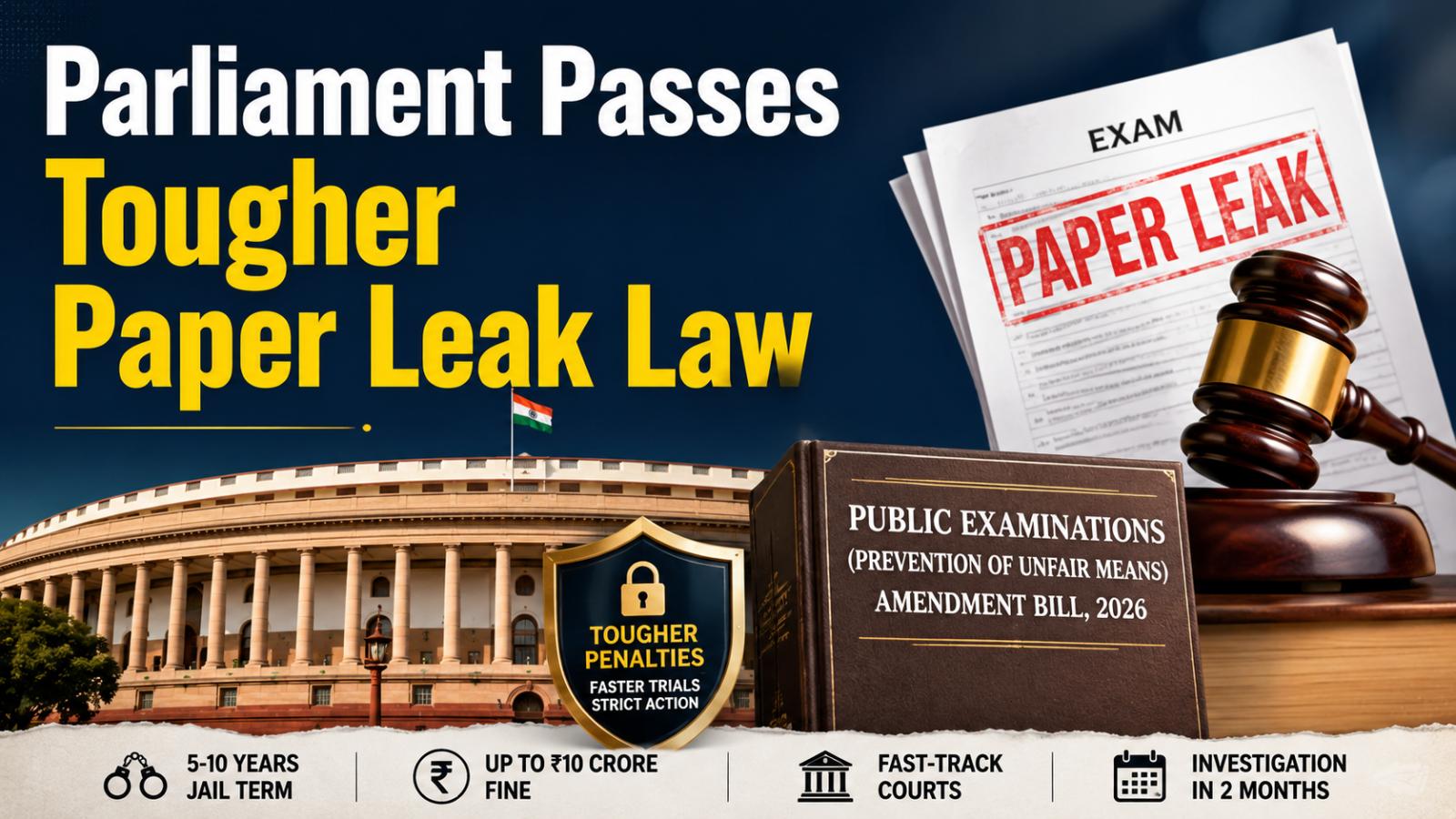
The Rajya Sabha passed the Public Examinations (Prevention of Unfair Means) Amendment Bill, 2026, on Thursday, July 30. The Lok Sabha had approved it through a voice vote a day earlier. The legislation strengthens the 2024 law by increasing punishments and establishing time-bound investigation and trial procedures.
Kharge Questions Centre During Rajya Sabha Debate
Initiating the debate, Leader of the Opposition Mallikarjun Kharge questioned why Prime Minister Narendra Modi and Union Home Minister Amit Shah had not directly addressed concerns surrounding the paper leak crisis and the police action against protesting students.
Kharge argued that students who prepared honestly for competitive examinations had suffered while people responsible for leaking question papers remained beyond the reach of authorities. He described the amendments as inadequate and alleged that they changed punishment figures without addressing weaknesses in the examination system.
He also claimed that the government acted only after student protests intensified in Delhi. According to Kharge, demands for stronger legal provisions had been raised earlier but were not adequately considered. His remarks led to objections from members of the treasury benches, with Leader of the House J P Nadda seeking the removal of comments he considered unparliamentary.
Government Defends the Examination Reform Bill
Union Minister Jitendra Singh rejected the Opposition’s criticism and said the amendments demonstrated the government’s willingness to consider constructive suggestions.
Singh said the government would not allow organised groups to jeopardise the future of students. He described the Bill as an effort to protect deserving candidates and improve the credibility, fairness and transparency of public examinations.
The minister said 52 FIRs had already been registered under the Public Examinations Act of 2024. He maintained that the tougher provisions would help authorities take stronger action against examination-related criminal networks.
Public Examinations Bill Penalties Increased
Under the amended legislation, a person found guilty of using unfair means in a public examination can face imprisonment ranging from five to 10 years. The maximum fine has been increased from ₹10 lakh to ₹50 lakh.
Service providers involved in examination fraud can be fined up to ₹5 crore and barred from conducting public examinations for eight years. Senior officials of service providers who are directly involved may also face between five and 10 years in prison and fines reaching ₹5 crore.
For organised examination crimes, the minimum imprisonment has been raised from five to seven years, while the maximum remains 10 years. The minimum fine for organised rackets has been increased from ₹1 crore to ₹10 crore.
Two-Month Investigation Timeline
The Bill requires investigations into offences covered by the law to be completed within two months.
Every state and Union Territory must designate a Sessions Court as a Special Fast Track Court for examination-related offences. Trials are expected to be conducted on a day-to-day basis and completed within three months of the chargesheet being filed.
The legislation also provides for special public prosecutors and allows the central government to establish a Special Task Force to investigate paper leaks, organised cheating and other serious examination fraud.
Opposition Walkout Marks Final Debate
The Rajya Sabha proceedings witnessed sharp exchanges between government and Opposition members. Opposition MPs eventually staged a walkout while demanding a statement from Amit Shah regarding the police action against students protesting over the examination controversy.
The House subsequently passed the Bill, completing its parliamentary approval. The legislation will become law after receiving presidential assent and being officially notified.
Implementation Will Determine the Bill’s Impact
The stronger punishments and fast-track court provisions may act as deterrents, but effective implementation will remain crucial. Investigating agencies will need sufficient personnel, digital expertise and coordination across states to identify the full networks behind examination leaks.
PRS Legislative Research has also noted that the Bill does not clearly specify what happens when the two-month investigation deadline is missed. It has further highlighted practical and legal questions surrounding mandatory trial and appeal timelines.
For students and job aspirants, the central issue is whether the new system can prevent leaks before examinations take place, rather than only punishing offenders after candidates have already suffered. The law’s success will therefore depend on secure examination procedures, swift investigations and consistent enforcement.