

Tongue Changes May Reveal Dehydration, Vitamin Deficiency Or Oral Health Issues
What Tongue Colour Says About Health
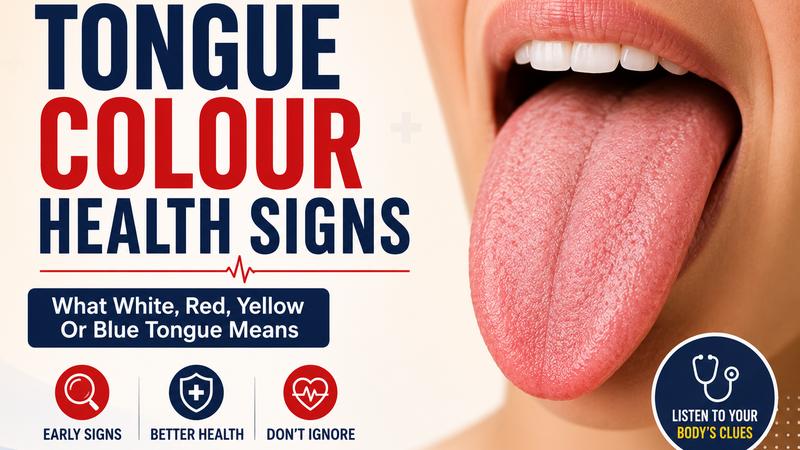
Your tongue can show useful clues about your overall health. Doctors say changes in tongue colour, coating, moisture and texture may sometimes point to dehydration, vitamin deficiency, infection, or poor oral hygiene. A healthy tongue is usually pink with tiny bumps called papillae. A thin white coating, especially in the morning, can be normal. But colour changes that stay for many days should be watched carefully.
Common Tongue Colour Warning Signs
A white tongue may happen due to dehydration, dry mouth, smoking, fever, poor oral hygiene or oral thrush. Thick white patches that do not clear may need medical evaluation. A pale tongue can be linked to iron or vitamin B12 deficiency and may appear with tiredness, dizziness, soreness, or cracks near the mouth. A bright red or strawberry-like tongue may indicate vitamin B12 deficiency, folic acid deficiency, or certain infections.
Yellow or orange tongue coating is often related to bacterial build-up, smoking, dry mouth, poor cleaning habits, or some medicines. A blue or purple tongue may suggest poor oxygen circulation and should be checked quickly, especially if there are breathing or heart-related symptoms.
When Tongue Changes Need A Doctor
A black or furry-looking tongue is usually harmless and may be caused by smoking, antibiotics, tea, coffee, or dry mouth. Still, persistent discolouration should not be ignored. Doctors advise medical attention if ulcers, lumps, pain, numbness, thick patches, or unusual tongue colour last more than two weeks. Regular tongue cleaning, hydration, healthy food, avoiding tobacco, and dental check-ups can help maintain better oral health. Tongue changes cannot confirm disease by themselves, but they can be an early sign to seek proper medical advice.