
Sonam Wangchuk Health Monitoring Ordered as July 20 Parliament March Nears
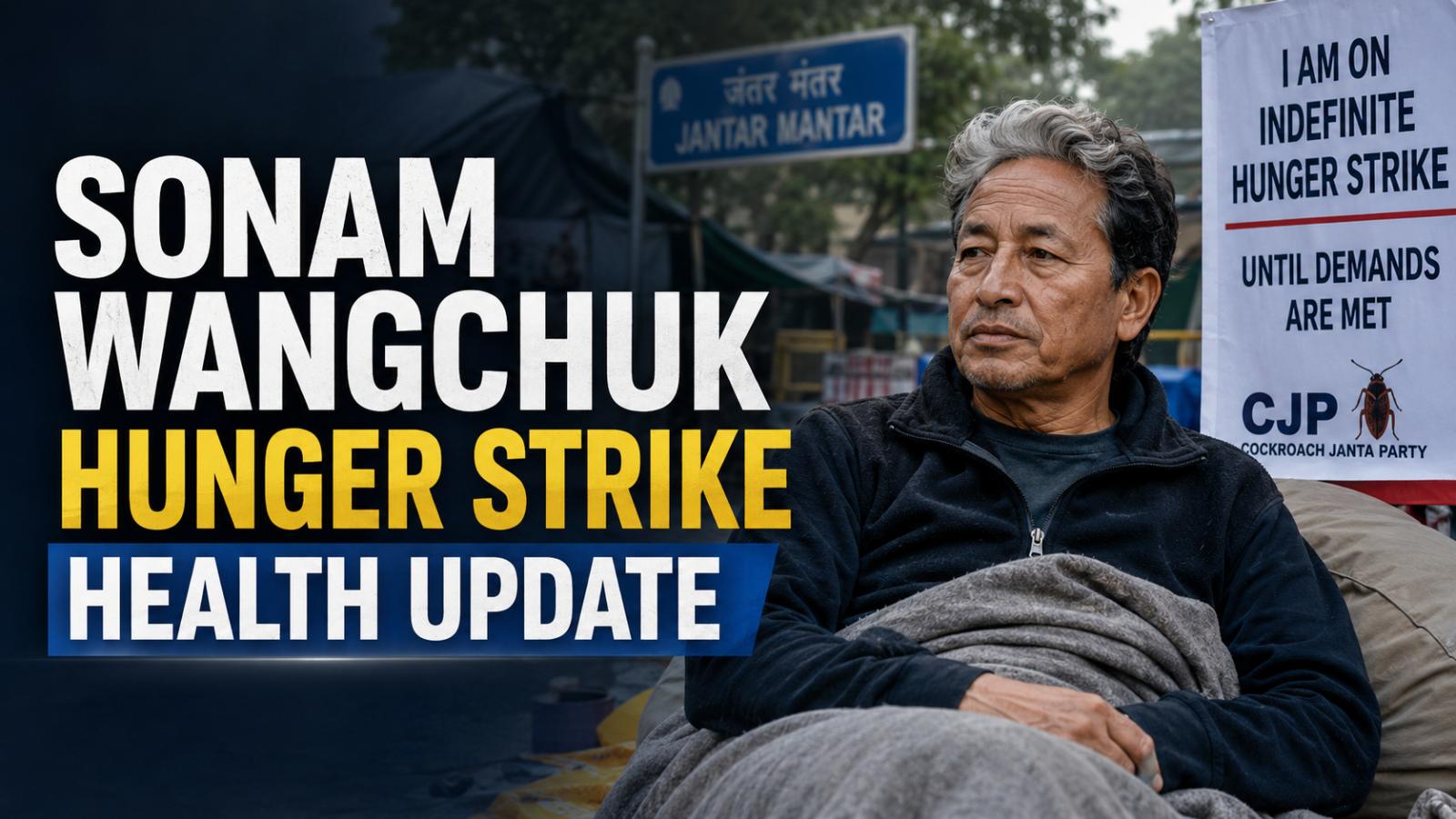
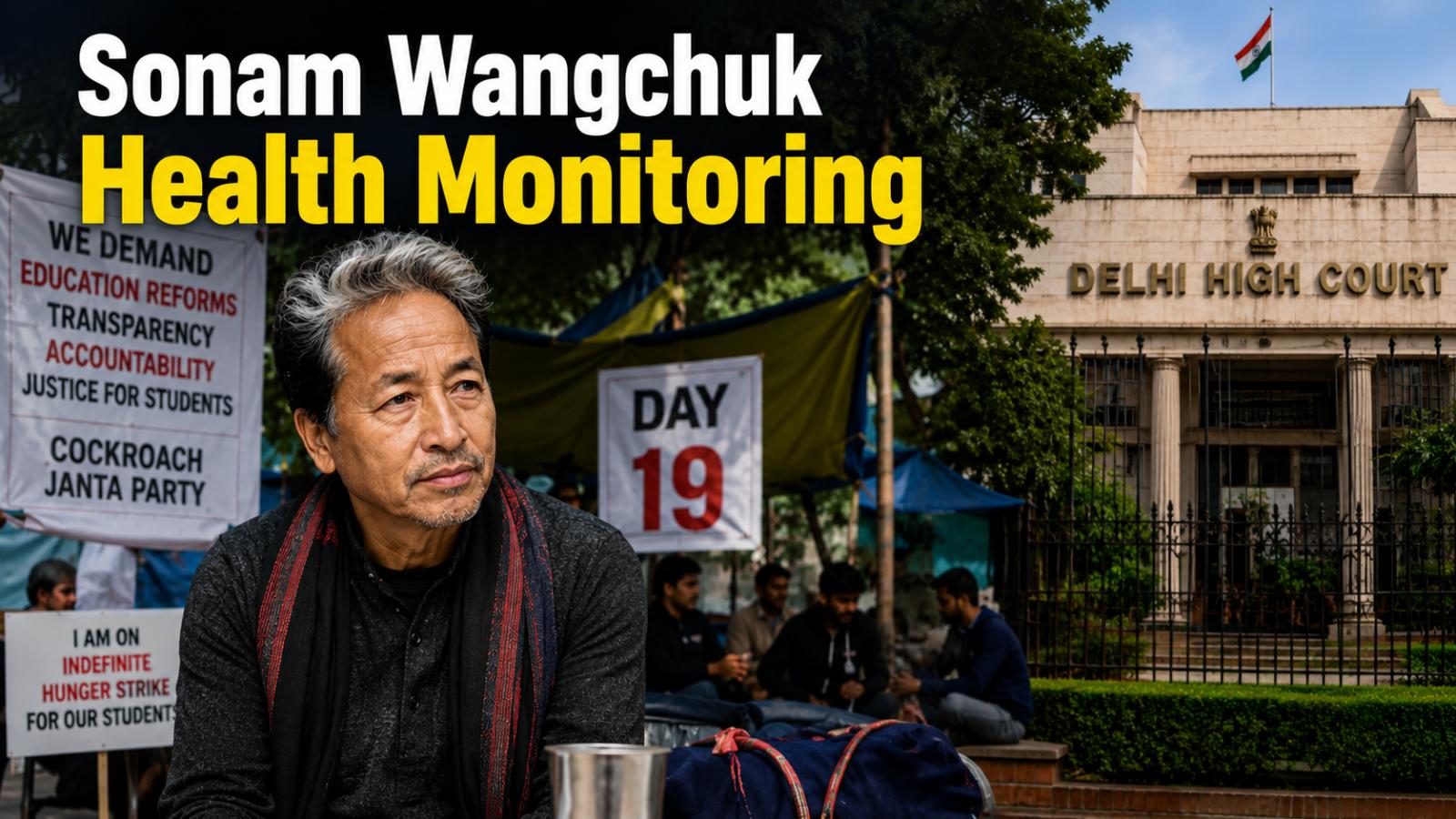
The Delhi High Court has directed authorities to regularly monitor activist Sonam Wangchuk’s health as he continues his indefinite hunger strike at Delhi’s Jantar Mantar. Despite growing concern over his physical condition, Wangchuk has urged supporters not to ask him to end the fast and instead participate in a peaceful march to Parliament on July 20, 2026.
The court’s intervention came as Wangchuk’s fast entered its 19th day on Thursday, July 16. Reports from the protest site have described difficult conditions marked by heat, humidity, and limited facilities, adding to concerns about the physical impact of the prolonged protest.
Delhi High Court Orders Regular Health Checks
Hearing a public interest litigation seeking urgent medical assistance for Wangchuk, the Delhi High Court directed the Centre and the Delhi government to ensure that his condition is examined regularly by government doctors.
The court observed that the life of every citizen is precious and said authorities must provide the required medical assistance if doctors believe intervention is necessary. Any decision to shift Wangchuk to a hospital or provide further treatment must be based on professional medical advice rather than political or public pressure.
The petition had raised concerns that Wangchuk’s condition could deteriorate during the prolonged fast. It reportedly sought immediate treatment and stronger medical intervention if his health reached a critical stage.
Appearing for the government, Solicitor General Tushar Mehta told the court that Wangchuk was already being examined by government doctors and that medical support would be provided based on their reports.
Wangchuk Responds to Health Concerns
In a video message, Wangchuk acknowledged that the fast had affected his physical strength but maintained that medical tests had not indicated an immediate threat to his life.
“I’m not in good shape but not so bad either,” he said while responding to appeals from political leaders, public figures, and supporters asking him to end the hunger strike.
Wangchuk said that although he was experiencing weakness and muscle loss, his heart and other core health indicators remained stable. He argued that ending the fast without any assurance or response from the government could weaken the message of the protest.
Reports said Wangchuk had lost more than nine kilograms since beginning the fast. A doctor attending to him said he remained mentally alert, although concerns about the effects of prolonged fasting continued to grow.
Activist Calls for July 20 Parliament March
Instead of asking him to break his fast, Wangchuk appealed to citizens to join the proposed “Chalo Sansad” march to Parliament on July 20.
The march is expected to begin from the Jantar Mantar protest site and coincide with the opening of Parliament’s Monsoon Session. Organisers are seeking wider public participation to draw lawmakers’ attention to alleged examination irregularities and demands for greater accountability in the education system.
Wangchuk also appealed to schools, colleges, and universities to treat the march as an opportunity for students to understand democracy and peaceful civic participation.
He said participants would be able to place their concerns before Parliament and urged supporters to take part peacefully and in large numbers.
What Are the Protesters Demanding?
Wangchuk has been fasting in solidarity with the youth-led Cockroach Janta Party movement, which has been holding demonstrations at Jantar Mantar over alleged examination paper leaks and irregularities affecting students.
The protesters have demanded education reforms, greater accountability for examination failures, and the resignation of Union Education Minister Dharmendra Pradhan. These remain demands made by the protesters, and no final determination has been made regarding the allegations raised by the movement.
The government has not publicly accepted the protesters’ principal demands. However, its assurance before the Delhi High Court that medical assistance would be provided marked an official response to concerns surrounding Wangchuk’s health.
Focus Shifts to Court-Ordered Monitoring
With the July 20 march approaching, attention is now divided between the mobilisation planned by the protesters and Wangchuk’s medical condition.
The Delhi High Court’s direction places responsibility on authorities to conduct regular examinations and act promptly if doctors find that his health is deteriorating. Wangchuk, meanwhile, remains firm that the protest should continue until the movement’s concerns receive a meaningful response.
The coming days will be crucial, as doctors assess whether he can safely continue the fast and organisers prepare for the proposed Parliament march.