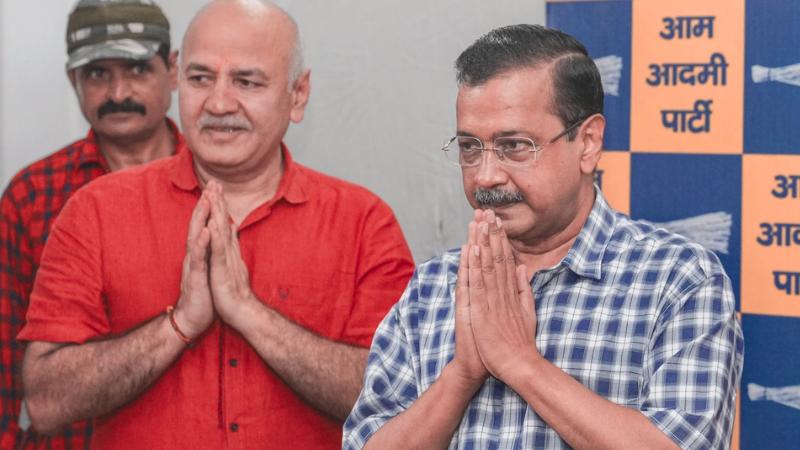
In a significant legal development, Delhi Chief Minister Arvind Kejriwal and former Deputy Chief Minister Manish Sisodia have been discharged from the controversial Delhi excise policy case. A Delhi court ruled that the Central Bureau of Investigation (CBI) had failed to present substantial evidence to support the serious charges against the two leaders, effectively clearing them of the allegations. The court's decision highlighted the absence of material evidence to support the claim that Kejriwal played a central role in the alleged corruption surrounding the excise policy. The judge emphasized that such serious accusations, especially involving a prominent figure like the Chief Minister, required solid, verifiable evidence. Without this, the prosecution's claims could not be sustained. The court further noted that accepting unproven allegations could erode public trust in the office of the Chief Minister and in the political process as a whole.
Manish Sisodia was also discharged by the court, which found that the prosecution's case did not hold up under judicial scrutiny. There was no evidence suggesting criminal intent on his part. The documents and statements related to the formulation of the excise policy were primarily administrative in nature and did not point to corruption or wrongdoing, weakening the prosecution's narrative. The prosecution’s conspiracy theory, which alleged an overarching plot involving both Kejriwal and Sisodia, was found to be lacking. The court identified internal contradictions within the claims and concluded that the policy formulation process had involved consultations at various government levels and institutional deliberations, none of which indicated illicit activity. This breakdown further undermined the prosecution's case.
The court's ruling marks a major setback for the prosecution, underscoring the challenges in proving political and administrative corruption cases when key allegations lack corroborated evidence. The acquittals of Kejriwal and Sisodia raise questions about the strength of charges against political figures and the use of public office in such investigations. For Arvind Kejriwal, the discharge clears his name in this high-profile case, which has attracted significant attention from both political observers and the public. Kejriwal has long argued that the case against him was politically motivated, aimed at damaging the Aam Aadmi Party’s (AAP) image ahead of elections. This ruling could prove to be a pivotal moment in his political career, potentially strengthening his position as a leader who has been unjustly targeted.


 Joyful
0%
Joyful
0%
 Cool
0%
Cool
0%
 Thrilled
0%
Thrilled
0%
 Upset
0%
Upset
0%
 Unhappy
0%
Unhappy
0%