
Documents Needed After Changing Jobs
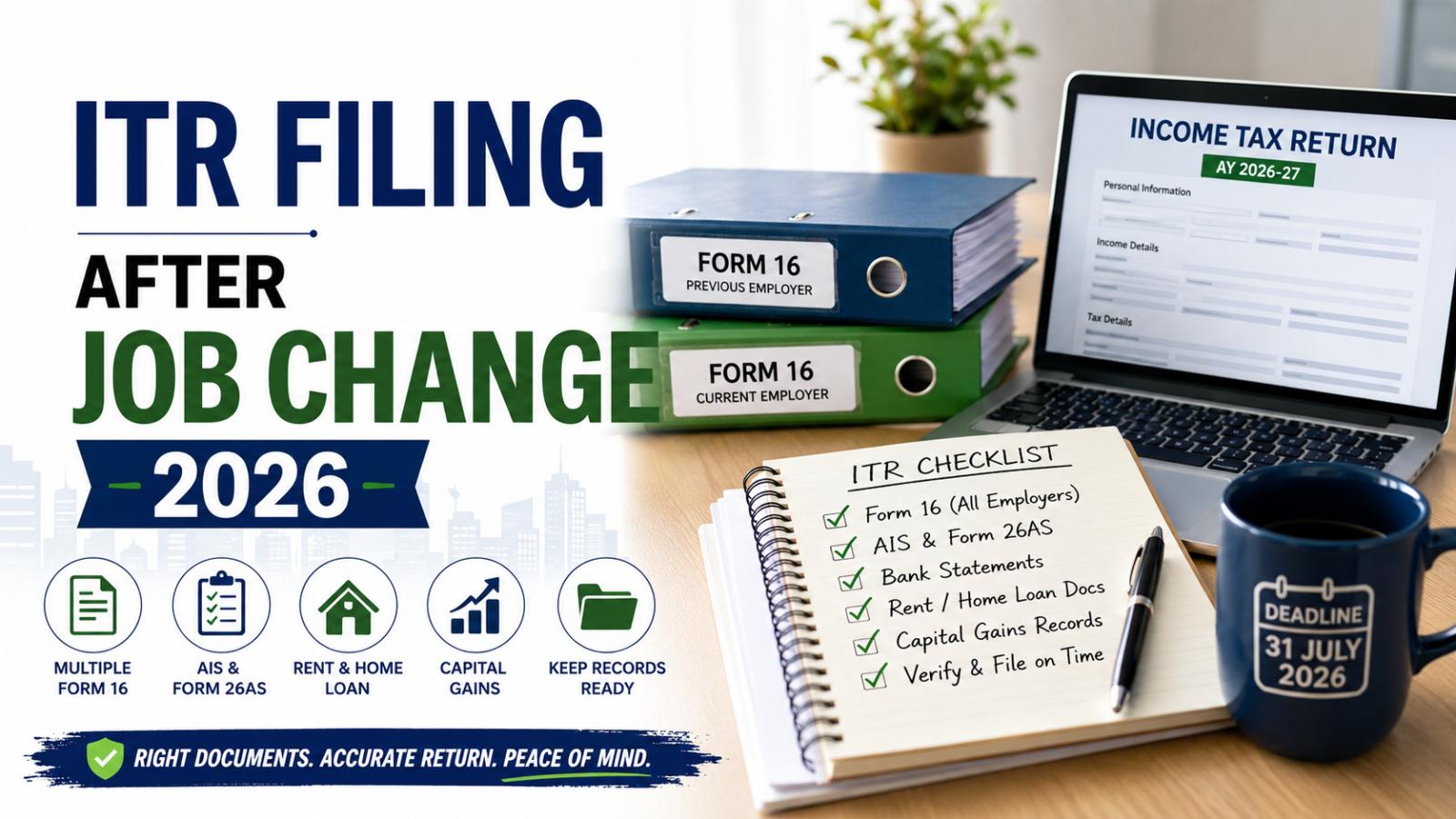
Taxpayers who changed jobs during FY 2025-26 must combine salary and TDS details from every employer. They should also verify AIS and Form 26AS and collect records related to bank interest, rent, home loans and capital gains before filing their return.
Changed Jobs This Year? Keep These Papers Ready for ITR Filing
New Delhi, July 28, 2026: ITR filing after a job change in 2026 may require more preparation than filing a return with salary from just one employer. Taxpayers who worked for two or more companies during FY 2025-26 should ensure that income from every employer is reported correctly.
The Income Tax Department has been reminding taxpayers that the due date for many AY 2026-27 returns is July 31, 2026. However, the applicable deadline may vary according to the taxpayer’s filing category, making it important to verify the date shown on the official portal.
ITR Filing After Job Change 2026 Requires Every Form 16
A taxpayer who changed jobs will normally receive a separate Form 16 from each employer. Depending only on the Form 16 issued by the latest employer could leave part of the annual salary outside the return.
Salary, exemptions, and tax deducted at source must therefore be checked across all Form 16 certificates. The details should then be reconciled with the taxpayer’s salary slips, bank records, and information available on the income-tax portal.
The original report also advises job changers to collect Form 16 from every employer and consolidate their salary income before submitting the return.
Changing jobs by itself does not automatically determine which ITR form must be used. The correct form depends on total income and the nature of other earnings. Salaried individuals with capital gains or income that makes them ineligible for ITR-1 may have to use ITR-2.
Check AIS and Form 26AS Before Filing
Taxpayers should download their Annual Information Statement, Taxpayer Information Summary, and Form 26AS before completing the return. These records can show salary TDS, bank interest, securities transactions, and other financial information reported to the department.
Figures in Form 16, AIS, and Form 26AS should not be copied without verification. A difference may arise because of delayed reporting, incorrect data, or an error in a TDS return.
The Income Tax Department recommends reconciling discrepancies with the employer, bank or other tax deductor. Taxpayers can also submit feedback against incorrect AIS entries and download an acknowledgement after the feedback is recorded.
Keep Records of Interest, Rent, and Capital Gains
Form 16 is only one part of the filing checklist. Taxpayers should also collect bank statements, passbooks, fixed-deposit interest certificates, and Form 16A, where tax has been deducted from non-salary income.
Those receiving rent should keep tenant details, municipal tax records, and home-loan interest certificates. Rent receipts may also be required when an eligible HRA claim was not fully considered by the employer.
Investors who sold shares, mutual funds, or other securities should obtain a capital-gains or profit-and-loss statement from their broker. Property sellers may need purchase and sale deeds, improvement-cost records, and documents supporting transfer expenses.
The department’s ITR-2 guidance specifically identifies Form 16, AIS, Form 26AS, bank records, rent information, and capital-gains statements among the records taxpayers may need.
Complete a Final Review and E-Verify
Before submitting the return, taxpayers should confirm that income from every employer and every additional source has been included. PAN details, bank account information, deductions, TDS credits, and the selected tax regime should also be reviewed.
Supporting documents are generally kept for verification and are not attached to the online ITR. After submission, the return must be e-verified through an available method to complete the filing process.
Careful reconciliation can reduce the risk of incorrect tax calculations, missing income, and avoidable follow-up notices.
Disclaimer: This article is for general information only and does not constitute tax or legal advice. Taxpayers should check the Income Tax Department portal or consult a qualified tax professional for guidance based on their individual circumstances.