
- trendtracker
- 26 Oct 2026
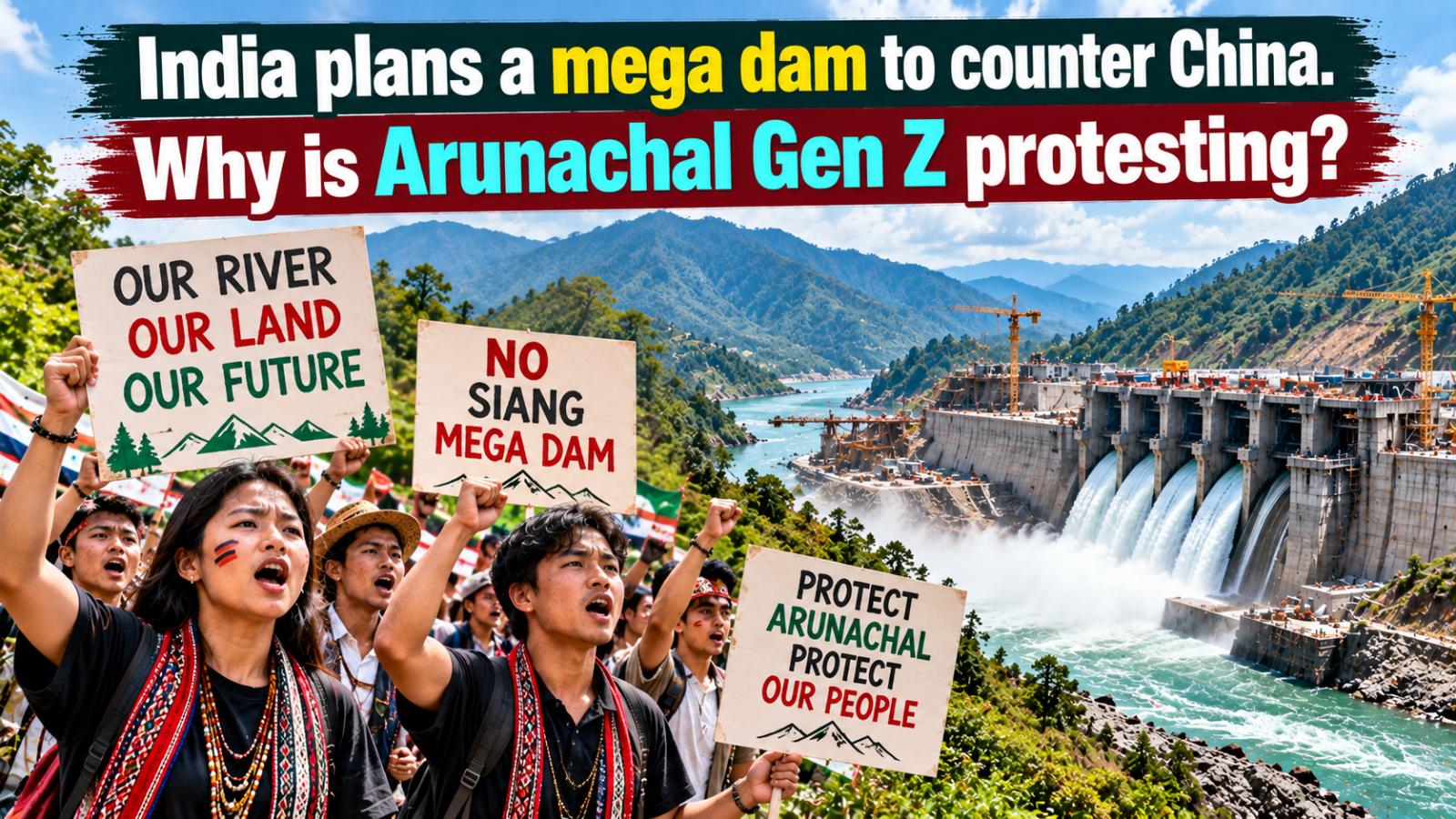
India's proposed 11,200 MW Siang dam in Arunachal Pradesh faces opposition from young protesters and indigenous Adi communities. The government views it as protection against China's upstream hydropower plans, but residents fear losing homes, farmland and cultural heritage.
Why India Wants the Siang Mega Dam
The Siang River enters India from Tibet, where it is called the Yarlung Tsangpo, and later joins the Brahmaputra. China began building a much larger hydropower project near Medog in July 2025. Indian officials worry that upstream water control could affect river flows and flooding. They say the Siang Upper Multipurpose Project (SUMP) could store water, moderate sudden flow changes and generate 11,200 MW of electricity. Its effectiveness remains subject to studies.
Why Gen Z and Adi Communities Are Protesting
For Adi families, the river supports farming, settlements and cultural practices. Residents fear a reservoir could submerge ancestral land, damage forests and fisheries, and displace villages in an earthquake-prone region. Younger protesters have joined longstanding opposition, with anger rising after reported police action against demonstrators. Community groups say water security must not come at the expense of their livelihoods or consent.
October 23 Protests Turn Violent
A 12-hour shutdown on October 23 was followed by clashes and reports of arson and vandalism in the Siang region. Police reported injured security personnel and damage to a police station, vehicles, an NHPC office and politicians' residences. Additional security forces were deployed. Groups including the Siang Indigenous Farmers' Forum and Adi Bane Kebang want survey work stopped and meaningful consultations through traditional village institutions.
What Happens Next to the Siang Project?
NHPC is involved in surveys for a pre-feasibility report examining possible sites, geology and safety. Protesters worry these studies could pave the way for construction despite objections. Chief Minister Pema Khandu says no final decision to build has been taken and the project will not proceed if experts find it unsuitable. Environmental and social assessments, clearances and community consultations would still be required. The dispute pits India's cross-border water concerns against demands for local protections.